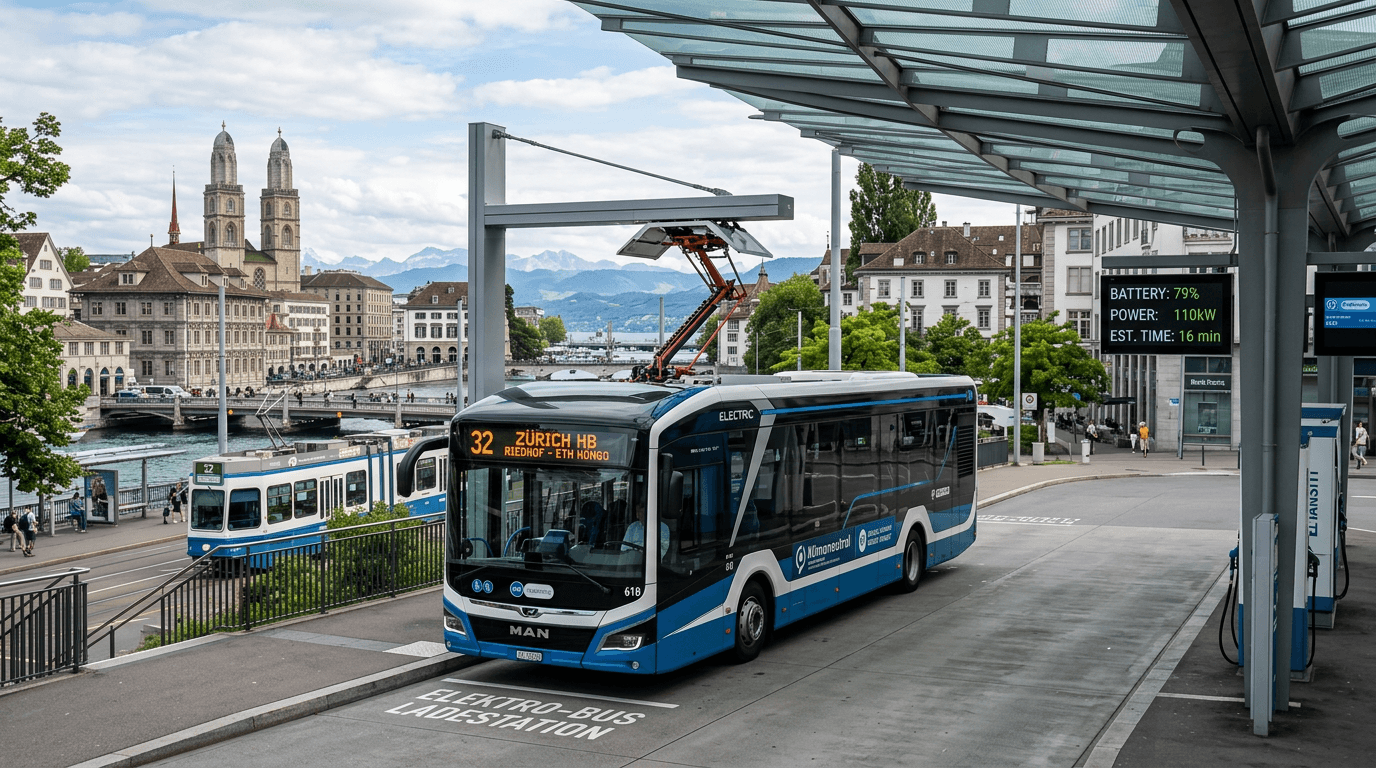
The problem is not the noble idea of electric drive, but the brutal fact that European giants – MAN and the domestic, Swiss Hess – treated a demanding customer like a free testing ground.
When the Swiss tear up a contract worth hundreds of millions, you should know this is not about a crooked screw. It is a technological capitulation of traditional brands that forgot a bus is primarily meant to drive, not be a smartphone on wheels that crashes at the slightest frost.
Hess, which has been supplying vehicles for decades, suddenly ran into supply chain problems that would have embarrassed electronics manufacturers during the pandemic. However, the real drama began only after the vehicles were delivered to the depot.
Passengers could feel as if they were in a sauna or a cold store, depending on the current mood of the complex HVAC system. Energy management systems behaved extremely unpredictably, drastically reducing vehicle range.
MAN, on the other hand, failed on door mechanics. Imagine: you have an ultra-modern electric bus worth millions of francs, and you cannot board it because the electronics have blocked the entrance. The authorities of Zurich (VBZ) finally said "enough".
Chinese competition and the modern electric bus
While Europeans are still debating optimisation, Chinese manufacturers such as BYD and Yutong are entering the market with enormous confidence. Yutong offers the U12 model, which in Polish conditions costs about 2.5–2.6 million zloty net.
These vehicles use lithium iron phosphate (LFP) batteries that can withstand 1.5 million kilometres. Such an electric bus does not wake up with a "system depression" when the temperature drops below zero, because the battery heating systems were designed for extreme frosts.
In Zurich, Vietnamese VinBus has also made the starting list of the new tender. If European manufacturers do not start delivering refined products, soon the only thing manufactured in the EU that moves around Zurich will be city bicycles. This is an important lesson for anyone interested in a professional catalogue of modern zero-emission vehicles.
Solaris and the Polish success in the shadow of the crisis
In all this turmoil, the bright star remains Polish Solaris. While others are taking hits, the company from Bolechowo is very effectively signing contracts to supply 115 vehicles for the Swiss giant PostAuto.
Why did the Swiss trust the Poles? Because the Polish electric bus has proven it can actually drive, not just look good in renders. Solaris picked up on the trend a decade ago, leaving latecomers far behind.
In Poland, the market picture looks promising. A 12-metre Maxi-class electric bus costs about 2.4–3 million zloty net. Although a Euro 6 diesel is cheaper, thanks to subsidies the real purchase price for local governments drops dramatically.
Warsaw is ordering models with huge batteries of more than 700 kWh. Such machines require every professional charger at the terminus to deliver powerful output, ensuring continuity of operations in the metropolitan area.
Operational performance as the key to success
The situation in Zurich shows that transport operators are no longer hostages to local patriotism. If a million-euro electric bus cannot heat passengers in winter, the prestigious "Made in Switzerland" label will not help.
In the world of professional transport, sentiments end where frost and a flat battery begin. Solaris has shown Europe that Polish engineering survives where giants from Munich or Zurich need a tow truck and a blanket for passengers.
Today, the only currency in public transport is fleet availability. Every modern electric bus must be ready for intensive operation 20 hours a day.
If a vehicle sits in a workshop because of software errors, the operator loses money. The Chinese promise ranges of around 540 km on a single charge without batting an eye. In urban transport there is no room for the compromises known from passenger cars.
The Polish brand Solaris is keeping up appearances, but competition from Asia is already charging batteries for a major attack on the rest of Europe.
Will the European electric bus stand the test of time?
An investment of about 650 million zloty in Zurich is a sign that the market is maturing. Building a prototype is no longer enough. A modern electric bus must have advanced energy management systems resistant to frost.
The rivalry between Europe and Asia is entering a decisive phase. Polish cities are increasingly choosing proven solutions, as can be seen by browsing the industry catalogue of public tenders.
To keep traffic flowing, infrastructure is also essential, including a fast charger at every terminus. The future of transport is zero-emission, but it depends on engineers whether it will be a comfort or a service nightmare.
The race to deliver the best electric bus continues, and Zurich has just become the most important judge in this contest.
FAQ – Frequently asked questions
Why did Zurich cancel the existing electric bus supply contracts?
The VBZ decision stemmed from recurring technical problems in Hess and MAN vehicles. The key failures were unstable HVAC systems and software errors controlling the doors. In addition, Swiss company Hess was unable to meet the delivery schedule.
What is the real cost of buying a modern electric bus?
The price of a 12-metre Maxi-class electric bus ranges from 2.4 to 3 million zloty net. Articulated 18-metre models cost around 3.5–4.2 million zloty. For comparison, Euro 6 diesel buses cost around 1.4–1.6 million zloty.
How do batteries in Chinese buses differ from European equivalents?
Chinese manufacturers often use lithium iron phosphate (LFP) cells, which offer longer life (up to 1.5 million km) and a higher level of safety. European NMC cells are lighter, but Chinese BMS systems are considered more efficient in extremely low temperatures.
What battery capacity do modern electric buses have?
Battery packs of 500 kWh to 700 kWh are becoming the standard in new orders. This allows covering about 300–400 km in an urban cycle without recharging during the day, solving the range problem known from older models.
Can Polish Solaris compete with Asian manufacturers?
Solaris wins with its experience in system integration and excellent local service. The Polish company has delivered more than 2000 "electrics" to 20 countries. Their advantage is advanced CO2 heat pumps, saving up to 40% of energy in winter.
How durable is an electric bus compared to a diesel?
The life cycle of a bus is about 12–15 years. In electric vehicles the motors are almost failure-free, but after about 10 years the battery may need to be replaced. Even so, operating costs are about 60–70% lower than for a diesel.