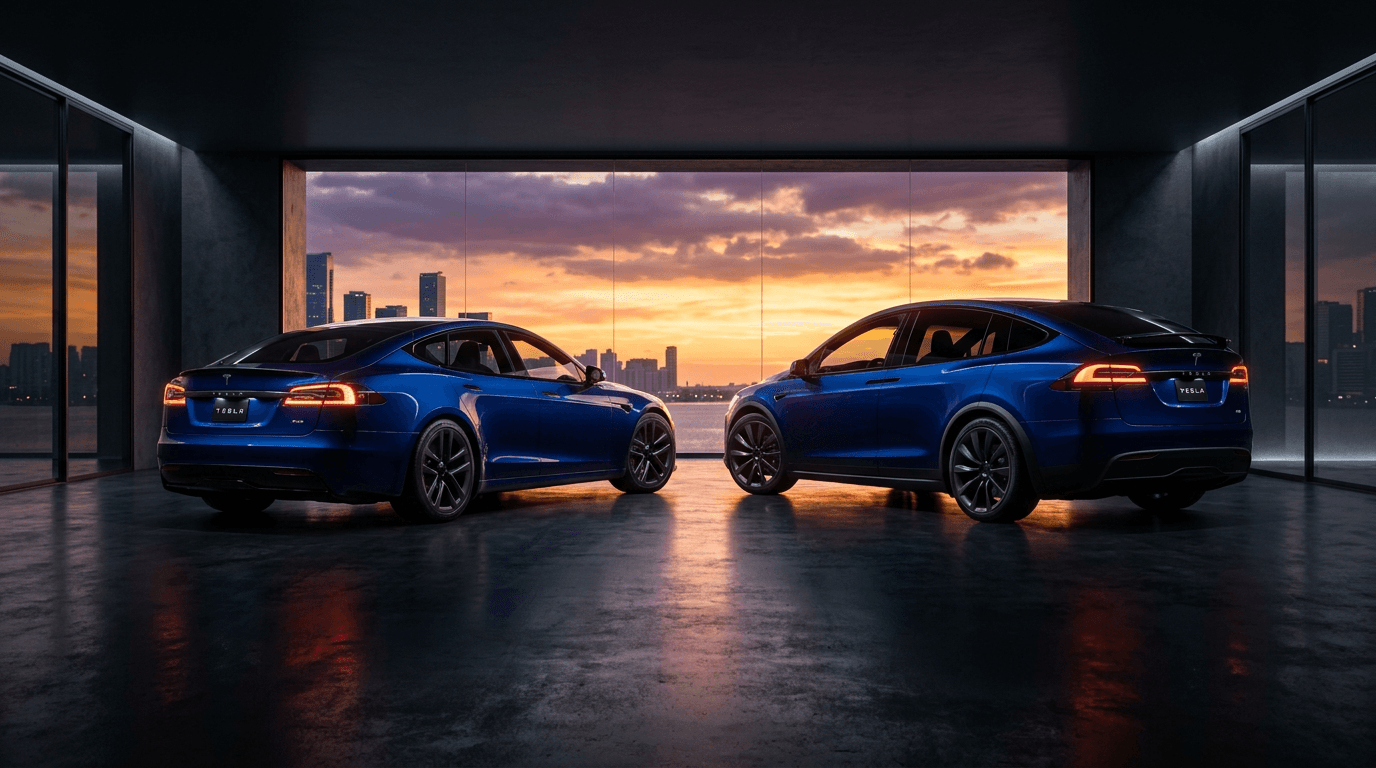
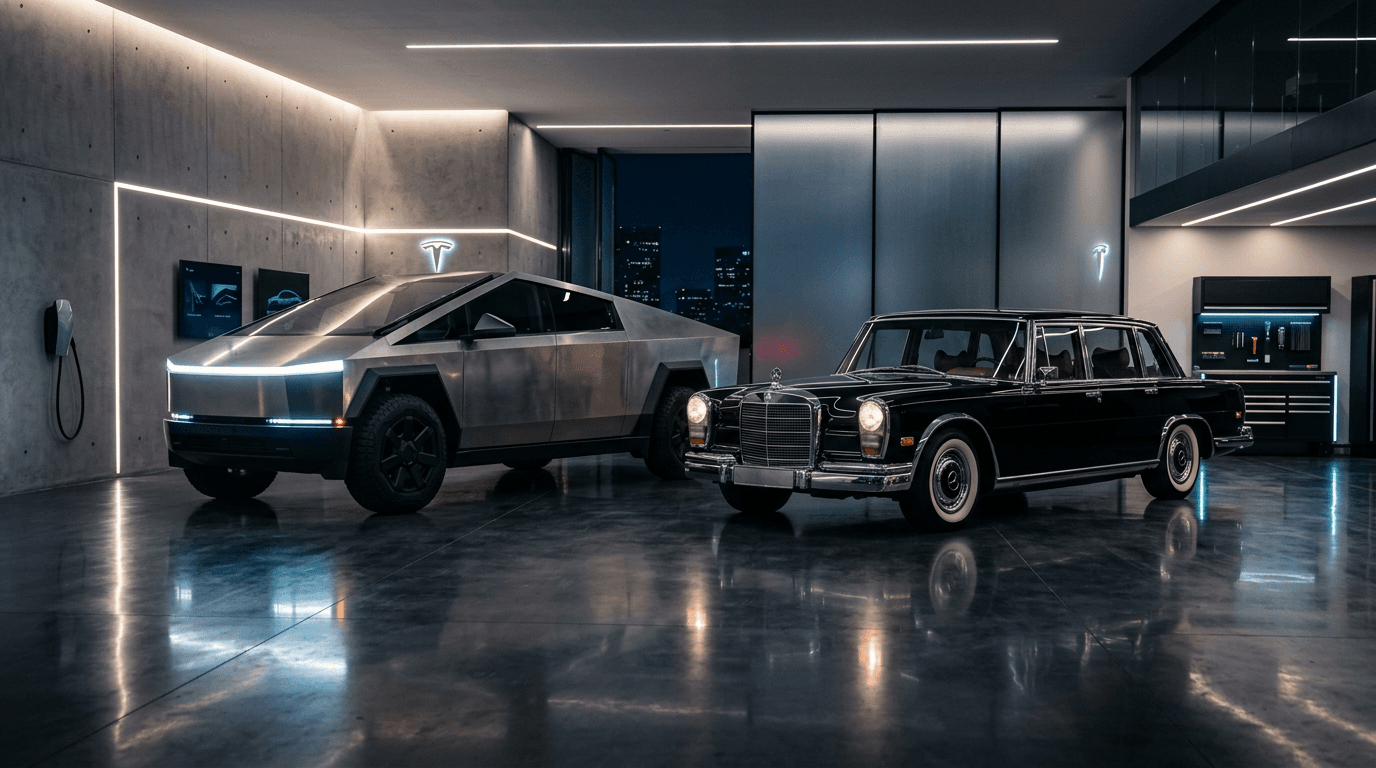
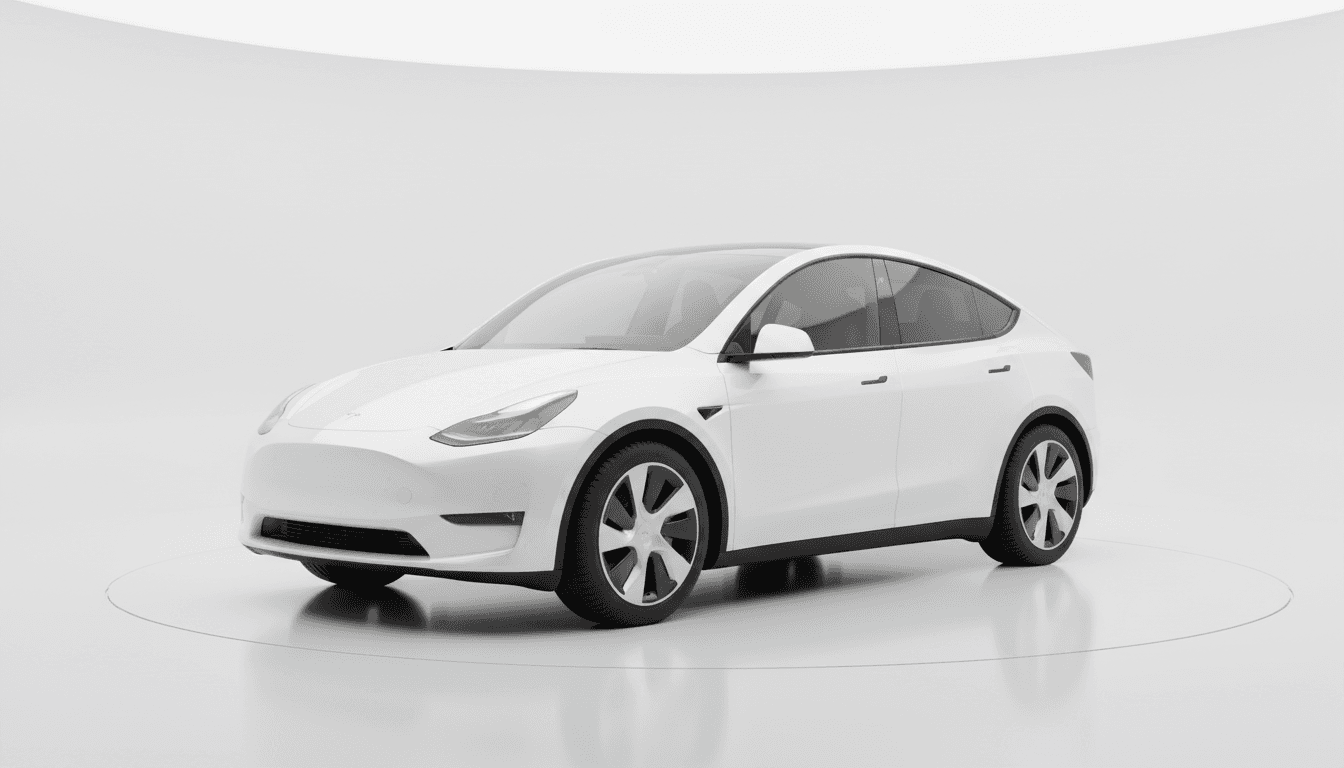
Elon Musk retires two legends: the end of Tesla Model S and Model X
It happened. The man who sent a cherry-red convertible into space and promised Mars colonization has now announced that Tesla Model S and Model X are being discontinued.
In Musk's world, nostalgia has no place. Musk does not trade in sentiment; he operates on a horizon that most people still see as abstract.
Elon Musk is closing the production line for his icons with a detachment that is both brilliant and unsettling. Instead of continuing to build flagship sedans and SUVs, he is doubling down on a new product – the Optimus humanoid robot.
Those cars were like the first reusable rockets – proof that "impossible" is mostly a matter of software and audacity. The Tesla Model S debuted in 2012, when the market still treated electric cars as a curiosity for a narrow group of enthusiasts.
Model S redefined the EV, offering luxury, range, and acceleration that defined a new premium class. Now these icons must make way for the company's new direction – the Optimus robot.
The production lines in Fremont, which until now built luxury sedans and SUVs with their signature doors, will be dedicated to producing humanoid robots.
Last call for the luxury Tesla Model S
Data table 1
| Car model |
Price in Poland (PLN) |
Range (WLTP) |
0–100 acceleration |
Architecture |
| Tesla Model S Plaid |
496,000 PLN |
634 – 649 km |
2.1 s |
400V |
| Porsche Taycan (2025) |
489,000 PLN |
503 – 590 km |
2.2 – 4.8 s |
800V |
| Lucid Air |
from around 450,000 PLN |
up to 883 km |
2.0 – 3.2 s |
900V+ |
| Audi e-tron GT |
599,000 PLN |
565 – 609 km |
3.3 – 4.1 s |
800V |
If you still dream of a new Model S or X from the showroom, you should hurry to the configurator.
Tesla officially ends deliveries in Q2 2026. That means the purchase window closes faster than many customers expect.
After that, only warehouse stock and the secondary market remain, where certified used prices already start from around 124,300 PLN for early production examples. Our catalogue offers a much wider selection.
The disappearance of these models will leave a gap in the premium segment. For years the Tesla Model S competed with the Porsche Taycan and the Mercedes EQS, often coming out ahead thanks to its simplicity and extensive charging network.
Dealerships still have final units available. The Tesla Model S Long Range AWD, offering up to 744 km of range, lists from 513,390 PLN. The Model X costs around 562,890 PLN for the six-seat version with ebony trim.
That is the price of technology that, while still impressive, is being overtaken by newer solutions. The 18650 battery architecture in earlier models has been replaced by more modern cells, but the structural foundation of both cars is over a decade old.
Performance and the Tesla Model S Plaid
Do not be misled by the spec sheet. The Tesla Model S Plaid is still a monster that catapults to 100 km/h in 2.1 seconds. The acceleration is so brutal that it reshapes your perception of speed.
Physics in this car feels like a suggestion rather than a rule. With 1020 HP from three electric motors featuring carbon-fiber-wrapped rotors, this sedan can still embarrass most Italian exotics.
Floor the accelerator in a Plaid and the experience is comparable to a catapult launch – instant, relentless acceleration.
At 300 km/h the Tesla Model S Plaid still has more to give, with a top speed of 322 km/h. The Model X Plaid is no slower – 2.6 seconds to 100 km/h in a family vehicle is a pure physical anomaly.
The Falcon Wing doors remain the Model X's signature feature. They are useless in low underground garages, where ultrasonic sensors can lock the mechanism, but they make the SUV stand out from the competition.
Unfortunately, this technology has its price not only at the showroom but also in service. The complexity of hinges and actuators in the Model X is a challenge for mechanics, and Tesla panel gaps remain a topic of debate.
Robot instead of steering wheel
The decision to end flagship production is a clear signal: Musk no longer wants to be primarily a car manufacturer. He wants to build a new product category, where autonomous machines play the central role.
The shift to Optimus production, which is meant to "increase US GDP," fits the company's long-term vision. The question is whether the market is ready for this change in priorities.
The Fremont factory will be fully reconfigured. The production line that built the Tesla Model S and X will be replaced by an assembly line for Optimus components.
It is the end of large structural underbody castings for sedans and the beginning of precise assembly of servo motors and vision sensors for the robot. Tesla is putting everything on one bet – autonomy and robotics.
Cars have become too low-margin for the company compared with the potential upside from software and robotics. The Tesla Model S and X had a pioneer soul, but the Model 3 and Model Y, which dominate Polish roads (Model 3 prices start from 167,600 PLN), deliver mass-market scale.
Collision with harsh market reality
The Tesla Model S and X stopped selling at levels that justified their continued production in a portfolio geared toward mass-market profit.
In 2023 they accounted for only a fraction of Tesla's total sales, overshadowed by the Model Y. Every new public charger serves thousands of cheaper models.
While the flagships slowly faded, premium customers who once queued for a Model S now look toward the electric Range Rover or the Lucid Air.
For technology enthusiasts this is sad news. The Tesla Model S introduced large center displays to cockpits and was the first to offer OTA (Over-The-Air) updates.
Those models taught us that a car key is a relic and that a phone in your pocket is enough to unlock and start the vehicle. Modern electric cars owe this model almost everything we now consider standard in the premium class.
Final verdict
The end of Tesla Model S production marks the end of an era – an era in which Tesla had to prove that an electric car could be desirable and absurdly fast.
Today the flagships bow out to make room for an army of robots. If you have the budget for a Plaid, buy one, store it in the garage, and do not sell it.
In ten years, when Optimus brews your coffee, the Tesla Model S will remind us of the days when drivers still enjoyed holding the steering wheel.
It was a symbol of rebellion against boredom, now being replaced by a cold spreadsheet calculation.
FAQ – Frequently asked questions
When exactly does Tesla Model S and Model X production end?
The final shutdown of the assembly line at the Fremont factory is scheduled for the end of Q1 2026. The last units ordered through the configurator will reach customers in June 2026. After that date production will be fully halted and the lines dismantled for adaptation to the Optimus project.
Will these models still be serviceable after 2026?
Yes, Tesla is legally required to keep spare parts available for at least 10 years after the end of production. Tesla service will continue to support these models, and OTA software updates will continue, though likely with less intensity in terms of new features.
Why is Tesla dropping such iconic flagship models?
The decision stems from the low profitability of low-volume production relative to the mass-market Model 3 and Y. In addition, the technical architecture of the Model S and X would require a costly upgrade to an 800V system and new 4680 cells, which at the current sales volume is no longer economically justified.
What is the real-world range of the Model S Plaid at highway speeds?
At a steady 140 km/h on a Polish motorway (at around 20°C), the real-world range of the Model S Plaid is approximately 420–450 km. In winter, at temperatures near 0°C, the distance drops to around 350–380 km. This is the effect of rising air resistance at high speeds, despite the impressive 0.208 drag coefficient.
Are the Falcon Wing doors on the Model X prone to failure?
In units produced after 2021 the mechanism has been significantly improved, but it remains complex. The most common issues involve obstacle sensors. The cost of replacing a single Falcon door actuator out of warranty is around 8,000 – 12,000 PLN.
Is it worth buying a used Tesla Model S from 2014–2016?
Buying early model years carries the risk of MCU failures and natural battery degradation. A key argument in favor is the free lifetime Supercharger charging (code SC01), which on these model years is permanently assigned to a specific vehicle.