Volkswagen, the same group that can squeeze the last euro out of a plastic gear knob in a Polo, has decided to play American poker.
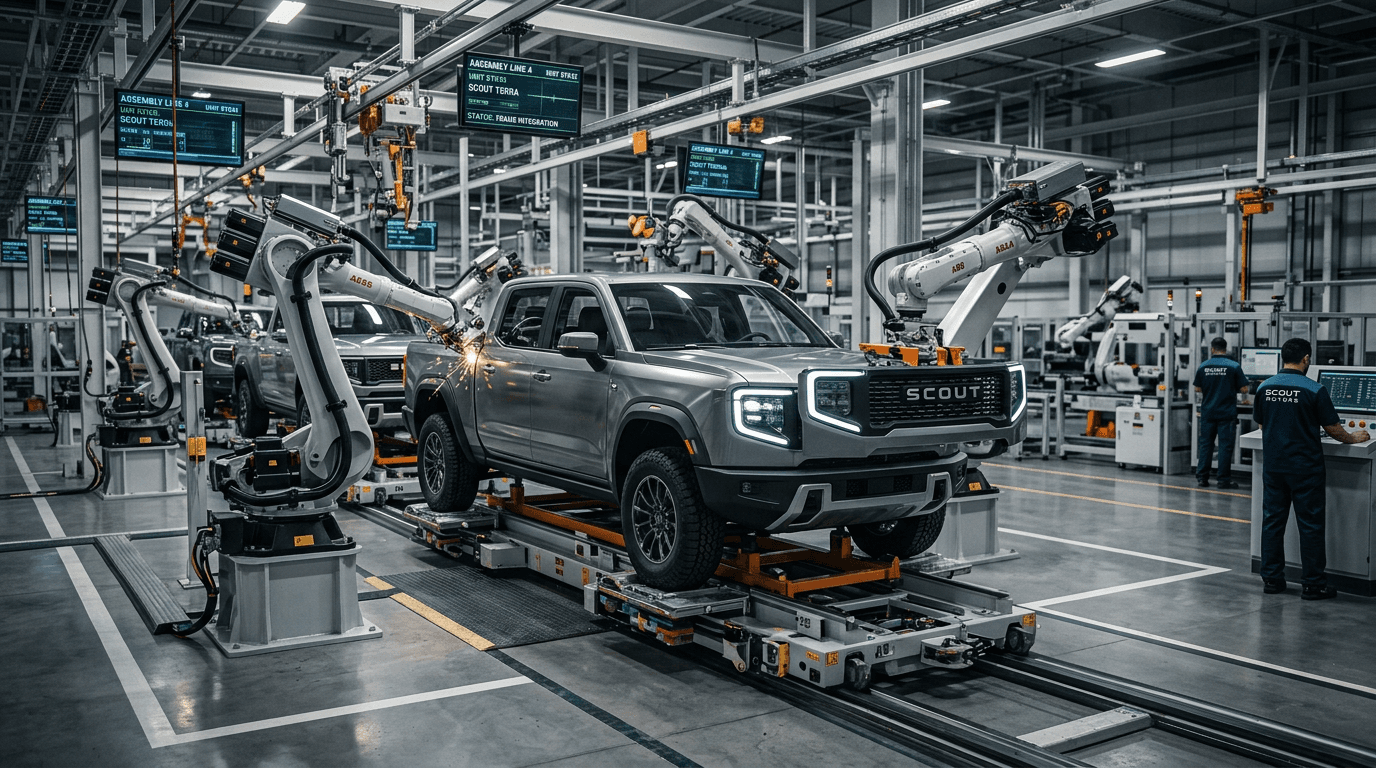
The stakes just went up. The Scout brand – with the Terra and Traveler models, a revived legend of tough guys in flannel shirts – is building its temple in South Carolina.
The problem is that the budget for this investment has just exploded with the bang of a bursting tire in a monster truck. By investing in next-generation electric cars, the group has collided with the brutal reality of costs.
Building a factory for three billion dollars to sell electric anvils to cowboys sounds like the plan of someone who overdid it on schnapps in an American bar. This is not business – it is a manifestation of pure madness.
Instead of the planned two billion dollars, three are now on the table. German leadership is nervously straightening its ties. A 50 percent cost overrun is not a "minor slip" in the world of corporate spreadsheets – it is open warfare with Excel, fought on enemy territory.
Automotive history knows many spectacular collapses caused by underestimating costs. Here, however, the stakes are higher – it is do or die for Volkswagen in the segment where the Scout Terra is meant to be a sales pillar.
The American dream and Scout Terra under construction
Why has building the factory in Blythewood suddenly become more expensive than sending an expedition to Mars? The official statement mentions expanding the supplier park and a desire to be "more efficient."
In reality, building infrastructure from scratch for a completely new brand is a logistical nightmare. The waterlogged terrain of South Carolina requires hundreds of thousands of tons of concrete and steel to bear the weight of production machinery.
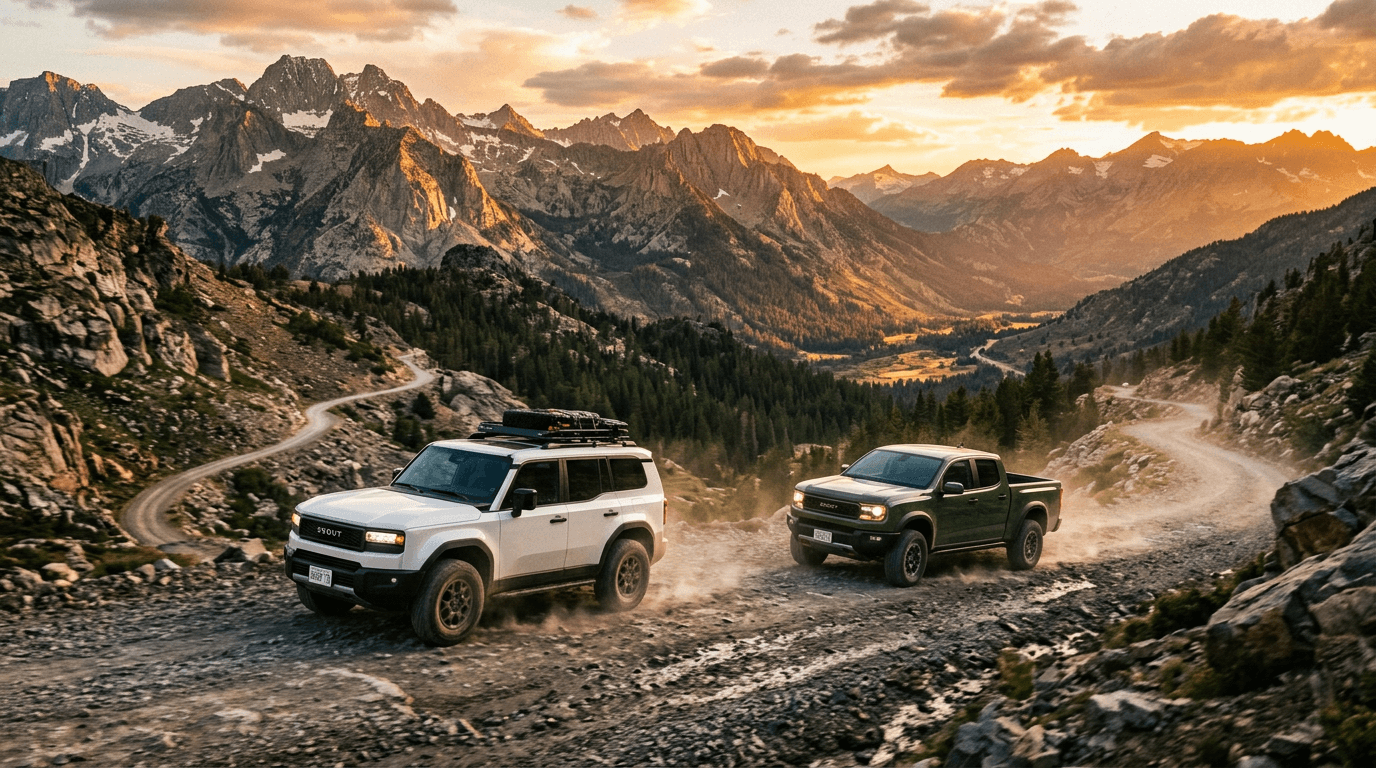
The Scout Terra is set to roll off the line as a mighty pickup and the nearly equally large Traveler SUV. These are not toys to be parked outside a supermarket, where the biggest challenge is a five-centimeter curb.
These are machines with the soul of an anvil and the aerodynamics of a residential block. Hardware like this demands manufacturing processes that look nothing like an assembly line for blenders or compact hatchbacks. Browsing our catalog, it is hard to find a similar construction.
There is turmoil in Wolfsburg, because the group is simultaneously announcing factory closures in Germany and drastic wage cuts. Informants report that every cent spent across the ocean is now being placed under a microscope by supervisory boards.
Volkswagen is battling an identity crisis in Europe while having to shower gold on the Scout Terra project. It is a leap into deep water in a market where electricity still fights for recognition against the smell of high-octane gasoline.
Scout Terra performance figures that take your head off
If we set the bills aside for a moment, the technical specifications of the Scout Terra make even the biggest skeptics of electromobility feel a thrill.
This is not another "urban crossover" with enough range to reach the nearest bakery. Here we are dealing with an 800V architecture that feeds the batteries at 350 kW. That is an absolute record in this class.
That means every fast charger along the route will prepare the car for the road in minutes. This system recovers energy at a pace that embarrasses Tesla and Rivian.
3.5 seconds to one hundred in something with the aerodynamics of a Gdańsk skyscraper is not a performance figure – it is a physical attack on the sense of balance. The Scout Terra does not accelerate; it simply bends spacetime.
What do we get in return for those billions of dollars? Torque of nearly 1350 Nm available from zero. This is not an ordinary unit of measure – it is a force that could move tectonic plates.
A sprint to one hundred in 3.5 seconds in a vehicle the size of a small apartment block? The Scout Terra does it in a brutal and absolutely fantastic way.
On top of that come 35-inch tires that will drive over anything that is not a vertical wall, plus the ability to climb gradients of 100 percent. This vehicle is meant to climb where other off-roaders call for help.
Harvester – the combustion ace up the sleeve
The most interesting element of this puzzle is not the pure electric drivetrain, which promises about 560 km of range. The real masterpiece is the Harvester system.
This is a combustion generator in an EREV (Extended Range Electric Vehicle) setup that does not drive the wheels directly but tops up the battery. Thanks to it, the range grows to over 800 km.
It is a brilliantly simple solution – you get an electric beast for daily driving that does not fear a missing charger in the middle of the Mojave Desert or in the deepest corners of the Bieszczady mountains.
The engineers designing the Scout Terra also went against the grain inside the cabin. Despite all the modern madness, inside you will find physical buttons and real knobs.
The designers understood what the accountants forgot: when you are driving over potholes, mud or sand, you do not want to aim a finger at a touchscreen the size of a television.
Market gamble and the great comeback
Managing the Scout brand is a balancing act between nostalgia and brutal futurism. Volkswagen had to buy back the rights to the name from Navistar, and that was only the first step in this costly operation.
Now they have to convince Americans that German technology wrapped in an American tank like the Scout Terra is a better choice than the Ford F-150 Lightning or the Chevrolet Silverado EV.
Competition is fierce, and customers in this segment do not forgive mistakes. If these electric cars debut with software glitches, the brand will die faster than it was reborn.
The Scout Terra and Traveler are scheduled to enter series production in 2027. Their price is set to start at around 60 thousand US dollars, which in Poland should oscillate around 250,000 – 300,000 PLN.
Scout Terra, or the future in the mud
Will Volkswagen drown in the costs of this factory? Possibly. The financial risk is gigantic, especially in an era of global slowdown in the electric car market.
But if the Scout Terra model hits the road with the same force with which its budget blew through the ceiling, we will be looking at a new king of the wilderness. These are cars for people who want to save the planet, but on their own terms.
They must be able to cross a river one meter deep and tow a 4.5-ton trailer. The Germans have discovered that building a legend costs far more than producing another million white Golfs.
FAQ – Frequently Asked Questions
What is the exact ground clearance and off-road capability of the new Scouts?
The suspension system in the Scout Terra and Traveler models delivers ground clearance exceeding 30 centimeters. The vehicles are equipped with mechanical front and rear differential locks and a disconnectable front stabilizer bar.
How does the Harvester (EREV) system work and what engine does it use?
The Harvester system is a rarely seen range extender. It is a small combustion engine that acts solely as a generator and does not drive the wheels directly. It increases total range to nearly 800 kilometers.
What towing capability does the Scout Terra offer?
The Scout Terra pickup has been designed for heavy work. Official specifications provide for a towing capacity of up to 4,535 kilograms.
Does Scout use an architecture that supports fast charging?
Yes, both models are built on an 800-volt platform. The cars support DC fast charging at up to 350 kW, which allows topping up the battery from 10% to 80% in under 20 minutes.
How does the Traveler differ from the Terra?
The Traveler is a classic SUV with a closed body and a spare wheel mounted on the tailgate. The Scout Terra is a pickup with an open cargo bed 5.5 feet long.
Will the Scout Terra be available in Europe?
Currently, the priority is the North American market. Obstacles in Europe may include regulations on gross vehicle weight and the massive external dimensions of the Scout Terra.