It happened. Elon Musk, the man who sent a convertible into space and believes tunnels under Los Angeles will save the world, has made a decision that makes about as much sense as mounting a spoiler on a lawn mower.
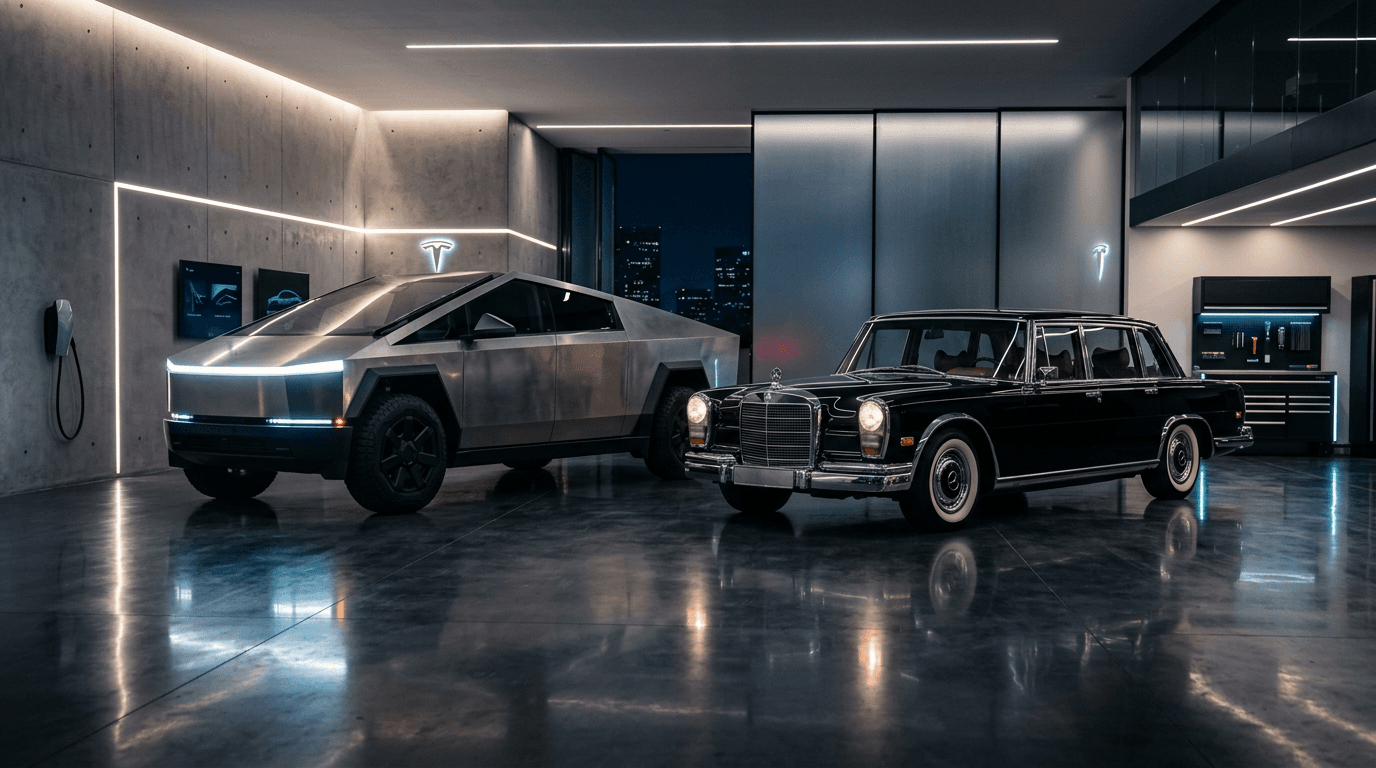
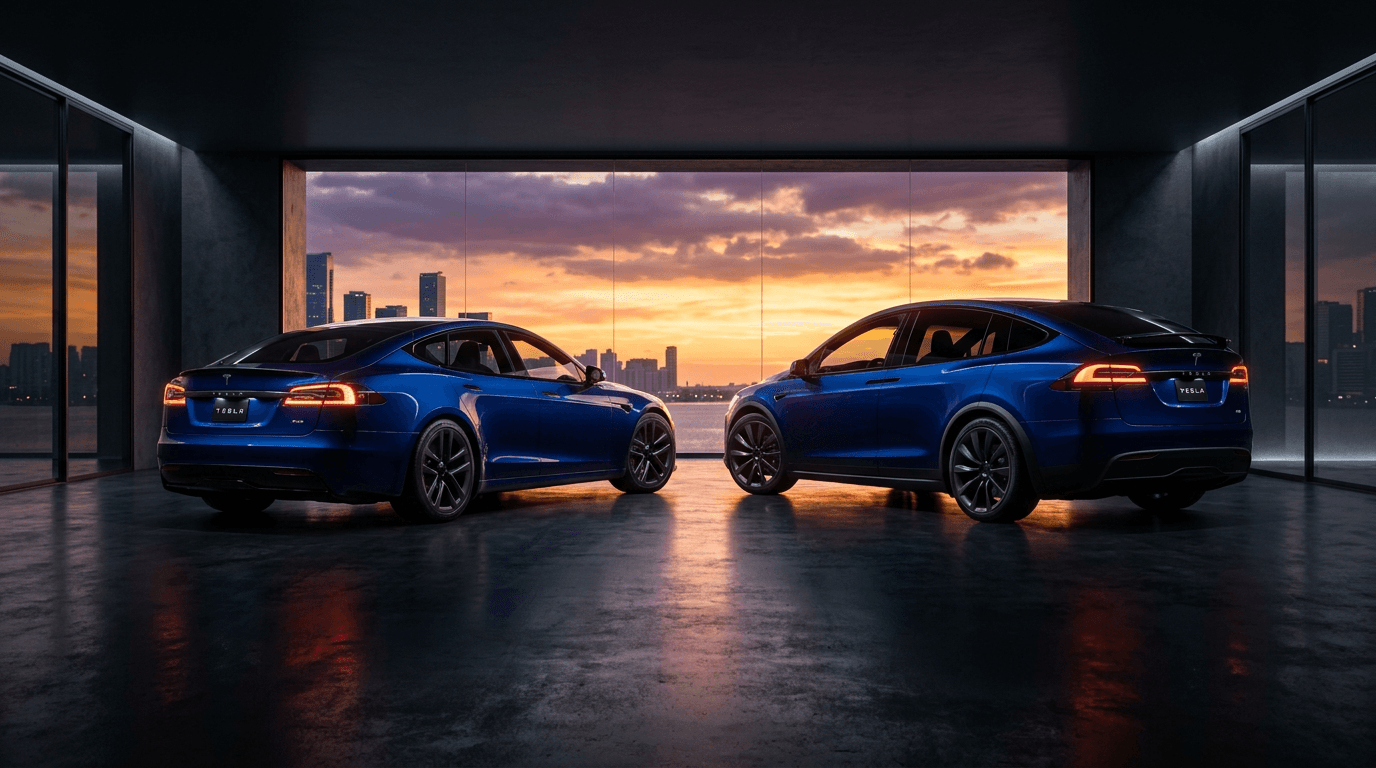
March 13, 2026 will go down in history as the day Tesla announced an "honorable discharge" for the Model S and Model X. In their place, the Tesla Cybertruck becomes the priority – that rust-free triangle on wheels that looks as if it were drawn by a five-year-old fascinated by Minecraft and brutalism.
This is not the ordinary shift you find in a typical catalog of premium brands. It is a tectonic shift suggesting that Tesla is ceasing to be a maker of dream cars and is becoming a factory of futuristic appliances for technology fanatics.
Tossing the Model S and Model X into the trash in favor of this steel slab is like closing a five-star restaurant to serve only cube food for astronauts. Sure, it's modern, but no one in their right mind wants to live like that every day.
Gary Black, an analyst who sees numbers where others see only tailpipe smoke (which, of course, there is none of here), says it bluntly: this is a colossal mistake. And he is right.
Abandoning the flagships in favor of the steel monster that is the Tesla Cybertruck is like tossing out a Savile Row suit to replace it with a medieval breastplate from a scrapyard. The Model S was the pioneer that proved an electric car doesn't have to look like a golf cart for a retired accountant.
The Model X, for its part, despite all its over-engineered nature, was a showcase of engineering pride at its finest. Now both of these pillars are being torn down to make room for something that looks like a prop from a very low-budget movie set.
A steroid-fueled concrete cow: the Tesla Cybertruck
Let's take a closer look at this "futuristic" pickup. The Tesla Cybertruck in its Cyberbeast version delivers 845 horsepower and sprints from 0 to 100 km/h in 2.7 seconds.
That is faster than gossip in a small town and enough to leave passengers' breakfast on the windshield. But let's be honest – who needs a pickup that weighs as much as a small planet (over 3 tons of live weight)?
It carries a 123 kWh battery and a real-world range that melts faster than ice cream in the sun the moment you try to tow those promised 5 tons. The engineering of this vehicle is pure madness: a 48-volt electrical system that is supposed to revolutionize the industry, and a steer-by-wire system.
This system eliminates the mechanical connection between the steering wheel and the wheels. It sounds great in a brochure, but in practice it means you are driving a huge steel wedge, relying entirely on processors and electrical impulses.
In Poland, the Tesla Cybertruck is still an exotic sight for people with a very specific sense of aesthetics and an excess of cash. Due to its gross vehicle weight exceeding 3.5 tons in many configurations, the vehicle would require a category C driving license in Europe.
Can you imagine that? You buy a lifestyle pickup and you have to take a truck-driver course just to legally grab a roll in it. Tesla's official website stays silent about orders on the Old Continent, so we are left with imports or hunting on auction portals.
And there? Prices stretch from 144,000 PLN for some post-accident dreams, up to 724,470 PLN for examples that actually exist and don't require straightening the frame in a barn.
For that amount you can buy a small apartment in Radom or, more sensibly, two decent electric cars that actually fit in a standard garage.
Death of the classics in the name of robots
Meanwhile, the Model S and Model X head into retirement to make room for… Optimus robots. Yes, you read that right. Musk has decided that the production lines in Fremont are too valuable for the cars that built the brand's power.
So now mechanical butlers will be built there. It is a slap in the face to loyal customers. The Model S, even in 2026, with a range of up to 744 km and a starting price of 513,390 PLN, remains the benchmark of the electric limousine.
It has soul, it has style, and it doesn't cut your hands on the bodywork edges every time you wash it. Its silhouette ages with dignity, while the Tesla Cybertruck looks outdated the moment it leaves the factory.
The Model X, for its part, despite its absurd "Falcon Wings" doors – which in Polish underground garages are as useful as a fork for soup – sold three times better than the Tesla Cybertruck in the early phase of production.
People want luxury, isolation from the outside world, and comfort, not to take part in a social experiment titled "how long does stainless steel last in contact with road salt on the S7 route."
Swapping these icons for humanoid robots is a move that could cost Tesla its premium customers to rivals like the Porsche Taycan or Lucid Air. Yet Elon does not seem to care about traditional motoring.
For him, a car is just a terminal for software, and since Optimus shares the same "brain," why bother with four wheels and luxury leather inside?
Autonomy and engineering challenges
Tesla's argument is simple: we are focusing on autonomy. The Model 3, Model Y, and the upcoming Cybercab are supposed to be the future of AI-based transport.
But the Tesla Cybertruck, with its dimensions, fits the ride-sharing idea like an elephant in a china shop. Gary Black rightly asks: why not update the Model S and Model X to full autonomy?
The Cybertruck tries to be a Swiss army knife, but it is so big it doesn't fit in a pocket, and its blades are so dull they won't cut even a Polish kaiser roll without destroying the mechanism.
Those are cars in which you would actually want to fall asleep during a trip from Warsaw to Berlin. Inside the Tesla Cybertruck, with its raw, industrial interior, you feel more like an excavator operator in a war zone than a passenger in a luxury capsule.
Looking at the Polish market, where the Model 3 can already be had for 167,600 PLN, it is clear that Tesla is becoming a mass-market brand. But a mass-market brand needs its "halo car" – a status symbol that defines the company's ambitions.
The Tesla Cybertruck is not that symbol. It is an internet meme that somehow got license plates. While the competition from Germany and China polishes the details, Tesla offers us a return to brutalism.
The problem is that while the concrete blocks of the 1970s had their charm, a steel slab on wheels may quickly become a symbol of an era in which technology stopped serving people and started serving the ego of a single visionary.
Giving up the flagships is also a blow to the image of a technological leader – the tri-motor Model S Plaid was a technical masterpiece that humiliated Ferraris on the straight.
The Tesla Cybertruck, while fast, is merely a curiosity that, at highway speeds, offers aerodynamic resistance worthy of a Gdansk wardrobe.
Verdict
Killing the Model S and Model X in favor of the Tesla Cybertruck is like replacing caviar with a bouillon cube because it "keeps better." Elon Musk is betting on brute force and robotics, forgetting that cars are also bought with the heart.
Tesla is risking the loss of its identity. If the company wants to be seen as a maker of future vehicles, it cannot abandon the segment that defined that future.
The Tesla Cybertruck may attract stares on the streets of Warsaw or Krakow, but the Model S attracted the money of people who know what class and discreet luxury are.
I fear that when the dust from this revolution settles, Tesla will wake up in a world where every home charger powers only boring soap bars and one giant steel mistake that doesn't fit in a Biedronka parking lot.
Musk's vision has gone one step too far this time, crossing the line between innovation and sheer absurdity. Even so, brand fans still believe that the Tesla Cybertruck will define a new era in the electric cars category for a broad audience.
FAQ – Frequently asked questions
Is the Tesla Cybertruck approved for road use in Poland?
Currently, the Tesla Cybertruck does not have official European homologation, which means it cannot be bought at a Polish Tesla showroom. Registration of individual units takes place through an individual road admission procedure, which requires lighting modifications. Additionally, due to a gross vehicle weight exceeding 3.5 tons in the Cyberbeast version, a category C driving license is required.
Why are the Model S and Model X being discontinued?
The decision stems from cost optimization and a shift in brand strategy, in which the Tesla Cybertruck has become the priority. Tesla plans to use the Fremont production lines for serial production of the Optimus robot and a new generation of smaller autonomous vehicles (Cybercab). The Model S and Model X currently generate smaller margins compared with the mass-market Model 3 and Model Y.
What is the real-world range of the Tesla Cybertruck while towing?
The technical data indicate a range of up to 547 km, but when towing a 5-ton trailer, the Tesla Cybertruck's range drops dramatically. Real-world road tests show that in such conditions the vehicle covers only 140-180 km on a single charge. This is due to the enormous aerodynamic drag and the weight of the combination.
What is the steer-by-wire system used in the Cybertruck?
Steer-by-wire is a system in which the steering wheel is not physically connected to the wheels via a steering column. In the Tesla Cybertruck, steering inputs are recorded by sensors and transmitted by cable to electric motors at the axles. This allows for a variable ratio – when parking, a small turn of the wheel is enough to fully steer the wheels.
Does the Cybertruck's stainless steel body actually rust?
The 30X steel used in the Tesla Cybertruck is highly corrosion-resistant, but it is not indestructible. The "rusty film" is often metallic contaminants from the environment that settle on the surface. However, without a paint layer, the metal is exposed to strong chemicals and road salt, which can lead to permanent stains.
What are the costs of servicing a Tesla in Poland after the warranty ends?
Outside the official network, servicing Tesla electric cars becomes cheaper thanks to independent workshops. A standard inspection costs around 800-1,200 PLN. Every home charger should be checked regularly to ensure battery safety, with potential module repair costs in the range of 20,000 – 40,000 PLN.