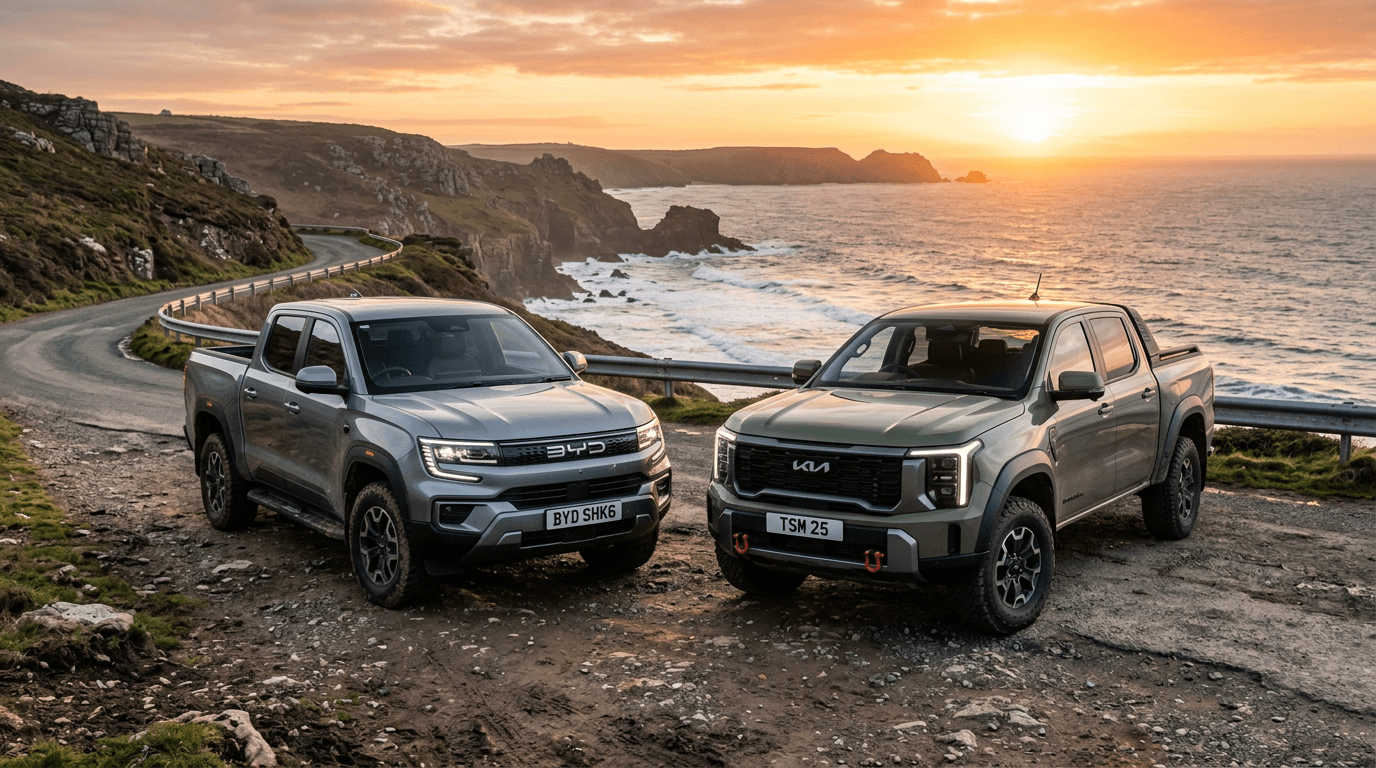
Let's start with Kia, because it's a fascinating case from the perspective of transport psychology. The Tasman is a car that draws a pitying smile from aesthetes and loud applause from those who believe a pickup should be hard as stale bread.
The design is aggressive to the point of pain, with vertical lamps and wheel arches that look stuck on at the last minute. Yet beneath that controversial bodywork lies a classic of the genre, even though it is precisely the BYD Shark 6 that today offers what modern technology fans are really looking for.
Under Kia's bonnet rattles a proven, 2.2-litre CRDi turbodiesel generating 210 hp and 441 Nm of torque. This engine will take you to the end of the world and a bit further, pulling 3.5 tonnes of shame, a yacht, or a cement mixer behind it.
4WD with a reduction gear is a promise that you won't get stuck in the first puddle outside the supermarket. If, however, you plan longer city use, a wall-mounted charger from the competition may tempt you more than you think.
The problem is that Kia woke up a bit too late. While they polish the start-stop systems on a diesel, the competition is driving silently towards the horizon.
The Koreans are indeed announcing a plug-in hybrid (PHEV), and even a fully electric version with a battery capacity of over 100 kWh and a range of over 400 km. However, that is a song of the future, vaguely planned for late 2027.
Currently, the Tasman costs around 210,000 PLN in conversion - a bold price for a truck with leaf springs at the rear. Leaf springs are great for hauling a tonne of bricks, but tragic if your only cargo is a gym bag and an oat-milk latte. The BYD Shark 6 proves you can do it differently.
Drivetrain advantages of the BYD Shark 6: Acceleration that rips your head off
And then it rolls in. The BYD Shark 6. The Chinese, recently associated with cheap mass-market cars, now dictate the rules of the game. They didn't bother with half-measures or repackaging an old diesel.
They dropped into the pickup their proprietary DMO (Dual Mode Off-road) system, a plug-in hybrid with 436 hp of system power. This truck catapults to 100 km/h in 5.7 seconds. A two-tonne monster with a bed accelerates faster than most hot hatches from a few years ago.
Before the Kia driver manages to slot third gear in the automatic, the BYD Shark 6 is already in another county, ordering takeaway through its huge touchscreen.
The BYD Shark 6 offers about 100 km of pure electric range thanks to Blade Battery technology. It is an ideal tool for someone who wants to move silently through the city during the week and ram through mud on weekends.
In Poland, this model targets a price oscillating around 180,000 - 190,000 PLN. That is a punch straight to the solar plexus of traditional brands. Browsing our vehicle catalogue, it's easy to see how strongly this model outpaces the classic competition.
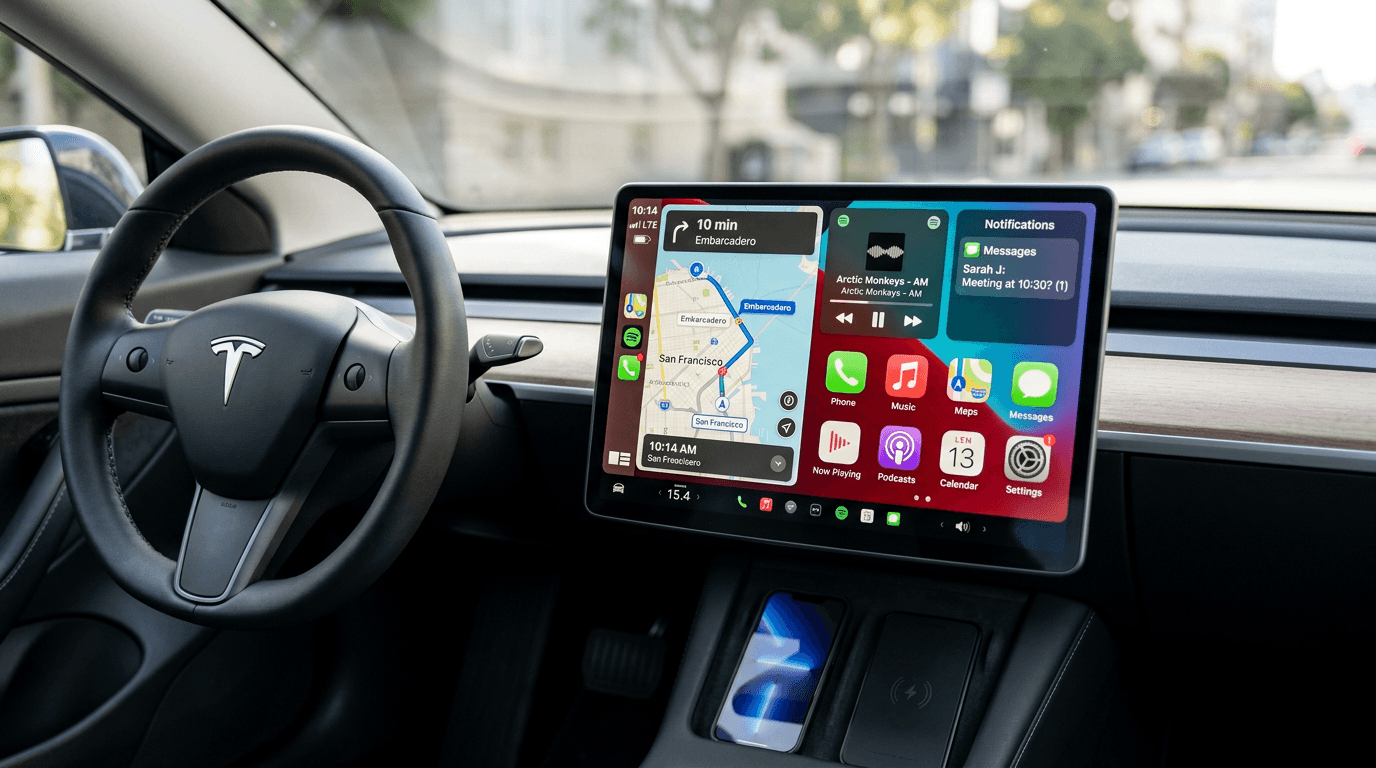
The interior of the Chinese pickup is a different galaxy. It features a 15.6-inch rotating screen and six V2L (Vehicle-to-Load) electrical outlets. You can plug in a cement mixer, a coffee machine, and a drill at the same time.
This is not just a means of transport - it is a powerbank on wheels with a huge bed and the appearance of a predator. The BYD Shark 6 completely redefines the notion of versatility in this segment.
Performance and range: Brutal math vs the engineering of emotions
Comparing these two vehicles is a duel between a retired heavyweight boxer and a young technology champion. The Kia Tasman offers brutal towing muscle and a 1,000-kilometre range on a single tank of fuel.
However, next to the BYD Shark 6, the Tasman seems sluggish. The Chinese competitor delivers 650 Nm of torque almost instantly thanks to two electric motors on both axles.
The Shark 6 has so much torque that it could probably rip the Asian continent from its foundations, while Kia is still wondering whether its turbo has woken up from its nap.
All-wheel drive here works with scalpel precision, distributing power in milliseconds, while Kia still relies on classic mechanical locks.
On the other hand, the BYD Shark 6 has a hidden flaw in its genes. When it runs out of electricity, the 1.5-litre combustion engine has to work hard to move 2.7 tonnes of kerb weight and top up the batteries.
Then the hybrid charm fades a bit, and fuel consumption rises. On the motorway, at speeds above 120 km/h, Kia's diesel will start making up ground. Yet for the modern customer, the technology offered by the BYD Shark 6 is simply unmatched.
Still, the Kia Tasman has an ace up its sleeve: a rugged frame construction. The Tasman is not afraid of being thrashed on rough tracks under full load, while the BYD Shark 6 with independent suspension may prove too delicate for heavy work in a mine.
Verdict: Is the BYD Shark 6 worth choosing?
If you need a workhorse that will survive a nuclear blast and the winter of the century, wait for the Kia Tasman. It is solid, predictable, and comes with a great warranty. It is a truck for those who build bridges or work deep in the forest.
Let's be honest, though - most buyers today don't buy a pickup to haul sand. They buy it to feel like the king of the road in a big vehicle that isn't afraid of kerbs.
In that category, the BYD Shark 6 wins by knockout. It is faster, more modern, offers a luxurious interior, and is simply cheaper. Kia needs to quickly "plug in," or its model will end up as an exhibit in a museum.
By choosing the BYD Shark 6, you step into a multimedia command centre on wheels. Low running costs in the city and a home charger will make driving it almost free.
This is a proposition for those who prefer to be ahead of trends rather than chasing them with a jerrycan in hand. Looking at our catalogue, it is easy to spot the power of the changes this Chinese giant is bringing.
Ultimately, the BYD Shark 6 is a vehicle of the future, while the Kia Tasman still has one foot stuck in the previous era of motoring.
FAQ - Frequently asked questions
What is the real towing capacity of the BYD Shark 6?
The BYD Shark 6 offers a towing capacity of 2,500 kg. This is lower than the Kia Tasman's 3,500 kg, which results from the characteristics of the PHEV hybrid system and the use of independent rear suspension.
Will the 2.2 CRDi engine in the Kia Tasman cope with the new emissions standards?
Yes, the 2.2 CRDi unit has been modernised, receiving a Selective Catalytic Reduction (SCR) system with dual AdBlue injection and a more efficient particulate filter.
What is BYD's Blade Battery technology?
Blade Battery is BYD's lithium iron phosphate (LFP) battery. Its long-cell construction provides a higher level of safety and longer lifespan than classic NMC batteries.
Will the Kia Tasman be offered with a manual gearbox?
In selected markets, Kia plans to introduce a 6-speed manual gearbox. However, in Europe, the standard will be an 8-speed automatic, optimised for driver assistance systems.
What are the bed dimensions of the BYD Shark 6?
The BYD Shark 6 bed is approximately 1,520 mm long and 1,500 mm wide. The Kia Tasman offers a similar space of 1,512 mm in length and innovative integrated storage compartments in the wheel arches.
Does the BYD Shark 6 have a reduction gear for off-road driving?
The Shark 6 has no mechanical reduction gear. It uses intelligent torque management of the electric motors, which simulates off-road gearing, delivering powerful output at low speeds.