American giant on its knees or a brilliant chess player?
The world has turned upside down, and the planet's axis of rotation has dangerously shifted close to Shanghai. A decade ago, Ford was the synonym for a solid people's car. Foci and Mondeos ruled the motorways, while Chinese cars resembled the cheapest razors in terms of build quality.
Today the situation looks entirely different. The Ford board spends more time in the air over the Pacific than professional pilots. The Valencia factory – once a proud bastion of European industry – may soon become a fief of the powerful Geely conglomerate.
This is not evolution, it is a humiliating capitulation. Ford trades the keys to its factories for instruction manuals written in Chinese, because its own ideas for the future lasted only until the first charging station.
This is not a routine corporate partnership looking to save money on tyres. It is an act of desperate courage or, more likely, a white flag raised by Detroit in the very heart of the Old Continent.
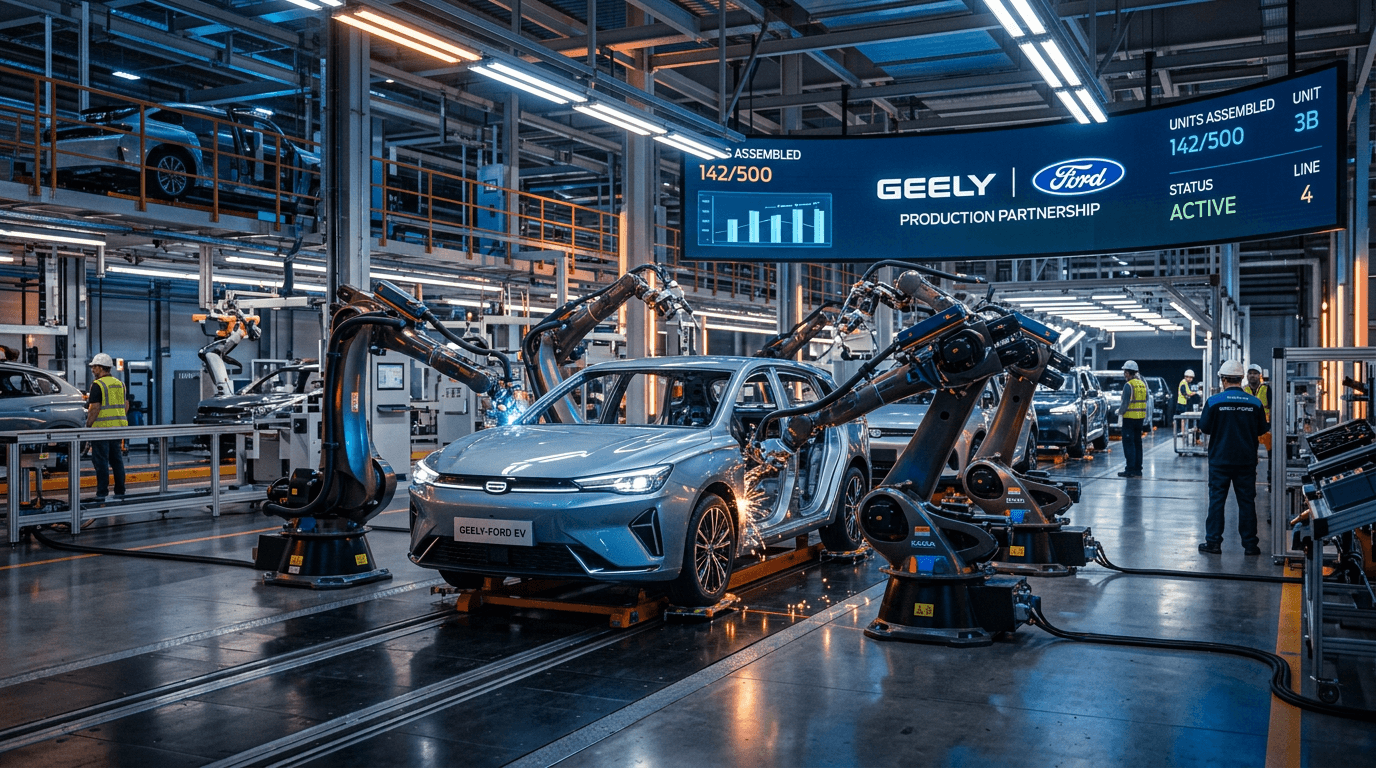
Ford, struggling with gigantic production costs, decided to let the fox into the henhouse. Geely will take over capacity in the Spanish and German plants to churn out its electric cars and cleverly bypass EU duties.
Brussels imposes nearly 19% tax on the Chinese, trying to save the local market. However, if a car rolls off the line in Valencia, it becomes as European as paella and siesta. It is a geopolitical masterstroke in which the Americans are extras.
The Chinese brain – how Ford adapts the technology
Data table 1
| Model (Segment C) |
Powertrain / Solutions |
Range (km) |
Chassis features |
Price from (PLN) |
| Ford Focus Kombi |
1.0 EcoBoost Hybrid |
980 km |
Agile handling |
126,300 PLN |
| Toyota Corolla TS |
1.8 Hybrid (5th gen) |
970 km |
Older-generation infotainment |
129,000 PLN |
| Volkswagen Golf |
1.5 eTSI Hybrid |
940 km |
Multi-link (above 150 HP) |
130,990 PLN |
| Skoda Octavia |
1.5 TSI mHEV |
960 km |
Torsion beam (up to 150 HP) |
125,000 PLN |
What does Ford get in return for handing over the keys to its factories? Something that hurts a brand with an age-old tradition the most: admitting defeat. Executives openly say that in the field of electric vehicles (EVs), the West has completely lost contact with the Asian peloton.
We are still debating winter range while they are building computers on wheels. Ford is now buying the brain without ceremony – the G-ASD technology from Geely's Afari company.
This system, based on the WAM (World Action Model), is not another annoying lane-keeping assistant. It is an intelligent network that can think and learn about its surroundings in real time.
While European systems panic at the sight of a puddle or faded lane markings, the Chinese technology glides the car through complex car parks and roundabouts. G-ASD manages everything: from energy recuperation to the screens, which today matter more than the suspension.
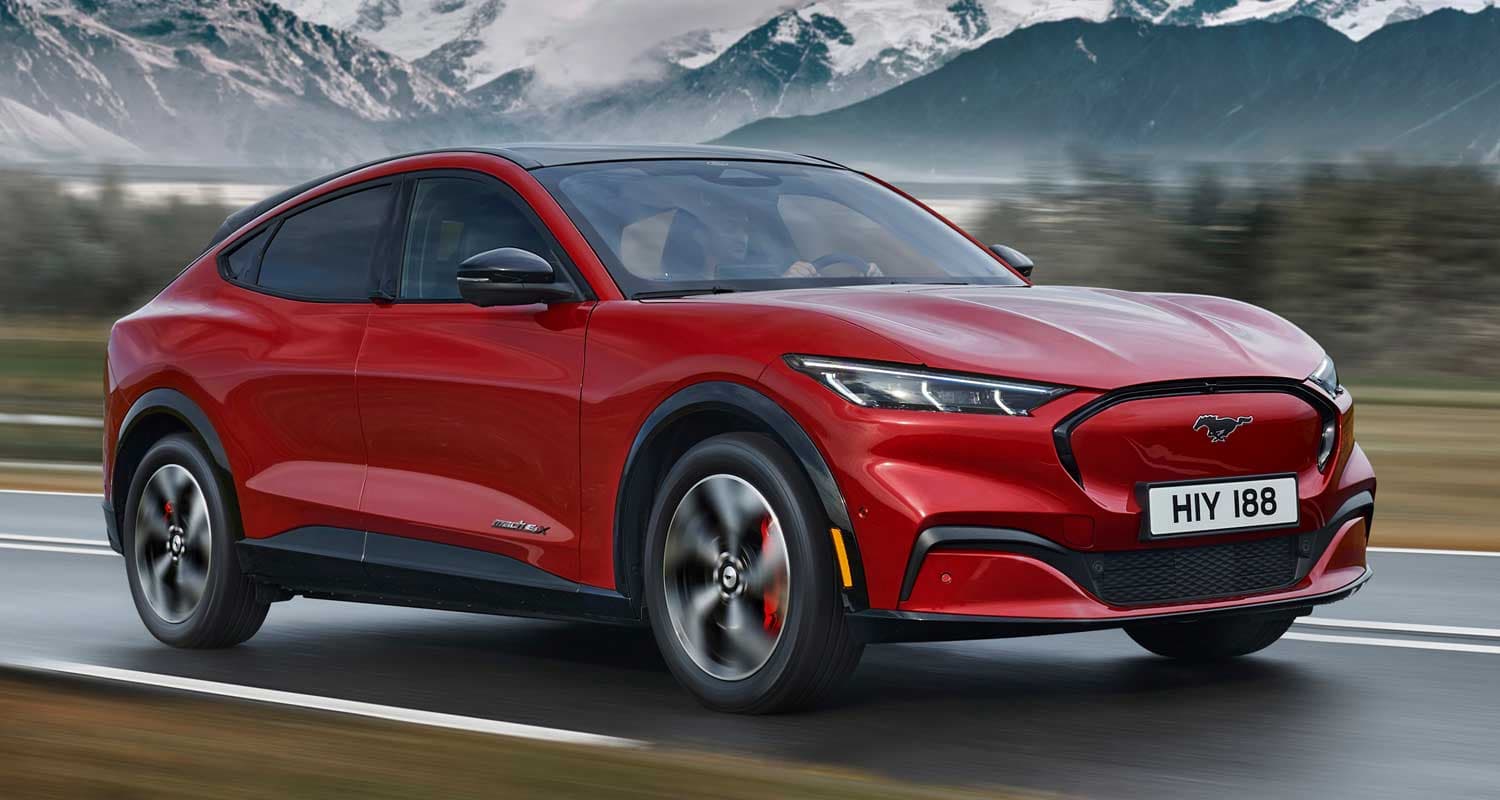
A Ford Mustang Mach-E with a Chinese operating system? It sounds like an American steak drizzled with soy sauce, but it is the only way for the product to survive in a market dominated by gadgets. Ford prefers to sell its hybrid soul rather than end up with an empty wallet.
The right charger and modern software are today the only key to success. Without them, traditional manufacturers can only switch off the lights in their showrooms.
An invasion priced in Polish zloty – what does it cost?
On our home turf, Geely no longer politely knocks on the door – it has kicked it in together with the hinges. The EX5 model now proudly sits in showrooms. For 169,900 PLN it offers 217 HP and a real urban range of up to 450 kilometres.
It is an electric SUV next to which European competition from Ford or Volkswagen looks like a museum exhibit. Interior finish, 4K screens and panel gaps put Wolfsburg engineers to shame.
For combustion-engine fans, the Starray model has been prepared. For 149,900 PLN you get a 262 HP hybrid. It is a brutal game of numbers in which European engineering is driven into a corner.
A Geely EX2 at the price of an exercise bike? It is not a commercial offer; it is a grenade tossed into Toyota and Skoda showrooms. If this car arrives at such a low price, European dealers will at best be able to sell hot dogs.
The real shock, however, will come with the EX2 model. In China, this car costs the equivalent of a laughable 36,000 zlotys. Even after adding margins and taxes, it will be a punch straight to the solar plexus for the Yaris or Fabia.
We are talking about a full-fledged electric car at the price of a used clunker. People no longer buy the legend of a brand; they buy a low instalment and peace of mind. Even a loyal Ford fan starts calculating whether such a switch makes sense.
Performance and range without illusions
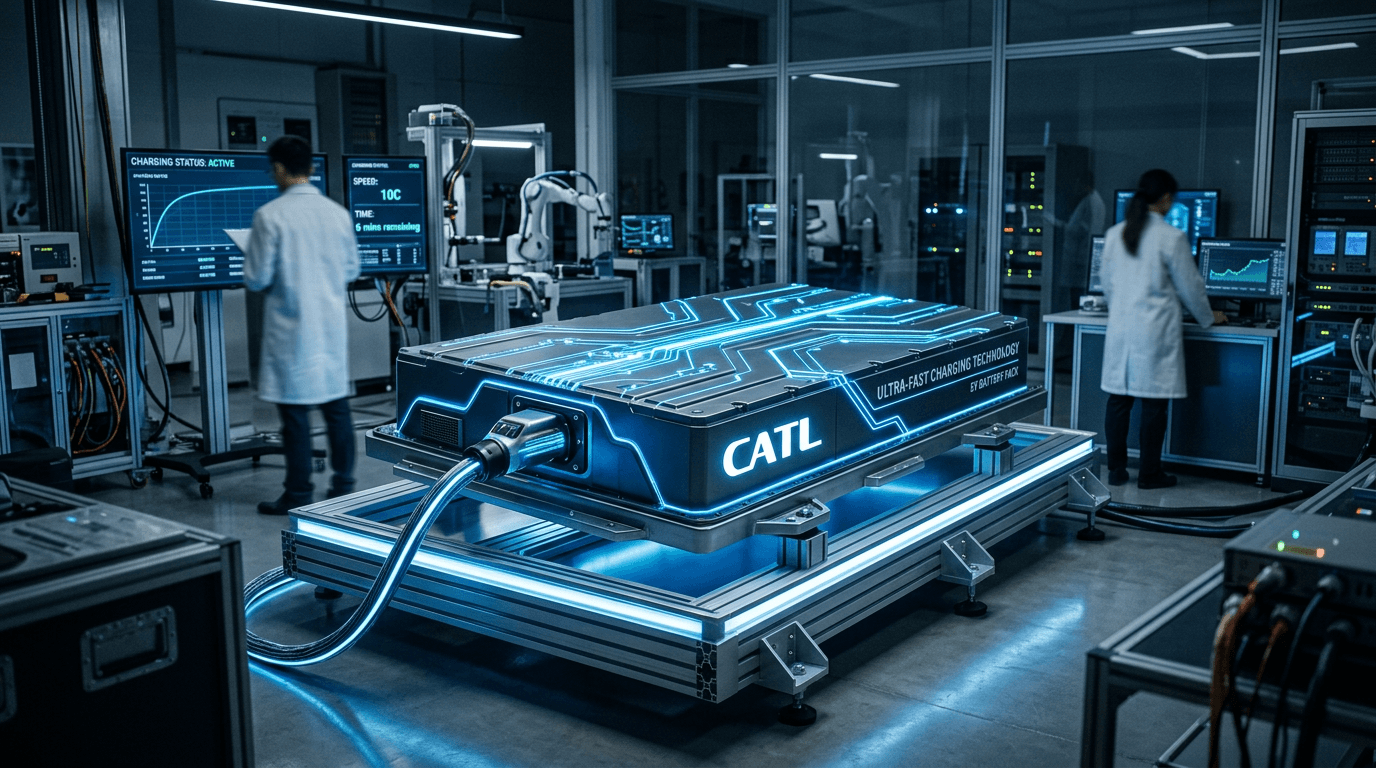
The Geely EX5's parameters are down-to-earth practical. An LFP battery with a capacity of more than 60 kWh is as durable as an old blacksmith's hammer. The manufacturer promises 3,500 full charging cycles without major losses.
This means that motorway barriers will rust away before this battery breathes its last. Any home charger will fill it stress-free, preparing the car for another week of driving.
A 0-100 km/h sprint in 7 seconds in a family SUV is enough to embarrass most diesel estates on national roads. Geely does not promise sporty thrills – it delivers a tool that simply works and fills the catalogue of future vehicles.
Ford is counting on this borrowed technology to keep it afloat. It is a cruel irony: the company that motorised the world a hundred years ago now has to learn to walk, holding hands with engineers from China.
This is no longer a partnership – it is a transfer of knowledge under the cover of saving jobs. New electric cars with the blue oval will from now on have an Asian heart and digital senses.
Verdict
Will this marriage of convenience survive? For the Ford group it is the only chance not to end up as a niche pickup maker for Texan ranchers. For Geely it is the final pass into the European elite.
We, the drivers, will get cars that can park with millimetre precision at a price that will not ruin the budget. The market is painfully simple: either you go with the new current, or you end up as a picturesque, rusting wreck on the roadside of history.
The Ford brand faces the biggest challenge in its history. The choice was simple – a Chinese alliance or slow oblivion.
FAQ – Frequently asked questions
Why did Ford decide to cooperate with Geely instead of developing its own technology?
The key factor was time and research costs. Ford had been several years behind Chinese leaders in software integration. Cooperation with Geely makes it possible to immediately deploy the G-ASD architecture, which saves billions of dollars and drastically shortens the time needed to bring new models to market.
How does the LFP battery in the Geely EX5 differ from standard NMC batteries?
Lithium iron phosphate (LFP) batteries do not require cobalt or nickel, which makes them cheaper and more environmentally friendly. They are extremely durable, withstanding thousands of charging cycles with minimal degradation. They are also significantly safer and more resistant to overheating.
How does production in Valencia affect the price and import duties?
A car manufactured in the European Union is treated as a local product. By using the Spanish factory, Geely bypasses punitive duties on vehicles from China. This makes it possible to keep a very competitive final price while maintaining high assembly standards.
What is the WAM (World Action Model) system in Afari's technology?
It is an advanced artificial-intelligence algorithm that predicts the intentions of other road users. The system simulates traffic scenarios multiple times per second, allowing smooth autonomous driving even in dense, chaotic city traffic.
Does the low price of the EX2 model mean savings on safety?
No. The EX2 model is based on the advanced SEA platform, designed with top crash-test ratings in mind. The low price stems from a gigantic production scale, the use of cheaper LFP cells and innovative chassis casting technology.
What is the real range of the Geely Starray in hybrid mode?
Thanks to the Thor PHEV system, the total range with a full tank and a charged battery exceeds 1,100 kilometres. In pure zero-emission mode, the car can cover about 100 kilometres, which is ideal for daily commutes to work.