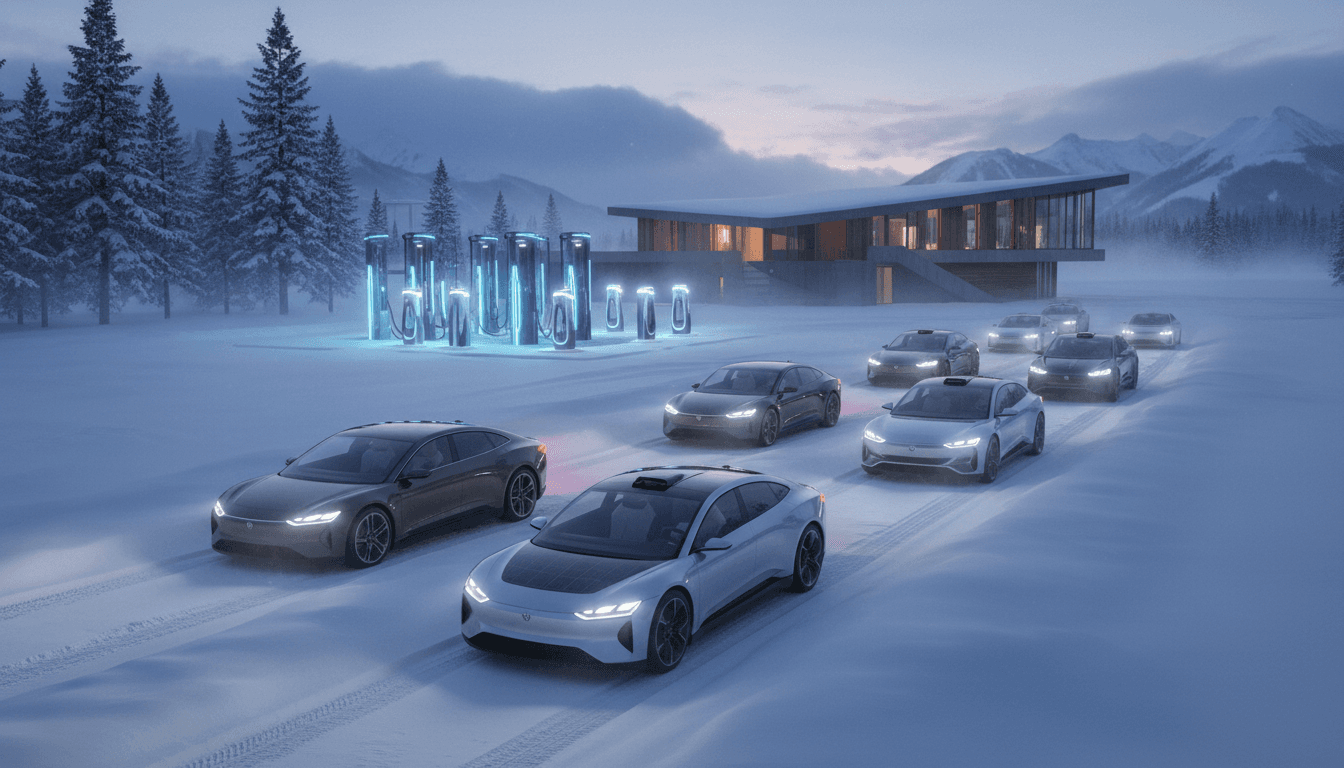
Imagine: 67 EVs pushed into minus 25°C – it sounds like a mad scientist's plan. In Poland the same test would end with drivers abandoning key fobs on the roadside. Let's look at what the data says.
A "winter slaughter" for batteries
When the temperature drops to -25°C, most people hide under a quilt and drink tea. Autohome, on the other hand, marches into the cold. Their test exposes every car. The XPeng P7 AWD delivered 53.9% of its CLTC range. In Poland that would translate to roughly 320 km from a claimed 600 km WLTP. The Tesla Model Y managed only 35.2%. The gap between the two models shows how brutally cold weather shortens declared range.
Prices in PLN – do they add up?
The XPeng P7 starts at PLN 216,900. The Yangwang U7 sits at PLN 562,760 – for that money you get 1,306 HP, a 2.9-second 0-100 km/h time and electromagnetic suspension. At the same time the BYD Seagull costs only PLN 120,000 – a small hatchback aimed at buyers focused on economy.
Model comparison
The comparison highlights differences in price and performance that can guide a purchase decision. The XPeng P7 and Tesla Model Y deliver specific WLTP ranges, while the Yangwang U7 impresses with acceleration – at a far higher price.
Real-world range and consumption – no fairy tales
Most of those "ranges" come from the CLTC cycle. In Poland, WLTP rules. The XPeng P7 AWD offers 576 km WLTP and a 4.1-second 0-100 km/h time. The gap between declared figures and reality is significant – roughly 450 km in real conditions if the heater is not running at full blast. For comparison, the Volvo EX30 delivers 542 km WLTP.
Winter charging – whoever doesn't yawn wins
The Avatr 07 charges from 30% to 80% in 15 minutes. The Xiaomi YU7 needs 31 minutes, the Tesla Model Y – 35 minutes. The XPeng P7 in Poland needs about 29 minutes for a 10–80% charge. In freezing temperatures, charging speed becomes one of the key buying criteria.
Polish market realities – a handful of numbers
In 2024 Poland registered 16,563 BEVs – a 3% decline versus 2023. Market share was around 3%. Best-sellers: Tesla Model Y (2,272 units), Model 3 (2,136), followed by the Volvo EX30 and Audi Q4 e-tron. Chinese brands are only just entering – BYD Dolphin or Seal are trying to win the market. The number of registered BEVs in July 2025 exceeded 103,500 – a 65% year-over-year increase.
Does this bone-chilling test make sense? Yes. Polish drivers get no mercy from winter, and choosing a car can cost PLN 200,000–600,000. The XPeng P7 is a solid option, the Tesla loses range in the cold, the Avatr charges faster than your patience, and the Yangwang U7 is a proposition for very few buyers.
Polish context
The Polish EV market is still developing, but infrastructure is lagging. Poland has around 3,200 chargers. Authorities offer a subsidy of PLN 40,000 toward the purchase of an electric car. In cities such as Warsaw or Kraków the number of charging stations is growing, but in smaller towns the situation is difficult. The winter months show that EVs must face not only the cold but also the lack of adequate infrastructure.
FAQ
Q: What are the most popular EVs in Poland?
A: The most popular EVs are the Tesla Model Y and Model 3, which together sold more than 4,400 units in 2024.
Q: What EV subsidies are available in Poland?
A: In Poland you can obtain a subsidy of up to PLN 40,000 for the purchase of a new electric vehicle, aimed at improving affordability.
Q: What are the main challenges for the EV market in Poland?
A: The main challenges are insufficient charging infrastructure and low winter range, which limit popularity among drivers.