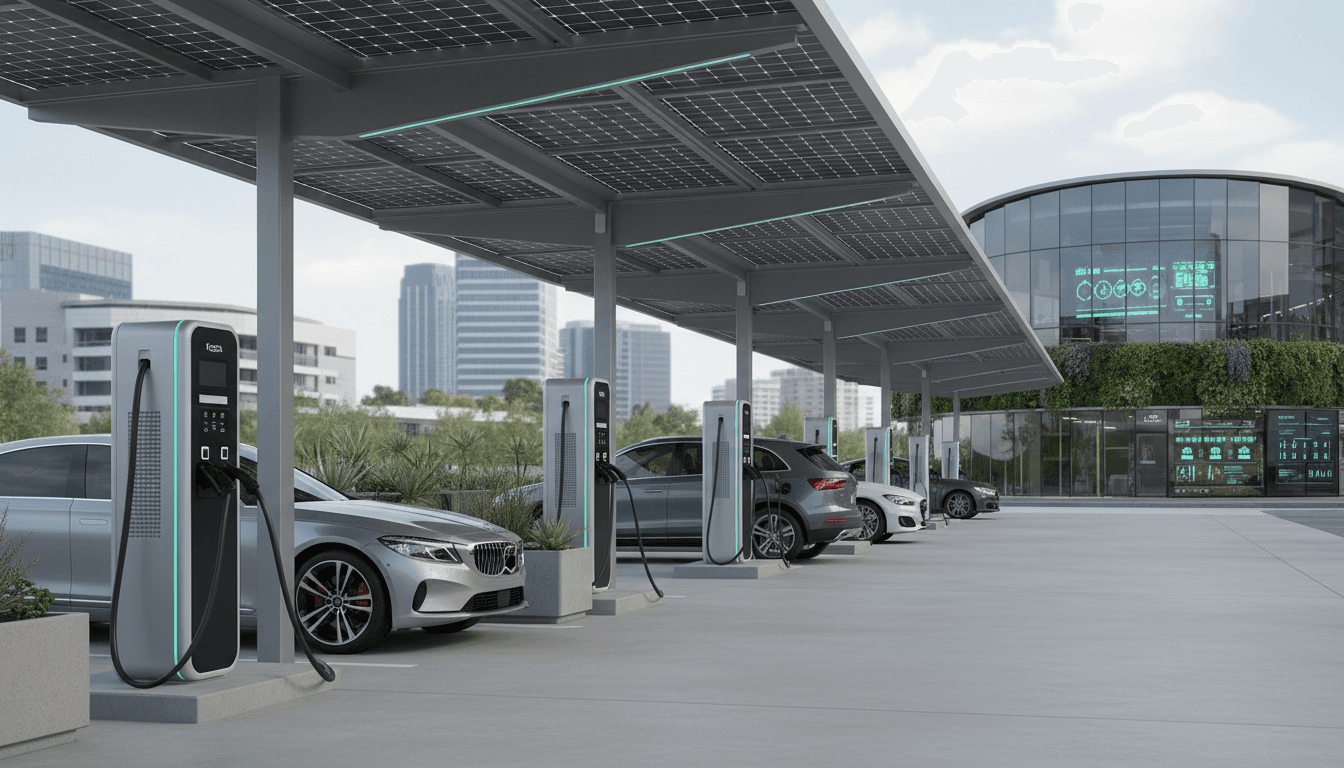
Here is the bombshell. Porsche is not Mercedes, which could step aside gracefully – yet that is exactly what Porsche is doing. It has around 200 EV charging stations in China. From March 2026 – goodbye. A communist whim? No – cold calculation. "Customer habits are changing." In other words, the king is losing his crown because nobody visits anymore. And the eastern wall now offers so many public fast chargers that Porsche only shines in name, not in infrastructure.
Where Porsche got lost – the China context
Sales in China used to be Porsche's golden goose. In 2021, it delivered 95,671 cars – its largest single market globally. Now? A 26% decline in the first three quarters of 2025, just 32,195 vehicles. Within a year the chapter will be closed. Why? Because Chinese brands are catching up on both technology and price. Porsche is left with marketing and charging costs. 200 stations – that is too few now. And too expensive.
Polish EV drivers and prices that shock (and amuse)
EV prices in Poland – you look and think "a joke?". The Audi e‑tron GT costs 470,300 PLN, and the cheapest Audi Q4 e‑tron is 241,073 PLN. Dacia Spring? 76,900 PLN – the only one trying to be reasonable. Tesla Model 3 base version: 194,990 PLN – the first time below 200k PLN. Long Range: 224,990 PLN. Performance: 251,490 PLN – that is almost an apartment. Meanwhile the Tesla Model 3 Standard 2026 – an ultra‑budget version – up to 534 km of range and only 174,990 PLN. That is a real decision, what one had to give up to be able to say: "I drive a Tesla, and the rest are jealous." All of it is so concrete that it hurts – 194,990 PLN vs 251,490 PLN is a 56,500 PLN gap.
Model comparison
The table above shows the price and range differences among popular EV models available in Poland. The Tesla Model 3 Standard 2026 stands out with the lowest price and an impressive range, making it an attractive option for Polish drivers.
Chargers: Poland is growing, but it is still a young market
Poland is not standing idle either. By the end of April 2025, the country had over 9,500 public charging points – including more than 3,000 fast chargers. Year‑over‑year growth of 62%. 10,600 points was the figure at the end of 2024. Fast 150+ kW stations grew from 317 to 875 in a single year – more than doubled. Along the TEN‑T network, there are 1,180 points in 2025 versus 624 a year earlier – as if someone had dropped off a navigation system, you simply will not get lost.
Poland's charging market – who is pushing the electric carousel
Installing a station is no joke – one public point costs between 20,000 € and 50,000 €. You can see it in the developers' plans: Powerdot aims to have 700 stations in Poland by the end of 2026, for over 70 million PLN. Aldi, Kaufland, Biedronka, Makro – they are all installing chargers on their parking lots. Powerdot is growing fast – in 2024 it added 680 new points and energy sales rose by 200%. Yes, Poland is becoming the e‑vehicle hub of Europe.
Comparison: Porsche versus the Polish EV market
Porsche is disappearing from the infrastructure in China, because 200 stations are now an outdated extravaganza when there are over 1.2 million public fast chargers there. Poland, on the other hand, is building, investing, developing – growth in points and the engagement of retail chains in charging is a natural move. In China, Porsche justifies itself with "changing habits." In Poland, every logical investor knows that an EV cannot run without power.
Who is winning here? The Chinese laughed that Porsche does not understand the EV market. Now they are watching how Porsche's high‑end branding loses its reason to exist. Poland is seeing real growth – infrastructure is expanding, prices are stabilizing, and drivers get something that works.
Tesla Model 3 for 174,990 PLN? That is not a price, that is a provocation. Porsche ending chargers in China? That is not a drama – it is a symbol that even luxury needs profitability. And Poland? We are building the future. Without unnecessary flash, but with substance and the electric hum of the motor.
Polish context
Poland, even though it is at the beginning of its EV market journey, already has reasons to be proud. In 2025, the number of public charging points is expected to exceed 10,600, all supported by government subsidies of around 40,000 PLN per station. The 62% growth in charging points over the past year shows that Poles are increasingly interested in electric cars. In 2026, with the right investments, Poland could become one of Europe's leaders, making the Polish EV market increasingly attractive for investors.
FAQ
Q: What are the forecasts for the number of charging stations in Poland in 2026?
A: In 2026, the number of public charging points in Poland is expected to exceed 10,600, representing significant growth compared to 2025.
Q: What are EV prices in Poland in 2025?
A: EV prices in Poland range from 76,900 PLN for the Dacia Spring to 470,300 PLN for the Audi e‑tron GT, showing a wide spectrum of available models.
Q: Which are the main companies investing in charging infrastructure in Poland?
A: The main companies are Powerdot, Aldi, Kaufland, Biedronka and Makro, which all plan to expand charging stations across their networks.