
Real-world range: 385 km
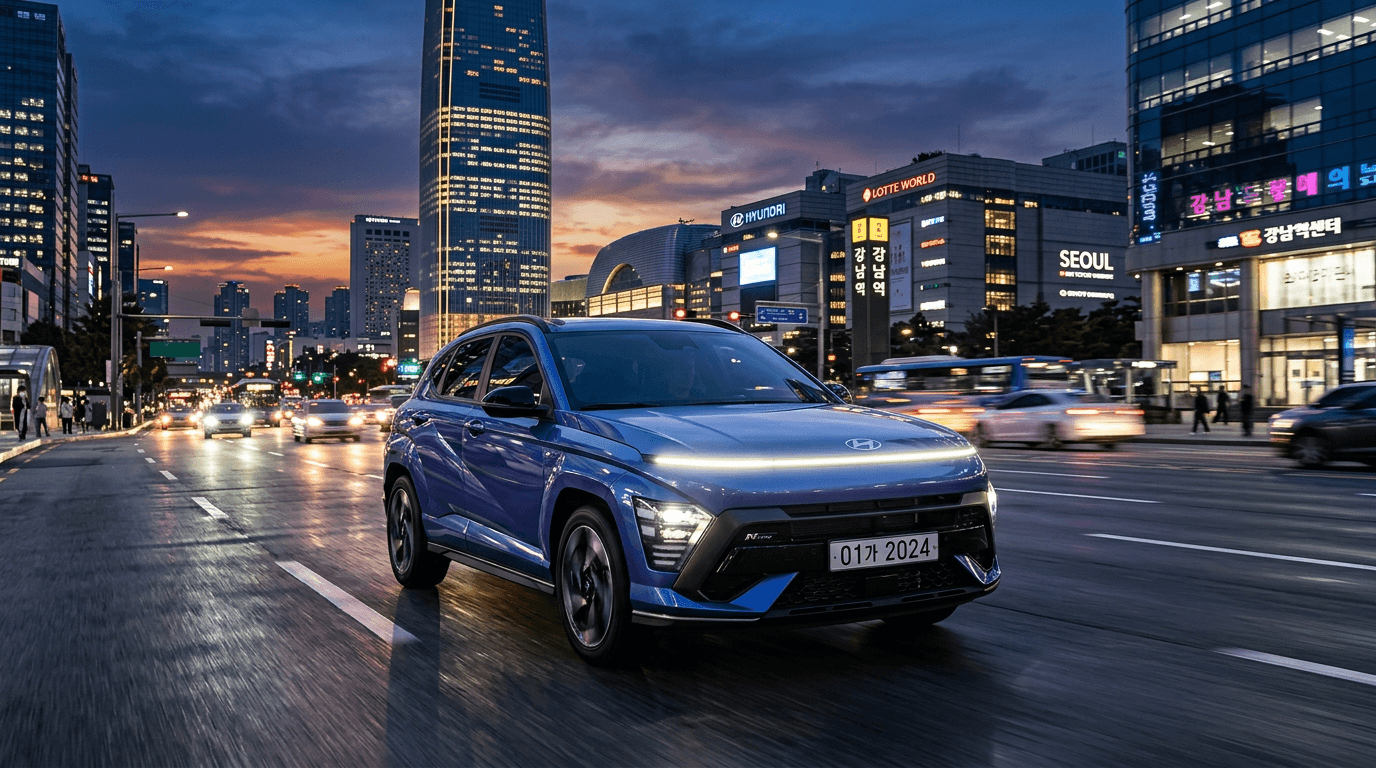
Hyundai Kona: bold new look and the third generation revealed
The Hyundai Kona moves to its third generation (SX3) in just eight years. We look at the Crater Concept-inspired design, the PLEO system, prices and real-world range of the current 2026 model.
EvCompass Editorial TeamPublished Updated 8 min read
| Model | Powertrain | Range / Consumption | Battery / Capacity | Indicative price |
|---|---|---|---|---|
| Hyundai Kona Electric | 156 – 218 HP | Up to 514 km | 65.4 kWh | ~167,398 PLN net |
| Kia Niro EV | 204 HP | Around 460 km | 64.8 kWh | ~198,000 PLN |
| Toyota C-HR (Hybrid) | 140 – 223 HP | 4.8 – 5.1 l/100km | Boot 388 l | From 147,200 PLN |
| Mazda CX-30 | 122 – 186 HP | 6.2 l/100km | Boot 430 l | From 119,000 PLN |
The Korean sprint: why the second generation is already old news
Imagine buying the newest iPhone, and three days later Apple announces that it was actually a joke. They are just finishing work on a model that can brew coffee and read minds.
That is roughly how the owners of the Hyundai Kona, which debuted only in 2023, must feel. The manufacturer has apparently decided that traditional car life cycles are about as exciting as watching paint dry, and is already testing the third generation of the vehicle, internally named SX3.
This is absolute madness. While European manufacturers need a decade to change the shape of a door handle and call it a "revolutionary facelift", the Koreans are sprinting through the market at the speed of gossip in a small town.
The second generation, represented by the current Hyundai Kona, has barely had time to gather dust on dealer parking lots, and engineers at Namyang are already wiping sweat from their brows as they finish designing the successor.
The Koreans build cars so quickly that by the time you leave the showroom in your new car, your model becomes an exhibit at a technology museum. This is not evolution, it is a regular lightning war on boredom!
The new model, which we will probably see at the beginning of 2027, completely abandons the tidy lines of an urban crossover in favour of something that looks like an overweight Martian lander. The inspiration is the Crater Concept – a machine so rugged, angular and cheeky that it could ram castle gates and then park effortlessly outside a trendy gallery.
This operational speed is a strategic strike against ossified competition from the old continent. The Germans are still wondering whether touch screens should have haptic feedback, while the Hyundai Kona receives its third architecture in eight years.
This pace is deadly for residual value, but brilliant for the brand image of a company that wants to lead in innovation, not produce boring rolling stock for pensioners. If you are interested in the full catalogue of available models, it is worth following these changes in real time.
Futurism on steroids and a Hyundai Kona with billboard-sized screens
If you thought the current "Seamless Horizon" light bar was bold, get ready for a visual attack with a firepower that Hollywood would not be ashamed of.
The third installment of the Hyundai Kona will be noticeably taller, will get more pronounced wheel arches and will be packed with pixel-style lights. They look as if someone pulled them straight out of an Atari console and processed them in a Marvel special effects program.
The brand wants you to feel like the captain of a spaceship conquering the galaxy, not a driver going for bread rolls on a rainy afternoon. Inside awaits the PLEO system, which in marketing language heralds the end of the ergonomics we know.
Forget traditional buttons – they are a relic, like cassette tapes. The new Hyundai Kona will get a giant curved screen running with the fluidity of smartphones capable of calculating a flight trajectory to Jupiter.
The only question is whether operating the menu while driving on a potholed road will not require a doctorate in quantum physics and the patience of a monk. But hey – at least it will look brilliant on Instagram and during a stop at a café.
The interior of the new Kona promises to be so sterile and digital that passengers may feel the need to put on a space suit. It is a car for people who talk to ChatGPT more often than to their own family.
Engineers are also promising a material revolution. Instead of plastics that remember a bygone era, recycled composites will appear that feel like expensive technical fabrics. All so that you forget you are sitting in a B-segment car and feel like you are in the living room of a minimalism fanatic.
Modern electric cars are increasingly betting on this aesthetic.
What is on the shelves today?
Before we move into that digital bunker in 2027, we have to face reality. And reality is kind to the wallet – the manufacturer, feeling the breath of Chinese competition on its back, has staged a real promotion hunt in showrooms.
The current Hyundai Kona, although theoretically "old", is still one of the most capable players on the market. The powertrain range is a real Swedish table: from a frugal ascetic to an urban warrior.
Traditionalists can choose the 1.0 T-GDI petrol with 100 HP, available from 109,900 PLN in the Smart version. But let us be honest – 100 horsepower in a car this size is like towing a yacht with a dachshund.
It might work, but the spectacle will be painful. The real fun begins with the 1.6 T-GDI engine with 170 HP, especially with 4WD.
The Hyundai Kona N Line for 169,900 PLN offers dynamics that let you overtake most sales reps in their white company cars with satisfaction.
For those who care about the environment, the 1.6 GDI HEV hybrid is available for 132,400 PLN – a sensible compromise between savings and stress-free driving. There is also, of course, a fully electric variant.
The Hyundai Kona Electric with a 65.4 kWh battery promises 514 km of range, although in a Polish December these numbers may change. The catalogue price of 167,398 PLN net makes the competition start nervously glancing at the calendar.
When buying the EV version, it is worth checking which charger will be optimal for a home garage, in order to fully enjoy low running costs.
Final verdict
The Hyundai Kona is currently a car in the splits, but it is a split performed with the grace of a ballet master. On the one hand, we have a well-priced, technically mature 2026 model with gadgets worthy of the premium class – such as ventilated seats or a 360-degree camera system.
A 466-litre boot means that the car successfully serves as the only vehicle in the family.
On the other hand, the third generation is already looming on the horizon, which may quickly make the current series look like a souvenir from a previous design era. It is a brutal market game. Is it worth waiting?
If you must have the newest processor in your phone – definitely yes, arm yourself with patience. But if you need a solid SUV here and now, the current discounts make this the best moment to buy.
When choosing zero-emission variants, remember that electric cars are no longer just a song of the future, but also the present of the Polish landscape.
This model has the soul of a modern gadget and the backbone of a solid craftsman. I would take it before engineers decide that the Hyundai Kona no longer needs a physical steering wheel.
Browsing the catalogue, it is hard to find a more complete offer, especially when you take into account home chargers and fast charging stations.
FAQ – Frequently asked questions
Is it worth buying the current Kona generation when the successor is close?
Economically – definitely yes. The 2026 model is covered by hefty discounts (up to 18,000 PLN on combustion engines and up to 40,000 PLN on electrics), making it one of the best-priced cars in the segment. The third generation will arrive in 2027 and will be significantly more expensive because of the new PLEO architecture.
What are the real performance differences between the 1.0 and 1.6 T-GDI?
The 1.0 T-GDI (100 HP) allows a 0-100 km/h sprint in 13 seconds, which works mainly in the city. The 1.6 T-GDI unit with 170 HP cuts that time to 8.1 seconds. The difference is colossal, especially when overtaking on the road.
What is the real range of the Kona Electric with a 65.4 kWh battery?
The catalogue 514 km WLTP translates to around 430-450 km in real conditions (20°C). At motorway speeds of 120 km/h, the range drops to about 310 km. In winter, expect around 280-320 km.
What is the PLEO system announced for the third generation?
PLEO is a new Software-Defined Vehicle (SDV) architecture. It will enable smooth Over-the-Air (OTA) updates, better energy management in EV versions and the introduction of an AI-based assistant.
Is the 466-litre boot enough for a 2+2 family?
Yes, 466 litres is the top of the segment. Thanks to regular shapes and a double floor, the boot fits a large pram and cabin luggage. The hybrid version offers slightly less space under the floor itself.
What 4WD system does Hyundai offer in the Kona?
The 4WD in the 1.6 T-GDI version is an on-demand system. Power normally goes to the front, but in the event of slip, the electronics can transfer up to 50% of the torque to the rear axle.
About the author
EvCompass Editorial Team
Cars in this article
Related articles
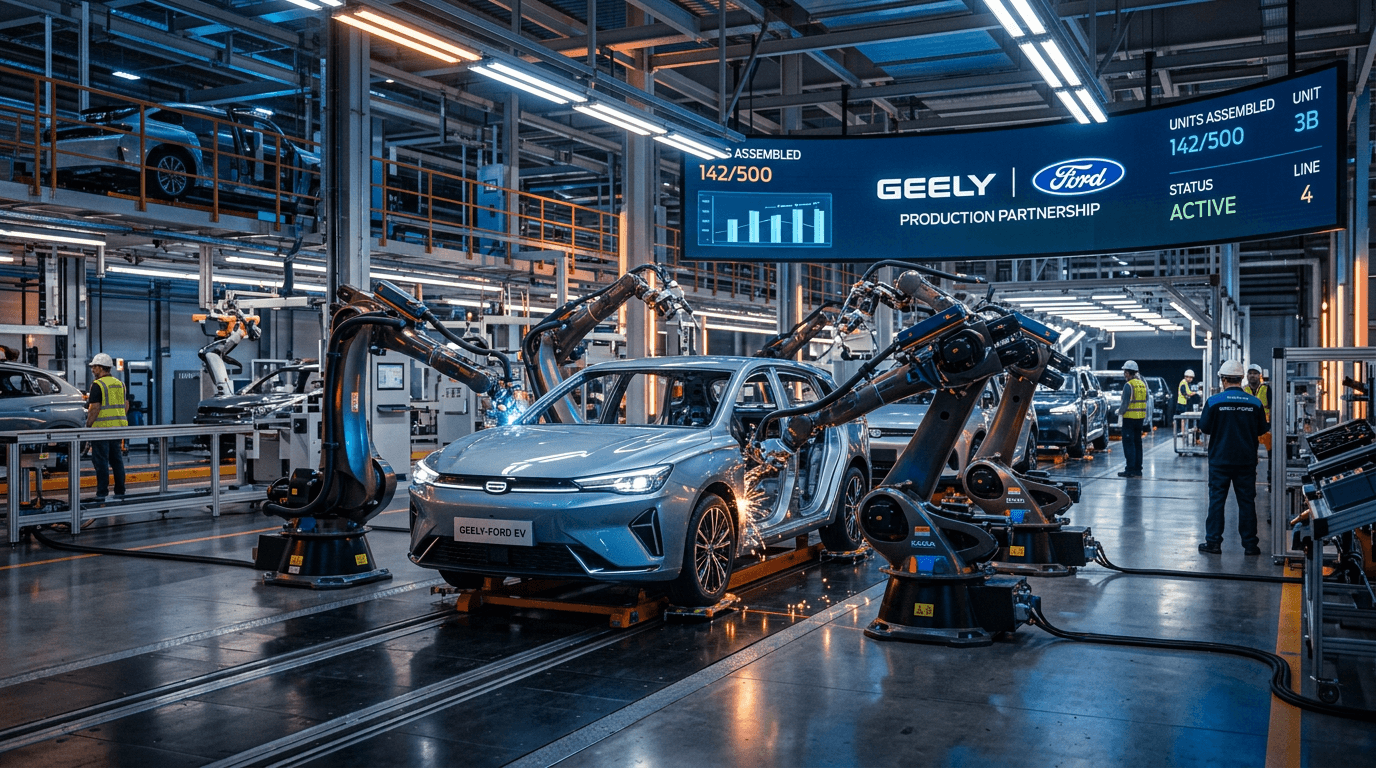
Ford and Geely join forces: a new balance of power in Europe's EV market
Ford is handing Geely the keys to its Valencia and German plants to bypass EU tariffs and accelerate EV development. In return, it gains the G-ASD technology and access to Chinese software engineering. Here is what this partnership means for the European EV market and drivers' wallets in Poland.
Apr 26, 20268 min read
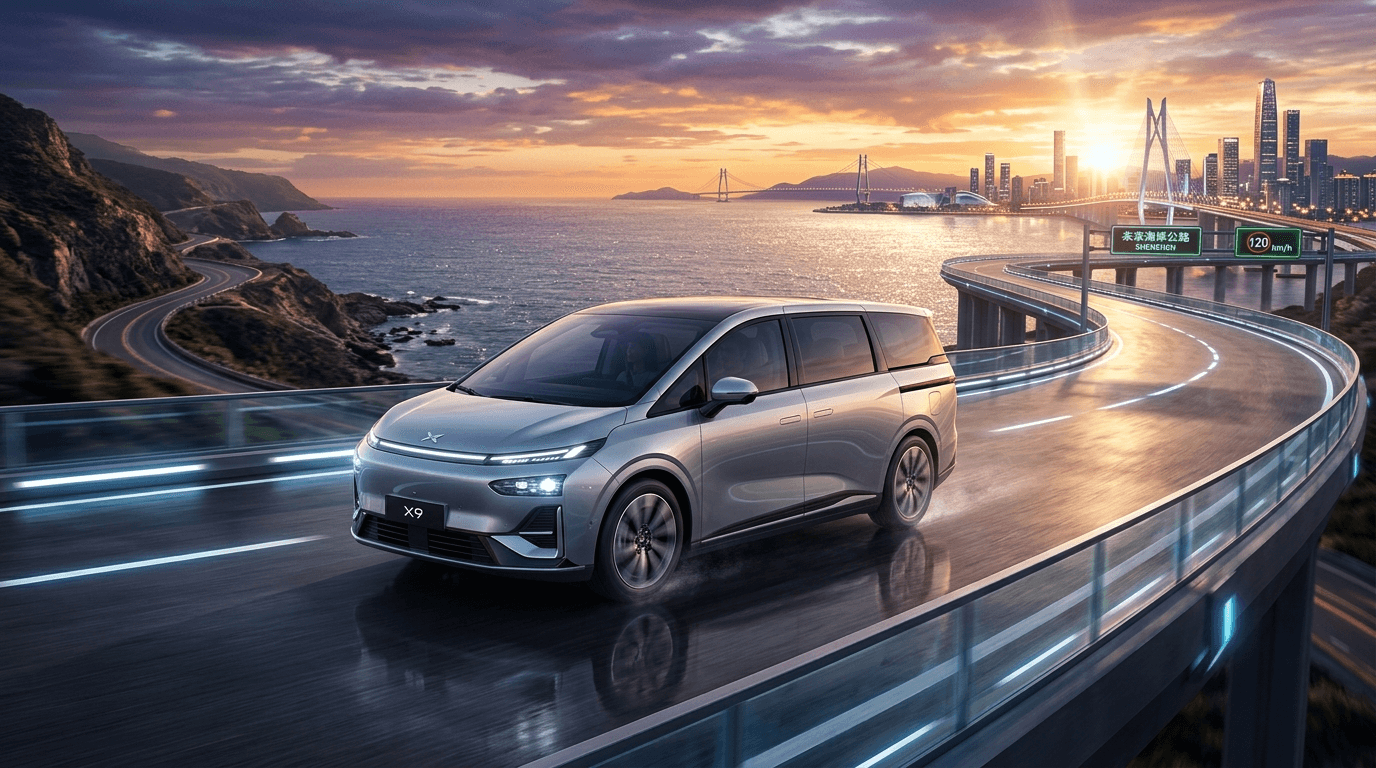
XPeng X9: luxury 7-seat electric MPV with record-breaking range
The 2026 XPeng X9 is a seven-seat electric minivan with up to 750 km of range (CLTC), 800V charging, and Zero-Gravity rear seats. Here are the specs, features, and estimated pricing.
Apr 22, 20267 min read
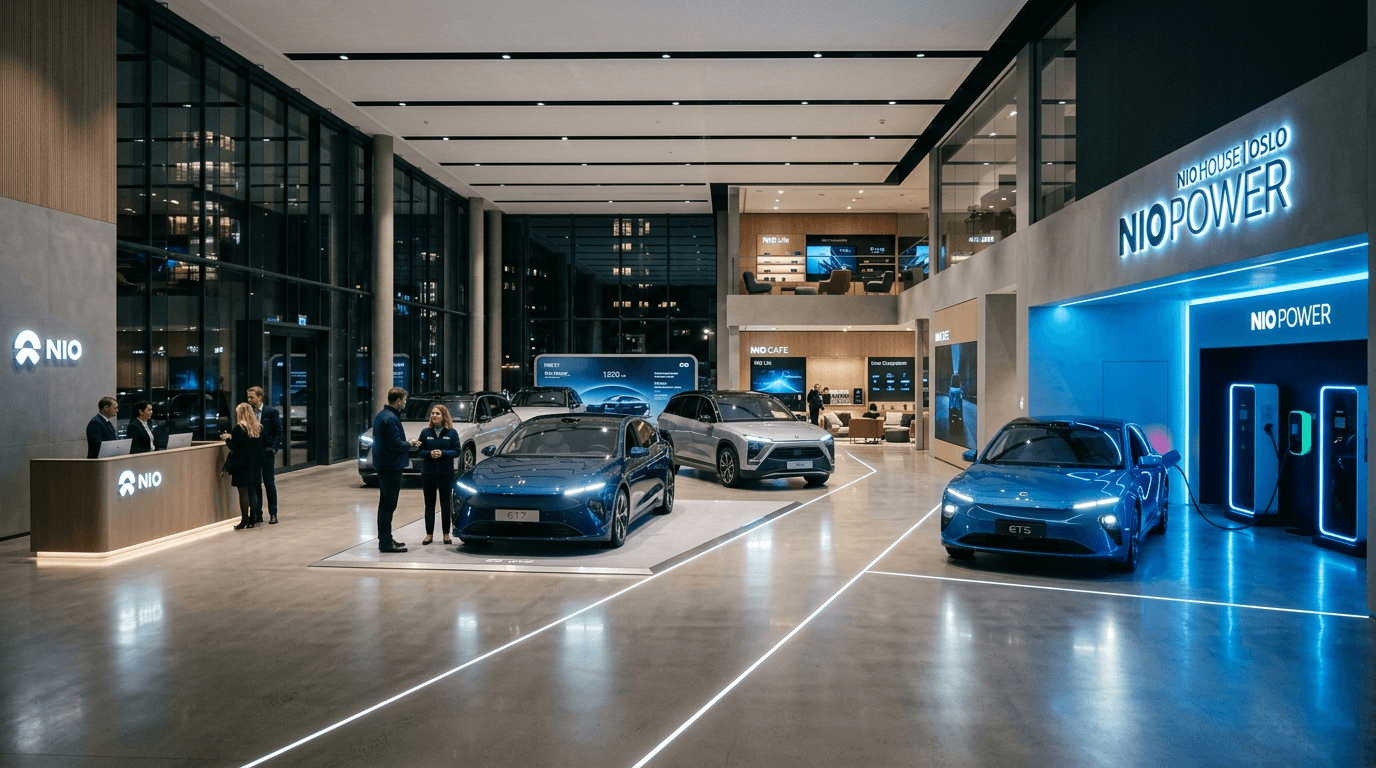
NIO in Poland: sales grow 96% year over year
NIO posts 96% year-over-year sales growth in Poland. The brand pushes battery swap Power Swap, the BaaS model, the Banyan system with NOMI, and the Firefly sub-brand.
Apr 18, 20265 min read