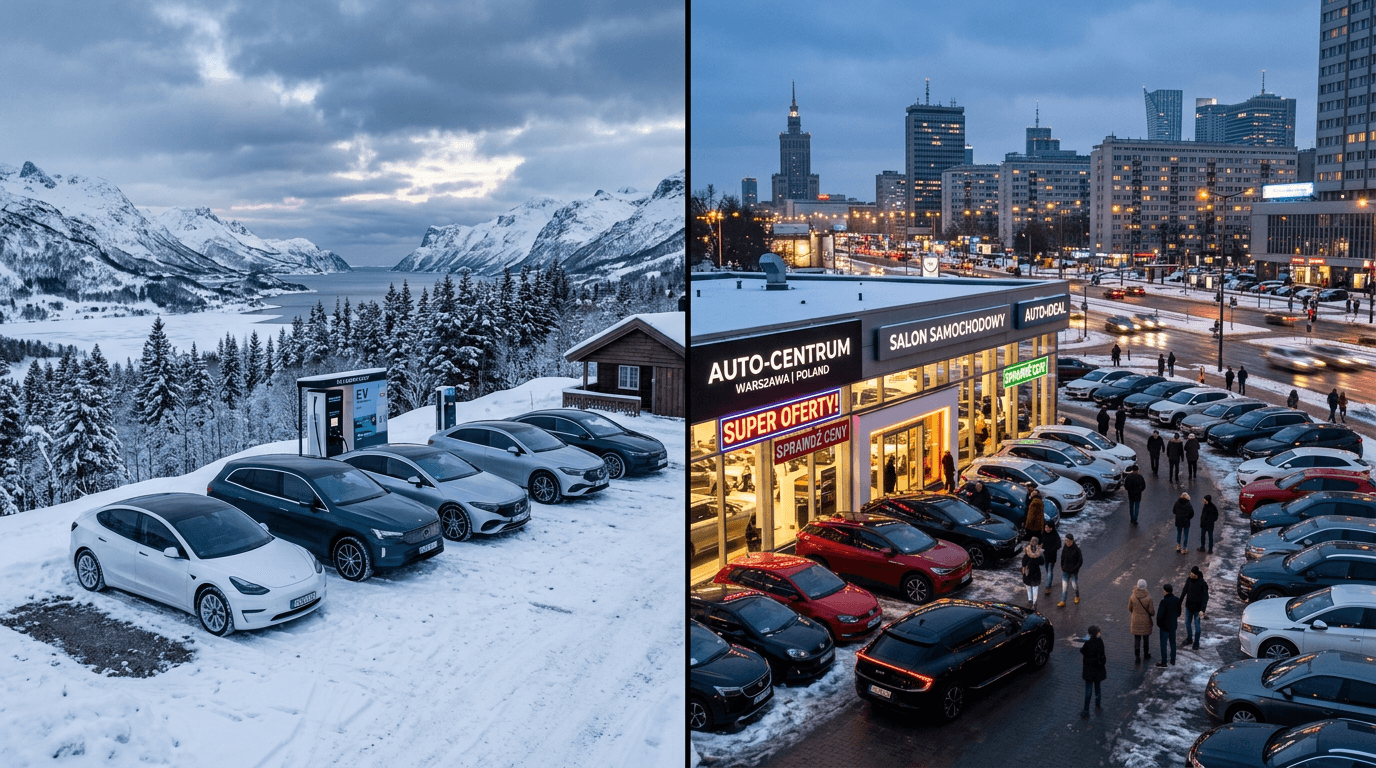
In this post-battle landscape, where only 2,218 new cars were registered (94% of which were electric cars), the Volkswagen ID.3 landed at the top of the sales chart.
A result of 299 units in normal conditions would be grounds for dismissing the sales director, but in January 2026 in Norway it makes it the undisputed king of the hunt.
The German hit, despite years on the market, still wins on solidity and predictability, which in a time of market chaos turns out to be crucial.
Right behind it is the Toyota bZ4X, which, after early software issues, has finally started to be seen as a solid alternative to European brands.
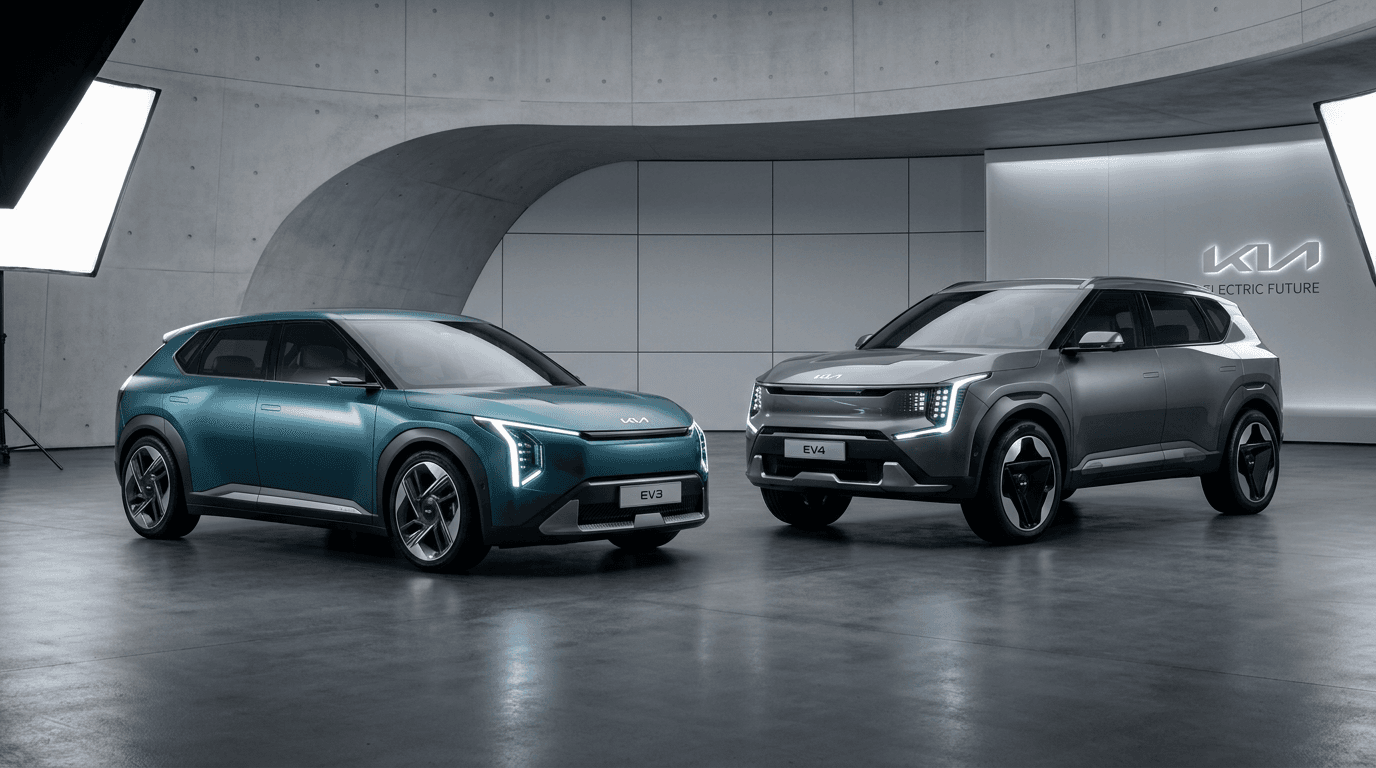
The podium is closed by the new Toyota Urban Cruiser, showing that customers paying from their own pocket, not from a government top-up, are choosing smaller and cheaper electric cars.
This is the dominant trend across Scandinavia, where cost optimisation has suddenly become a priority for every household.
Interestingly, exotics such as the Changan Deepal S05 or Hyundai Inster appeared in the TOP 10. The Chinese offensive has stopped being a conspiracy theory and has become a hard reality in the sales rankings.
The most humiliated, however, is the Tesla Model Y — a car that once sold faster than free hot dogs at a station — which in January found only 62 buyers.
It is as if the Rolling Stones played a concert for three people and a dog, and the dog would have left halfway through anyway, because it would get bored of looking at the empty hall.
Poland: El Dorado for the Frugal and the Bold
While Norwegians lick their wounds and make peace with old diesels, in Poland 2026 is shaping up to be absolutely the best moment in history to buy.
The price war triggered by Chinese manufacturers has led to a situation nobody expected. New electric cars are starting to cost the same as their combustion counterparts.
Browsing the current catalogue, you can see that the entry barrier to the world of electromobility has never been set this low.
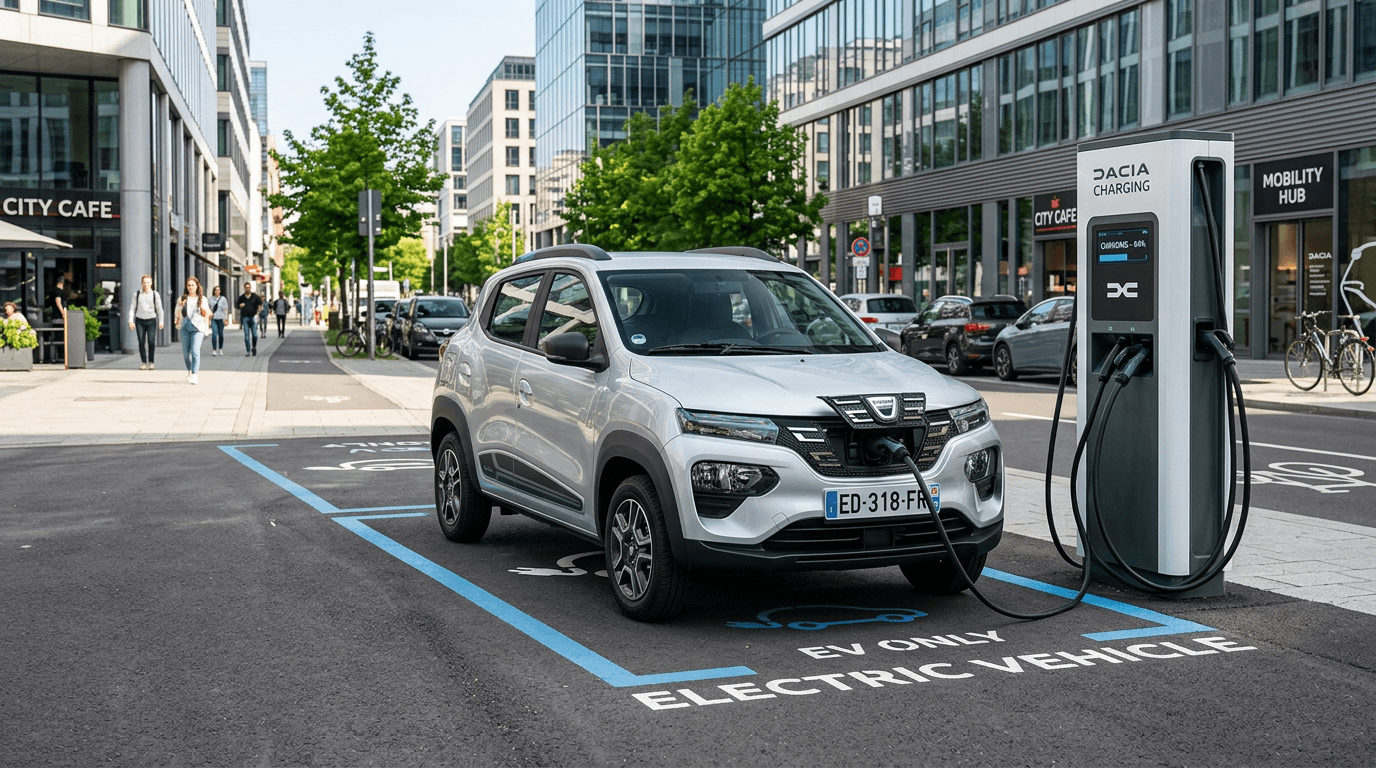
If you have PLN 73,500 to spare in your wallet, you can drive off in a new Dacia Spring. Yes, it has the soul of a microwave and an interior made from recycled yogurt cups, but in the city it will serve you better than a bicycle in a downpour.
This is a car for someone who needs to get from point A to point B without unnecessary philosophy and without paying a fortune for a litre of fuel.
The popularity of this model shows just how much electric cars have evolved toward real accessibility for the average driver.
For those who despise austerity, the Polish market has far more interesting propositions. The Citroën ë-C3 at PLN 88,900 or the BYD Dolphin Surf at PLN 82,700 are proof that electrification has stopped being a toy for millionaires.
The Chinese offensive is relentless and technologically advanced. The Leapmotor T03 at PLN 74,900 makes European executives in Armani suits start nervously browsing job ads.
And if you add to that the subsidy from the "NaszEauto" programme, which with the Large Family Card reaches PLN 40,000, it suddenly turns out that a new electric car costs as much as a premium cargo bike.
It is the moment when maths beats nostalgia for the sound of a V8, and electric cars simply become the most rational economic choice.
The Winter Truth About Electric Cars
Unfortunately, you cannot cheat physics, even if you are a brilliant engineer from Wolfsburg or Shanghai. 2026 brought a harsh winter, and road tests at -30°C show a brutal truth.
The WLTP range in Polish winter conditions is worth as much as politicians' pre-election promises. Electric cars in extreme frost have to cope with an enormous demand for heat.
Buying the WLTP range is like believing that holidays on the Baltic will always be sunny. When the frost comes, your luxury cruiser turns into an expensive ice sculpture if you forget to plug it in overnight.
The Volkswagen ID.Buzz, an icon of style and the hope of camping fans, loses more than 38% of its range in severe frost. Instead of long journeys it offers more of a trip to the nearest point with a fast charger.
The Skoda Elroq, priced at around PLN 189,900, gives up even faster, losing 41% of its declared distance. That hurts when you are stuck in traffic on the Zakopianka and the battery indicator drops faster than the temperature outside.
The record holder for winter disappointment is the Volvo EX90. The monumental SUV, the pinnacle of safety and comfort engineering, loses almost half of its driving range in harsh frost.
The Tesla Model Y, priced at PLN 184,990, in real motorway conditions in the frost will travel around 359 km instead of the promised 600.
It is still a solid result, but far from stress-free travel across the whole of Poland "in one go," even if high-power charger stations are dense along the way.
Infrastructure Evolution or the Death of the Project
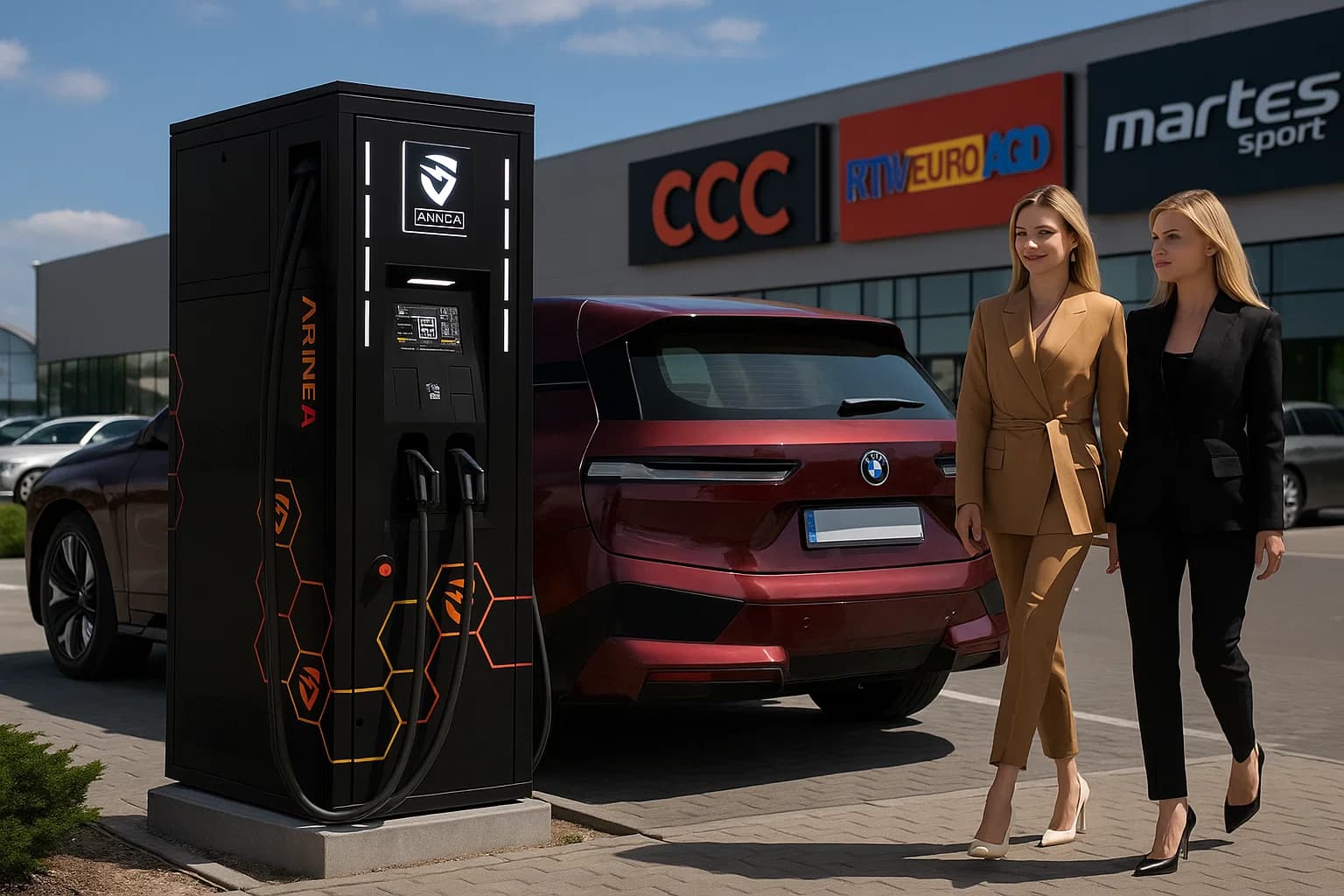
In 2026 Poland finally saw a breakthrough in infrastructure. The days when finding a working DC charger above 100 kW bordered on a miracle are over.
New hubs along motorways offer 350-400 kW terminals, which let you top up energy in modern cars in less time than it takes to drink an average coffee at a station.
Modern electric cars with an 800V system can accept that power without a hiccup.
The problem is that you have to pay for the luxury. Electricity prices at fast chargers without a subscription make the cost of covering 100 km equal to the fuel expenses of a luxury diesel.
That is why your own garage with a wallbox is becoming a necessary condition in 2026 for operating an electric car to make economic sense.
Without cheap energy from a socket or photovoltaics, all these advanced electric cars remain simply a very expensive hobby for gadget enthusiasts.
The Verdict: A Cool Calculation
The electric car market in 2026 resembles a teenager after their first serious party — it has ambitious plans, but also huge form drops and painful moments of reflection.
Norway has shown the world that without lavishly poured subsidies and tax breaks, demand for electric cars can evaporate almost immediately.
This is a lesson for the entire industry: cars must defend themselves on parameters and price, not on props from the state treasury.
In Poland, however, we have a golden moment. Prices are falling thanks to competition, the choice of models is dazzling, and the charging network finally resembles civilised Western standards.
Is it worth buying an electric car right now? Yes, provided you have somewhere to charge it at night and you do not believe catalogue fairy tales about range during a winter holiday in Zakopane.
By wisely choosing efficient electric cars, you gain a great means of transport that still requires a little humility from the driver in the face of the laws of thermodynamics.
FAQ — Electric Cars in Questions
Why did electric car sales in Norway fall so dramatically in 2026?
The cause was a pre-buying effect. The Norwegian government introduced the full VAT rate (25%) on electric vehicles, dropping the previous exemptions. Customers mass-bought cars at the end of 2025 to avoid the price hikes, which resulted in market saturation and a temporary collapse of statistics at the start of the new year.
How much can you actually save by buying an electric car in Poland with a subsidy?
The "NaszEauto" programme offers real financial support. The base subsidy is PLN 22,500, and Large Family Card holders can count on a refund of around PLN 40,000. This means that budget models, such as the Dacia Spring, after the refund can cost between PLN 35,000 and 45,000.
Why do electric cars lose range during heavy frost?
The range drop is due to cell chemistry, which has higher resistance at low temperatures, and the lack of free waste heat known from combustion engines. Cabin and battery heating systems consume significant amounts of energy, which in extreme frost drastically limits the distance that can be driven.
What new Chinese electric car brands are available on the Polish market?
The market has been dominated by brands such as BYD, Leapmotor, MG Motor, as well as Zeekr and Changan. Thanks to control over the battery supply chain, these manufacturers offer vehicles 20-30% cheaper than European competition, while providing rich equipment and modern multimedia systems.
Is the charging network in Poland ready for the growth in the number of vehicles?
Infrastructure in 2026 improved significantly, especially along main national routes, where the distance between fast charging points shrank to around 60 km. The biggest challenge remains older urban development, where grid upgrades are not keeping up with the installation of home charging points.
What is the battery lifespan in modern 2026-model-year cars?
Modern LFP cells can withstand 3,000 to 5,000 charging cycles without significant degradation, which translates into ranges of around one million kilometres. Thermal management systems ensure that the battery maintains over 80% efficiency throughout the vehicle's intended lifespan.