
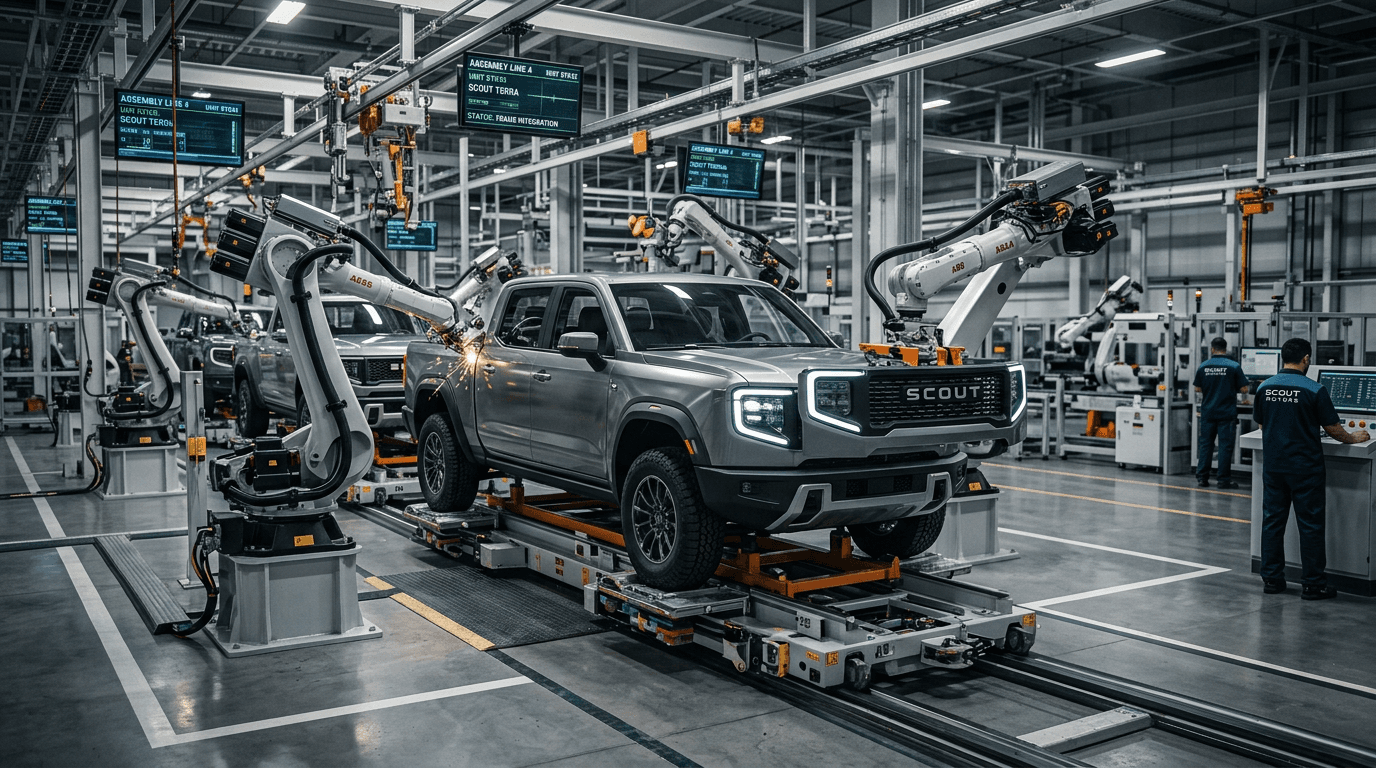
Scout Terra: Price, Factory Budget and Volkswagen's US Ambitions
Scout Terra: starting price, 800V/350 kW specs and a swelling Blythewood factory budget. Volkswagen bets on a new brand in the electric pickup and SUV segment.
Apr 15, 20267 min read
US fleet-payments giant WEX markets an integrated fuel-and-charging card as a revolution, while Europe and China have used similar solutions for years. How does the Polish market compare on the global fleet-payments map and what does the end of the "NaszEauto" subsidy mean for drivers?
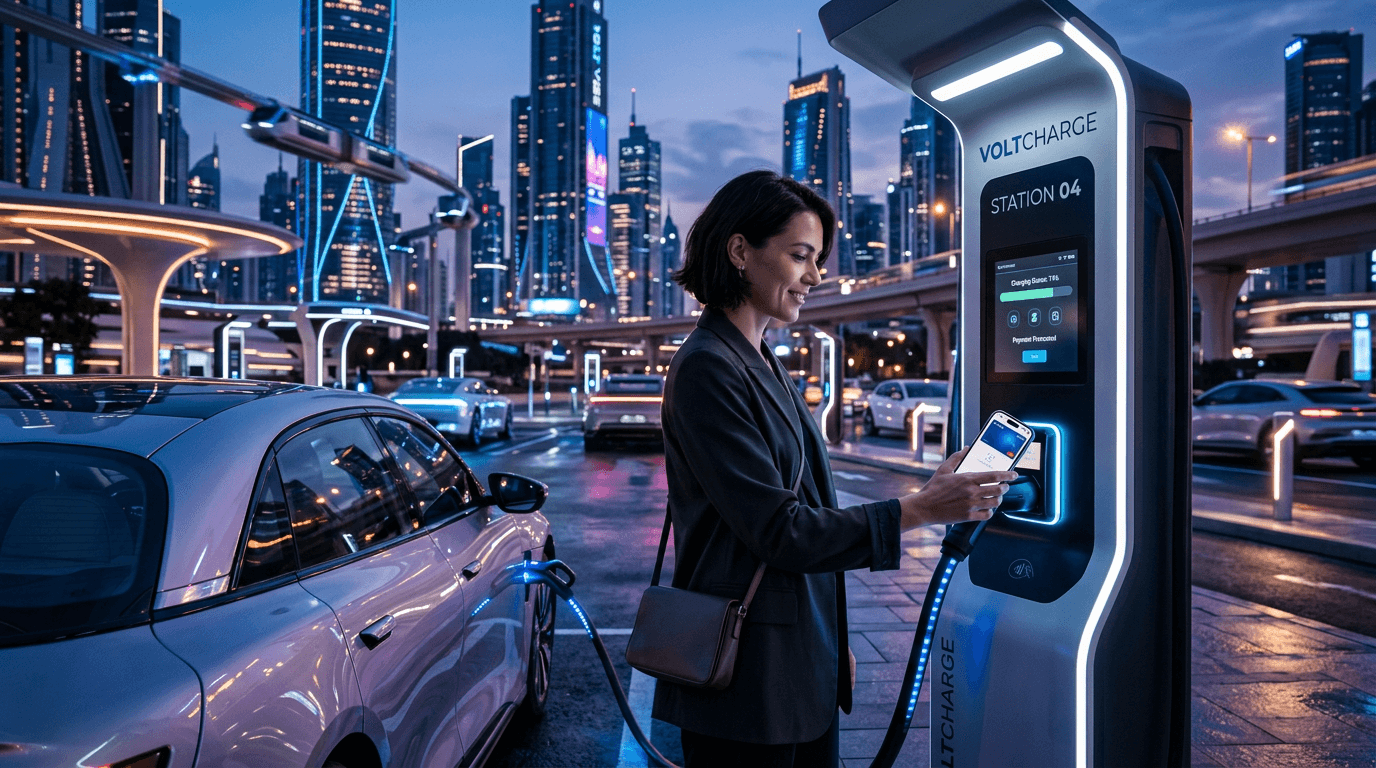
Imagine you have been eating dinner with a knife and fork for ten years. Suddenly an uncle from America bursts into the room, waving a spoon, shouting that he has just made a civilisational breakthrough. Because now he can eat soup and a main course at the same time without changing utensils.
That is roughly what the latest "milestone" in the USA looks like. Fleet-payments giant WEX announced that their card can now handle both petrol and electricity on a single invoice. Fascinating.
For those of us watching how electric cars are developing, this is a discovery about as revealing as the statement that water tends to be wet. While Americans spent years juggling apps and invoices, Europe simply kept driving.
Here, the fact that a fleet mixes diesel with electricity is about as exotic as pork cutlet on a Sunday. In Poland, "closed-loop" systems that integrate different energy sources are the standard, letting managers control costs with surgical precision.
Americans have only just realised that a grease-covered driver does not want seven cloud accounts just to top up a battery. When choosing modern electric cars, we expect full service integration without unnecessary fuss.
| Model | Battery (Net) | Max Power | WLTP Range | Price (March 2026) |
|---|---|---|---|---|
| Tesla Model 3 (RWD) | 60 kWh | 283 HP | 513 km | 162,500 PLN |
| Hyundai Ioniq 6 | 53 kWh | 151 HP | 429 km | 166,910 PLN |
| BMW i4 eDrive35 | 67 kWh | 286 HP | 483 km | 225,300 PLN |
| Volkswagen ID.7 | 77 kWh | 286 HP | 621 km | 239,900 PLN |
Fleet management is not an extreme sport – it is accountant boredom elevated to an art. Managers do not want drivers hunting for an app for a charger that happens to be down because a server in California is on a coffee break.
Americans have just reinvented the wheel, in the form of a digital fuel card. While in Europe we are weaving fleets into a single coherent organism, across the ocean they are still trying to understand that a driver just wants to plug in a cable and keep going.
Companies want one invoice, one credit line, and peace of mind. What WEX promotes as a revolution is in reality a desperate attempt to catch up with a world that is two car-lengths ahead.
The real revolution happened in China. There the plastic card is a relic of the past, something like a gramophone. Everything is handled by smartphone, and the difference between a litre of petrol and a kilowatt-hour faded from digital wallets years ago.
Licence-plate recognition systems and automatic tolling make the payment process almost transparent. Meanwhile America, the country that put people on the Moon, until recently still loved paper-signed transaction authorisations.
And what does it look like here, on the Vistula, in mid-March 2026? The mood is bittersweet. The "NaszEauto" programme has become history and the subsidy piggy bank is empty.
If you were counting on free money from the state, you are roughly two months late. But don't worry – manufacturers have no intention of watching their brand-new electric cars gather a layer of dust on lots near Warsaw.
Check the current catalogue to see available models at the new prices.
The market in 2026 has entered a phase of brutal fight for the customer. To soften the pain after subsidies ended, Tesla adds a "Tesla Bonus" – a solid 18,750 PLN discount on the Model Y.
Thanks to this, a car that recently was a status symbol becomes a real alternative to diesel. The Chinese, in turn, are cutting prices as aggressively as if they worked in a slaughterhouse. At Omoda or Jaecoo dealerships you can shave off up to 30,000 PLN with factory financing.
It is a regular war for survival, where electricity fights diesel for every soul, and dealer margins shrink faster than range at -15°C. Electric cars are becoming accessible to the masses.
Choice in 2026 is huge, but you need to know what to look for. If you are after common sense, Skoda Elroq is on duty. For 141,900 PLN you get a car with an umbrella in the door and an ice scraper in the tailgate.
In the version with an 82 kWh net battery it can really cover more than 300 km even on cold days. The Czechs understood that the customer choosing electric cars does not need a spaceship, just physical buttons and solid build quality.
If, however, you want to feel the technological future, aim for the 800V architecture. The new Volvo EX60 and Audi A6 Avant e-tron are true efficiency monsters.
Buying an EV today without a heat pump is like building a house without windows. The roof over your head is there, but comfort is zero, and heating bills will eat your savings faster than inflation.
These vehicles can recover 300 km of range in 20 minutes, provided a fast charger with 270 kW of power is at hand and not just "under maintenance".
This changes the rules of the game – suddenly a trip across Poland does not require planning worthy of the Normandy landings logistics crew. Modern electric cars are finally matching combustion cars in usability.
For those on a tighter budget, the Dacia Spring at 73,500 PLN remains – ideal for city traffic jams. The new VW ID. Polo, meanwhile, is meant to be the answer for the people, although its natural environment remains the concrete jungle.
It is worth noting the progress in heat pumps. In 2026 an electric car without this system is like a smartphone without internet – it works in theory, but in practice is a nuisance for half the year.
Modern thermal management systems recover heat from the motor and inverter to warm the cabin. This is where the real fight for range takes place, not in garish interior ambient lighting colours. Efficient electric cars are first and foremost thermal engineering.
Another key aspect is cell durability. After a decade of scaring people about degradation, the data is clear: modern LFP packs comfortably withstand 3,000 charging cycles.
This means the car will rust with age before its range drops by more than 15%. That is knowledge worth having during negotiations, because the used electric cars segment is just starting to swell with ex-lease cars.
The American "discovery" of integrated payments is a sign that the world is finally treating electric cars as ordinary infrastructure. In Poland, despite the end of subsidies, the market is maturing and firming up.
EVs have stopped being toys for enthusiasts with rooftop solar. Although it must be admitted that with your own photovoltaics, driving something like a Hyundai Ioniq 6 is practically free.
Is it worth switching? If you have somewhere to charge and approach the topic with cool calculation – yes. Today the difference between a good and a bad model is not in the 0-100 sprint, because nobody lacks dynamics.
The real difference shows up in efficiency when the thermometer drops below zero. By choosing wisely, electric cars give you comfort and peace of mind.
To find the optimal model, browse our catalogue and compare parameters. The right home charger will complete this ecosystem, giving you independence from petrol stations.
Yes. The lack of state subsidies has been offset by manufacturer rebates of up to 40,000 PLN. With home charging, the cost of driving 100 km still hovers around 9-12 PLN.
The 800V architecture, used for example in the Ioniq 6, cuts charging time in half. It accepts power above 240 kW, topping the battery up to 80% in about 18-22 minutes.
In modern 2026 designs, the range drop at -10°C is usually 20-30%. The condition is having a heat pump and pre-conditioning the battery before the trip.
LFP batteries are significantly more durable than NMC cells. They withstand thousands of cycles without losing capacity, are safer, and better tolerate charging to 100%.
Service costs are about 40-50% lower than for combustion cars. The costs of replacing fuel filters, engine oil or timing belts disappear.
Yes, slow AC charging is healthier for cell chemistry. The best rule is 80% charging at home (AC) and 20% at fast stations (DC).
A 5 kWp installation produces enough energy to power a car driving 15,000 km per year. The sun remains the cheapest fuel supplier.
About the author
Ranks 280 families
What share of combined range at 23 °C remains at −10 °C?
Scout Terra: starting price, 800V/350 kW specs and a swelling Blythewood factory budget. Volkswagen bets on a new brand in the electric pickup and SUV segment.

Scout Motors: 85% of 150,000 Traveler and Terra reservations chose the Harvester extended-range version. Check the specs, performance, and pricing of Volkswagen's two American off-roaders.
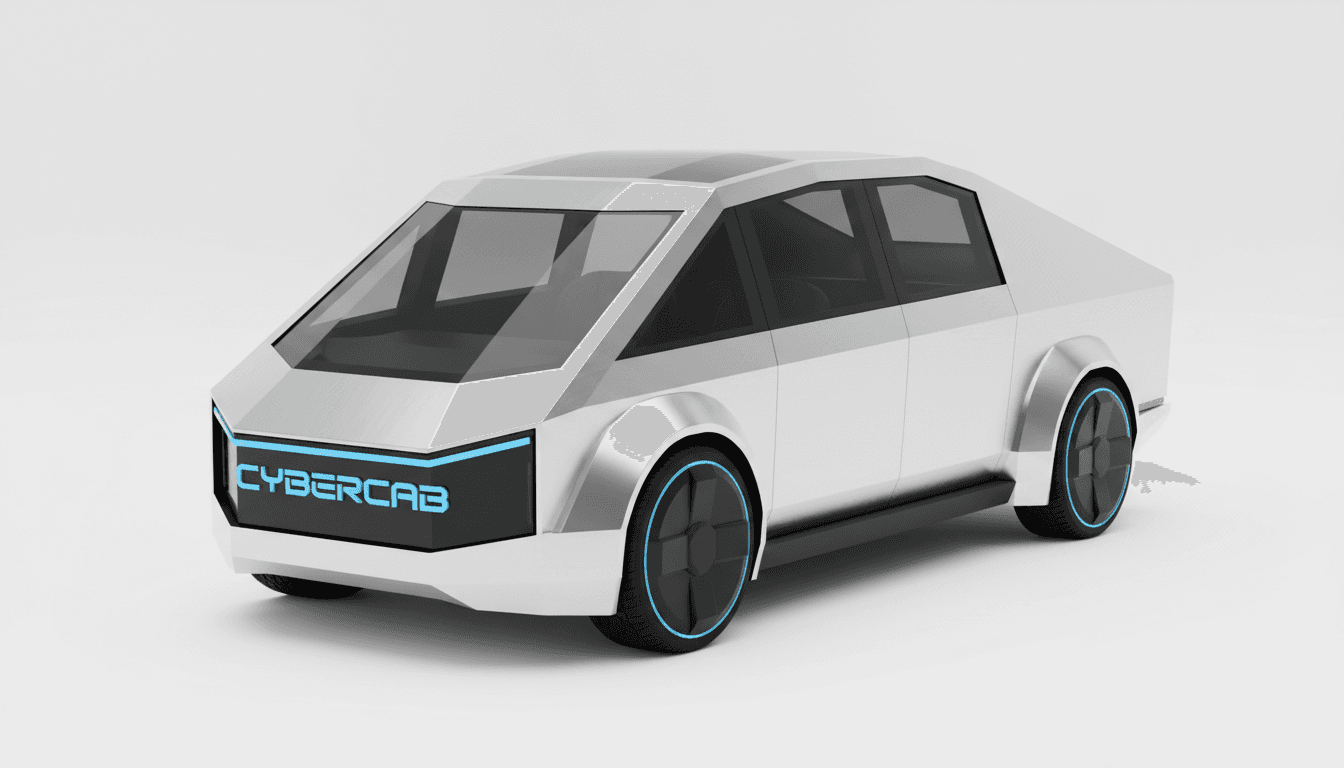
How much could the Cybercab cost in Poland, what are its specs and production timeline, and what stands in the way of charging infrastructure – a source-faithful overview.