Imagine the scene: a frosty morning in the province of Ontario and an empty, wide road that practically begs you to press the throttle harder.
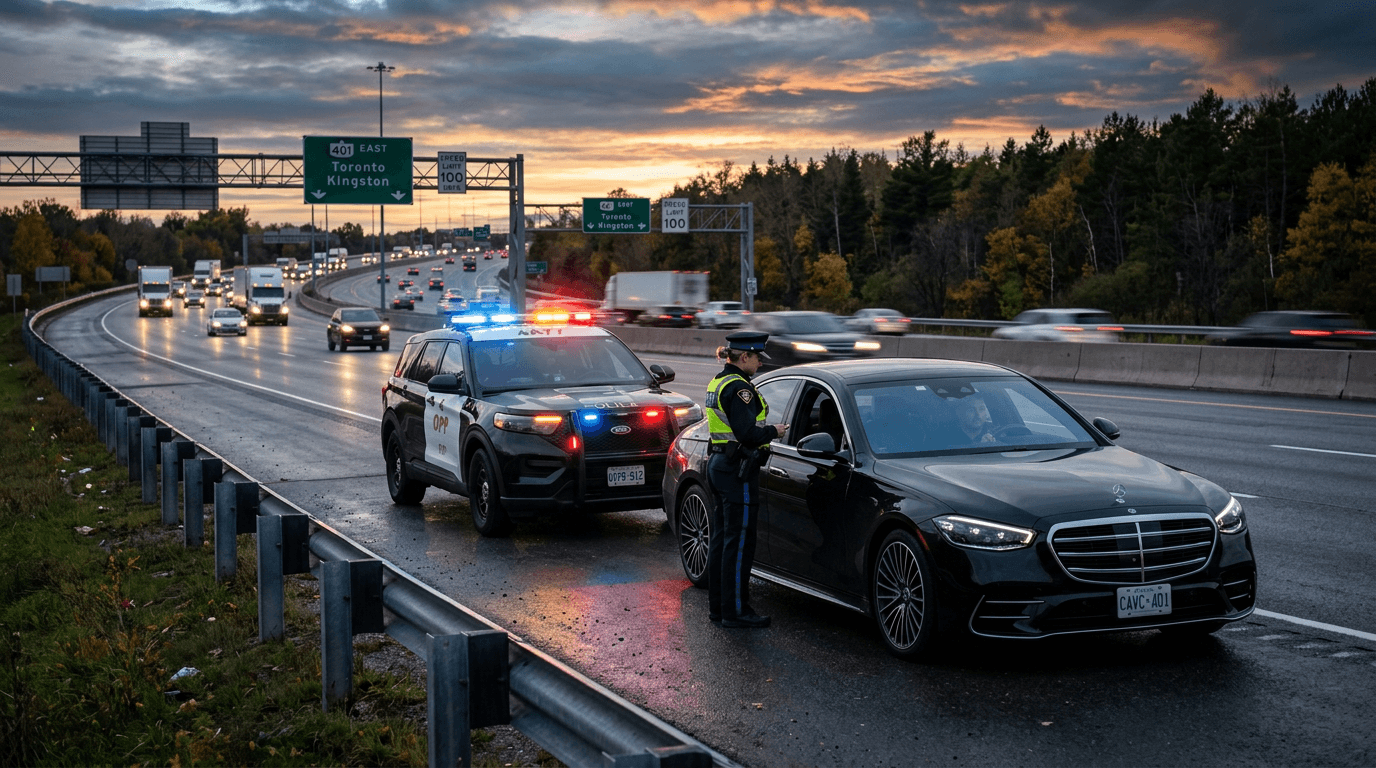
Our hero, driving his van with the grace of an elephant in a china shop, was speeding at almost twice the legal limit. In Canada, police do not play along with polite warnings or safety chats over a glazed doughnut.
Exceeding the limit by 40 km/h on a road with an 80 km/h cap is automatically classified as "stunt driving".
Driving a van at that speed in Canada is not stunt work – it is asking the police to dismantle your driving licence faster than a Formula 1 pit crew. Had this gentleman been driving an EV with a smart limiter, the only thing he would have had to tow away would have been his own ego.
The term sounds like a description of stunts in a Tom Cruise movie, where the actor hangs off the side of a taking-off aeroplane. In practice it means something far less heroic: an immediate 30-day roadside goodbye to your driving licence and the car being towed to a police lot for two weeks.
The cost of towing and impound? Enough to finance a small yacht in Monaco. This case shows that electric cars could protect a driver from such costs thanks to factory speed monitoring systems.
As if that were not enough, our senior decided to spice up the sterile interior of his vehicle with an open container of THC, lying carelessly on the passenger seat.
In the local legal reality, that was about as wise as walking into a hungry bear's cave wearing a premium kabanos sausage necklace. Ontario police are about as understanding about psychoactive substances in the cabin as an alligator that has just been woken from a nap.
The result of the escapade? Vehicle confiscation, suspended licence and a date with a justice of the peace that certainly will not be one of the most romantic experiences of the year.
Could electric cars have helped him?
Looking at this case from the perspective of our backyard in 2026, one could say that had the unlucky 70-year-old lived by the Vistula, his existence would have been simpler – provided he had been clever enough to switch to a compact "electric".
With today's conventional fuel prices, which make a visit to the pump feel like paying off a mortgage instalment, driving an old combustion beast at warp speed is a sport for financial kamikazes.
Browsing our catalogue, it is easy to see that the potential savings are simply colossal.
Today, in March 2026, the Polish market offers machines that make life easier even for the most absent-minded drivers. Take the Dacia Spring – after accounting for inflation and current trends it costs around 66,500 PLN.
This car has the soul of a lawnmower and an interior made of plastic that probably comes from recycled bottle caps, but in the city it is absolutely brilliant. The risk of entering "stunt driving" mode behind the wheel of a Spring is smaller than the chance of hitting the jackpot in a lottery without buying a ticket.
A real-world range of 225 km is more than enough for a trip to the pharmacy or the garden centre. Naturally, any "herbs" should be kept in tightly closed compartments, away from the eyes of the law.
If our Canadian road pirate had bigger ambitions and a wallet thicker than the user manual of a modern washing machine, he could aim for more refined electric cars.
Enter the BMW i3 Neue Klasse. It is not just a car but a technological manifesto with a range of up to almost 900 km. Thanks to its 800V architecture and 469 KM, our hero would have outrun the police before they could even think of maple syrup.
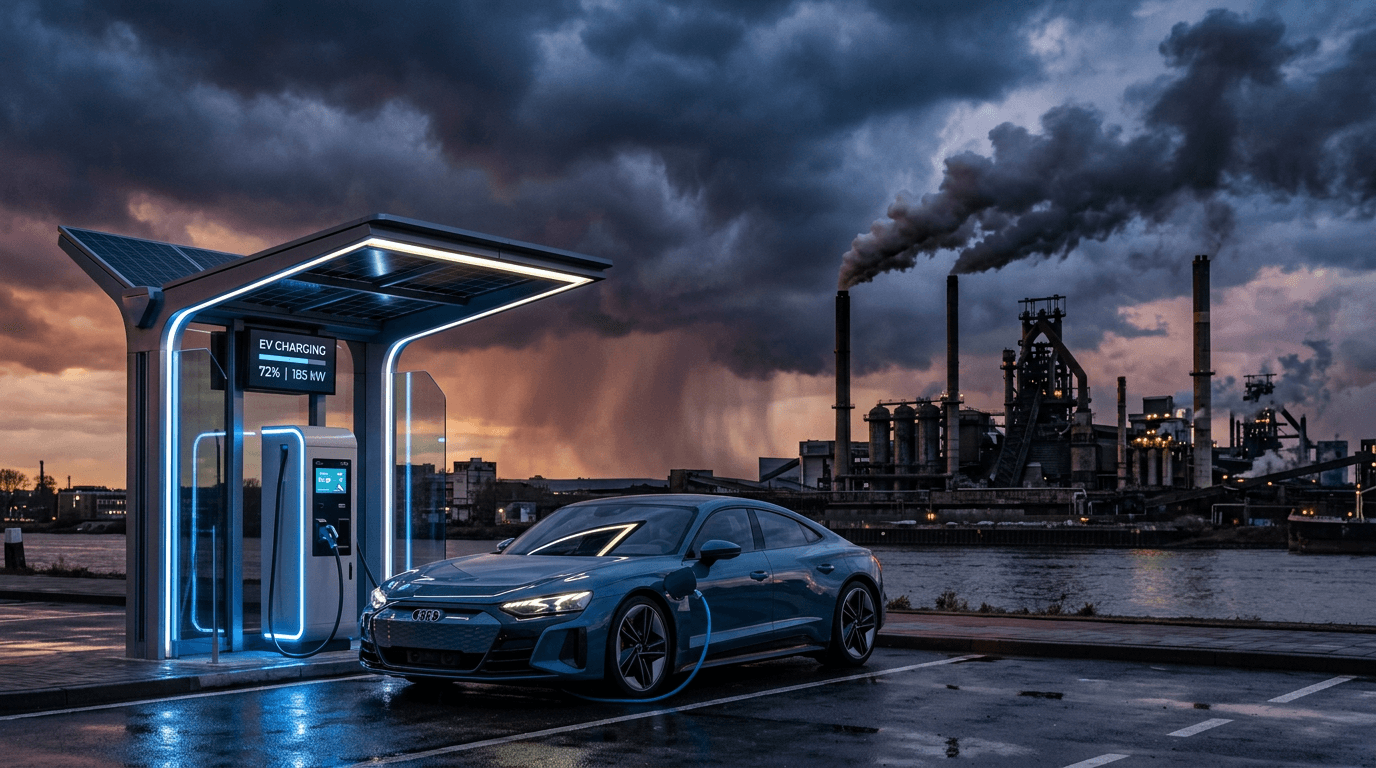
What is more, 400 kW DC charging allows regaining 400 km of range in just 10 minutes. That is faster than drinking a hot coffee from a petrol-station vending machine.
Technical challenges of modern mobility
In 2026, the new-car market has become a jungle in which it is easy to be devoured by your own ignorance. While Canada harshly punishes a "heavy foot", Polish drivers face technological traps.
While electric cars keep getting cheaper, the second-hand combustion market is a genuine minefield today.
There is growing talk of mechatronics problems in newer-generation DSG gearboxes from the Volkswagen group. A controller failure at around 80,000 kilometres is almost standard there.
Equally "interesting" is the situation with engines that use wet timing belts (e.g. newer PureTech or EcoBoost units). They can wreck a household budget faster than a visit to a dentist in central Warsaw.
If you are looking for durability you could leave to your grandchildren, look towards the Far East. The KGM SsangYong Torres EVX uses lithium-iron-phosphate (LFP) cells from BYD, which offer outstanding longevity.
Today's gearboxes and timing belts are clearly designed by people who sincerely hate your wallet. Switching to LFP batteries is the only way not to become a permanent sponsor of your local garage.
After government subsidies, this car costs reasonable money and offers a comfort that the Canadian 70-year-old could only envy from a hard cell bench.
The budget revolution and electric cars
Today in Poland we can apply for funding under the "NaszEauto" programme. For large families or entrepreneurs it can reach a record 40,000 PLN.
This makes models such as the Citroën ë-C3 (around 88,900 PLN) or the new Kia EV2 a realistic alternative to keeping an old diesel van in the garage.
By choosing electric cars, we invest in a future free from emissions penalties and costly combustion engine repairs.
Let us remember, however, that driving an "electric" is a different philosophy. In Canada, at -30 degrees, EV range loss reaches as much as 40%. In the Polish climate, where winter is mainly rain and mud, the drop in efficiency is far less drastic.
Even so, a private 11 kW wallbox is the baseline today – every home charger dramatically increases ownership comfort.
Without one, charging a modern EV from a regular socket is like trying to fill an Olympic swimming pool with a teaspoon.
Today's electric cars demand planning, but they reward you with silence and freedom from combustion-engine hardware problems. Had our Ontario hero opted for electromobility, he might have avoided such a harsh penalty.
The electric cars increasingly chosen by Poles are proof that the market is maturing. It is worth browsing our catalogue to find a model perfectly matched to your needs.
Final verdict
The moral of this story flows wide and clear: if you absolutely must speed through the world with illegal substances on the seat, do it only in computer games. There the only penalty is the "Game Over" screen.
Regardless of whether you choose electric cars or other powertrains, the rules are – and will remain – unforgiving.
And if you absolutely must break speed limits, buy yourself a Dacia Spring. Before you manage to exceed the limit by the magic 40 km/h, the police will already have retired, and you will safely make it home for an evening lemon balm tea.
Because in today's world it is not a feat to be fast – it is a feat to be invisible to the system. Nothing makes you more "invisible" than small electric cars parked outside a supermarket.
Remember that the right charger in the garage is the ultimate key to full freedom.
FAQ – Frequently asked questions
What exactly is the stunt driving classification in Canada?
Stunt driving is an aggressive category of offences in Ontario. It covers exceeding the speed limit by 40 km/h (on roads with a limit below 80 km/h) or by 50 km/h on motorways. The penalties are applied immediately: vehicle impound for 14 days and a 30-day roadside licence suspension.
What are the real running costs of the Dacia Spring in 2026?
The Spring uses on average 13.9 kWh per 100 km. On a night tariff, the cost of driving 100 km oscillates around 12-15 PLN. Servicing costs are minimal because the electric motor does not need oil changes, fuel filters or complicated accessory belts.
Does the BMW i3 Neue Klasse really offer 900 km of range?
The new generation is based on efficient cylindrical cells. In optimal city conditions the range can approach 900 km, but in a real motorway cycle (120 km/h) it is around 550-600 km, which is still a record result in this class.
Why is the Volkswagen group's mechanics controversial?
The main issue concerns mechatronics controllers in DQ200 gearboxes, which can be prone to overheating in dense city traffic. A further challenge is the infotainment software in newer model years, which despite updates still manages to irritate users.
What sets the LFP batteries in the SsangYong Torres EVX apart?
Lithium-iron-phosphate (LFP) cells are more resistant to thermal degradation and tolerate several times more charging cycles than classic NCM batteries. They can be safely charged to 100% capacity without the risk of rapid wear, which makes them an ideal choice for many years of use.
What are the requirements of the NaszEauto programme in 2026?
The maximum subsidy of 40,000 PLN is available to holders of the Large Family Card. The standard grant amount is around 18,750 PLN with a vehicle price cap of 225,000 PLN gross. The conditions include keeping ownership of the vehicle for at least 2 years and holding a full AC insurance policy.