The Cost of Missing Efficiency vs Electric Cars
If this looks like a problem only for people in Kentucky riding giant pickups, that is a mistake. It is a mental plague that ricochets through global supply chains and the pace of innovation.
The American proposal assumes that the average driver will spend $1,400 more on fuel over the entire lifetime of the car. At the current exchange rate, that translates to roughly PLN 5,500 simply evaporating through the exhaust pipe.
It is like buying a modern A+++ refrigerator and then voluntarily paying the power plant every month to cool an open window in July. Electric cars eliminate such waste entirely.
Public health experts warn about smog, congestion in city centers and rising costs of treating respiratory diseases.
Yet the fuel lobby, those big corporations with glass-and-steel office towers, rubs its hands with the joy of a cartoon villain.
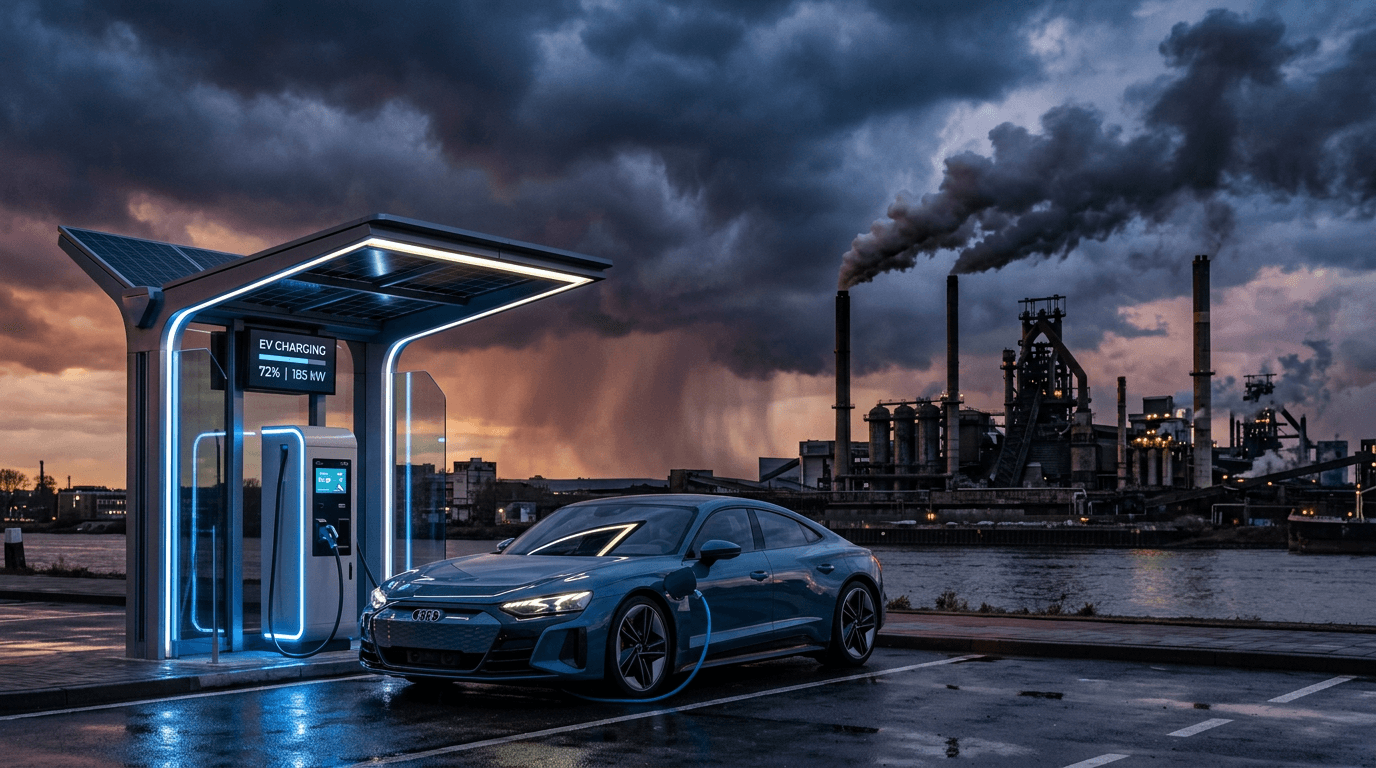
At the threshold of 2027, with 800V architecture, LFP cells with a million-kilometer lifespan and AI-based energy management systems available, the decision to prefer watching toxic fumes glow in the sunset is baffling.
This is not economic patriotism – it is sabotage of one's own future served on a tray labeled "freedom of choice." Meanwhile, it is electric cars that offer real independence.
Poland 2026: Where Electricity Makes Sense
On the Vistula, the situation looks entirely different and, surprisingly, much healthier. The market needs no decrees or political arguments on breakfast television – the numbers speak for themselves.
If anyone still claims electric cars are only for wealthy eccentrics eating kale for breakfast, they probably last visited a showroom around the Battle of Grunwald. Or at least when the Polonez was considered the height of luxury.
Today you can drive out of a showroom in a new Dacia Spring for a modest PLN 73,500. That is less than a decent home cinema set and half the price of a B-segment combustion SUV.
That combustion SUV has the aerodynamics of the Palace of Culture and drinks petrol like a thirsty camel in the desert. The full catalog of available models includes the Citroën ë-C3 at PLN 88,900 or the BYD Dolphin Surf priced below PLN 100,000.
These cars are not just an "alternative." They are the logical choice for anyone who can operate a calculator.
The real revolution, however, is happening in the family segment. The Volkswagen ID.7 Pure currently costs PLN 157,890 – the price level of a well-equipped Passat.
Except here you get over 600 km of WLTP range. Of course, let's be realistic: in winter, on a freezing trip to Zakopane, that range drops by about 40%, as recent tests proved.
But even then, with real-world 350-400 kilometers, electric cars of this class will go further than the average passenger's bladder can handle.
Charging Technology and Efficiency
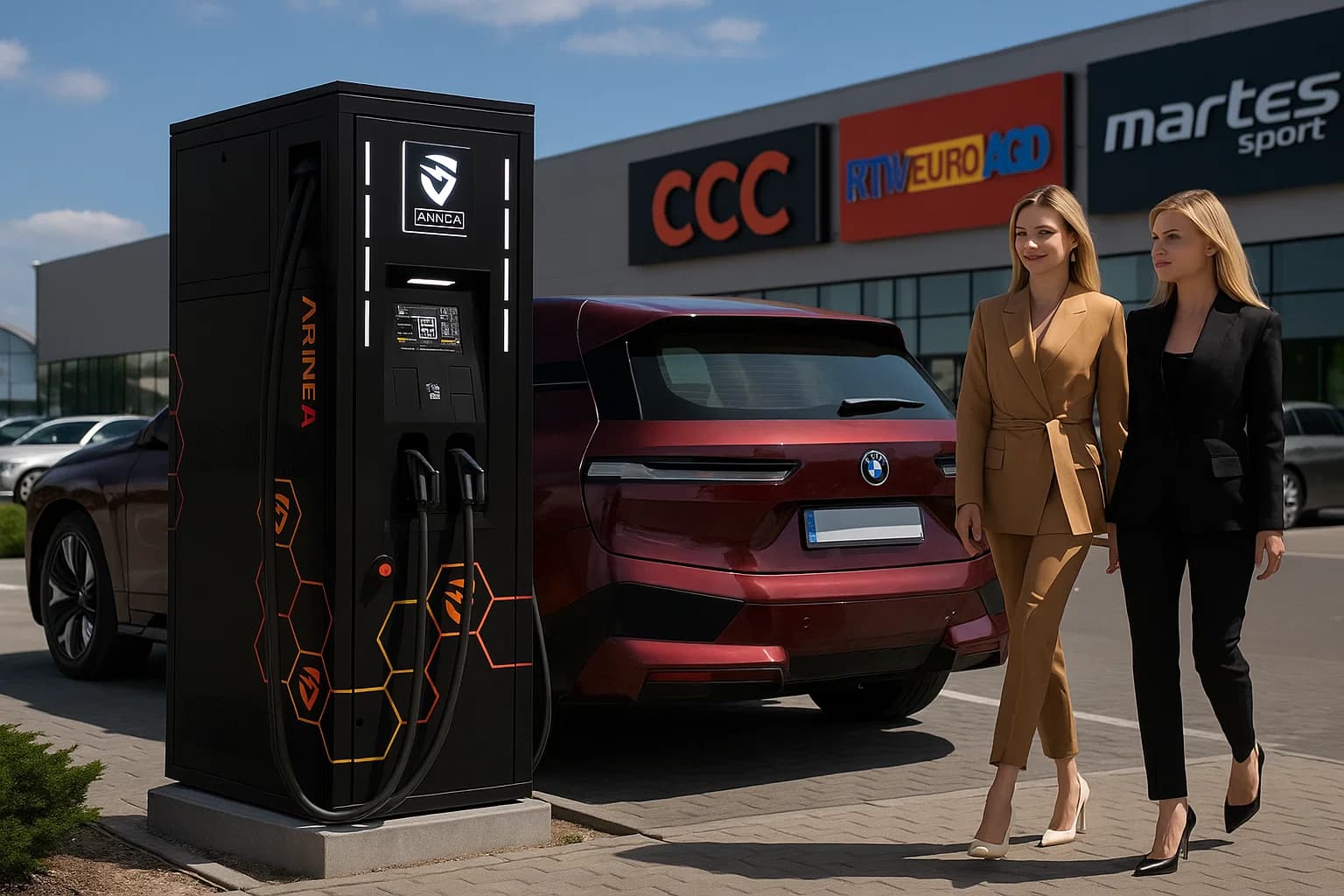
What is happening now in terms of infrastructure and charging speed is pure engineering magic. New BMW models on the Neue Klasse platform or the Volvo EX60 charge at up to 400 kW.
Translating into human terms: from 10 to 80 percent the battery fills in about 18 minutes. That is exactly how long it takes to drink an average coffee at the station, quickly check social media and make one bathroom visit.
Before you can smell the hot dog, the car is ready for another 300 kilometers of driving – provided a high-power charger is within reach.
Waiting 18 minutes for 300 km of range is not a sacrifice – it is a blessing. Humans were not built to sit in a metal box for 5 hours straight.
There is also the Hyundai Ioniq 5 at PLN 214,900, whose 800V architecture does the same thing faster than you can check your favorite team's score.
And the Americans? They want you to keep standing at a dirty, smelly dispenser, chasing leaking oil and watching your money turn into noise and waste heat.
It is like insisting on VHS rentals in the age of Netflix, arguing that "rewinding the tape builds character." Meanwhile, electric cars are simply pure convenience.
The current generation of devices, such as the home charger with 22 kW output, is becoming standard in every new housing estate.
The cost of driving 100 kilometers by charging from a home socket on a nighttime tariff has dropped below the price of a pack of cigarettes.
Comparing that to running a diesel with its DPF filters and crystallizing AdBlue is simply unfair to common sense. In Europe we have understood that modern electric cars are not ideology – they are mathematics.
Modern Electric Cars and the Final Verdict
The attempt to kill efficiency standards in the US is a desperate drumming of a civilization afraid to cut the umbilical cord from 19th-century energy sources. It is telling people that stairs are better than elevators.
In a world where the Kia EV3 or Renault 5 E-Tech give us great range, iconic style and ridiculously low running costs, a return to fuel-guzzling monsters is simply sad.
It is like watching an old sports champion, instead of retiring in glory, trying to run a marathon with a ball and chain while light electric cars zip past.
If NHTSA gets its way, American cars will become the motoring equivalent of typewriters in the computer age. They will be loud, clunky and unnecessary to anyone outside museums.
And in Poland? We will browse the catalog, pick the best model and drive cheaper, faster and without the suffocating cough on a frosty morning.
The future does not wait for those who want to slow it down. The future simply passes them by, choosing electric cars gliding in absolute silence.
FAQ – Frequently Asked Questions
Why is the US fuel economy rollback a problem for Europe?
The NHTSA decision affects the global strategy of automotive giants such as Ford and General Motors. Reduced pressure for efficiency in the US means slower investment in electric (EV) and hybrid powertrains. This may lead to outdated designs being offered in European markets or higher prices for zero-emission models in order to finance emissions penalties in other regions.
Does the real winter range of EVs at -15°C actually rule them out?
Absolutely not. Modern heat pumps, standard in cars like the VW ID.7 or Volvo EX60, limit the energy lost to cabin heating. Even a 30-40% range drop in extreme cold still leaves 300-400 km. With a growing network of HPC chargers above 150 kW, this enables smooth travel across Poland.
What does 800V architecture offer over standard 400V systems?
800V architecture transmits more power at lower current, minimizing heat generation. This means thinner, lighter cabling and extremely fast charging. Cars like the Hyundai Ioniq 5 can accept over 230 kW, cutting the highway stop to under 20 minutes.
Can the Polish power grid handle a sudden surge in electric cars?
The main challenge is the local distribution network, not total power generation. Solutions such as V2G (Vehicle-to-Grid) and smart charging during nighttime valleys can actually stabilize the grid. The average annual electricity consumption of an EV at 15,000 km equals that of one additional heat pump in a home.
How will solid-state technology affect vehicle price and use?
Solid-state batteries offer higher energy density, allowing lower vehicle mass while keeping the same range. They are lighter, safer and resistant to rapid degradation. Mass introduction of this technology after 2027 is expected to cut charging times below 10 minutes and enable cars with over 1,000 km of range.
Why are the additional US fuel cost calculations so important to the consumer?
The $1,400 figure is a market average. In reality these costs can be far higher due to oil price spikes. By investing in electric cars, consumers free themselves from the variable refinery margin, which over 10 years of use dramatically lowers the total cost of ownership.
What is the durability of today's EV batteries?
LFP cells withstand up to 3,000 full charge cycles. At a range of 400 km, that means up to 1,200,000 km of driving.