
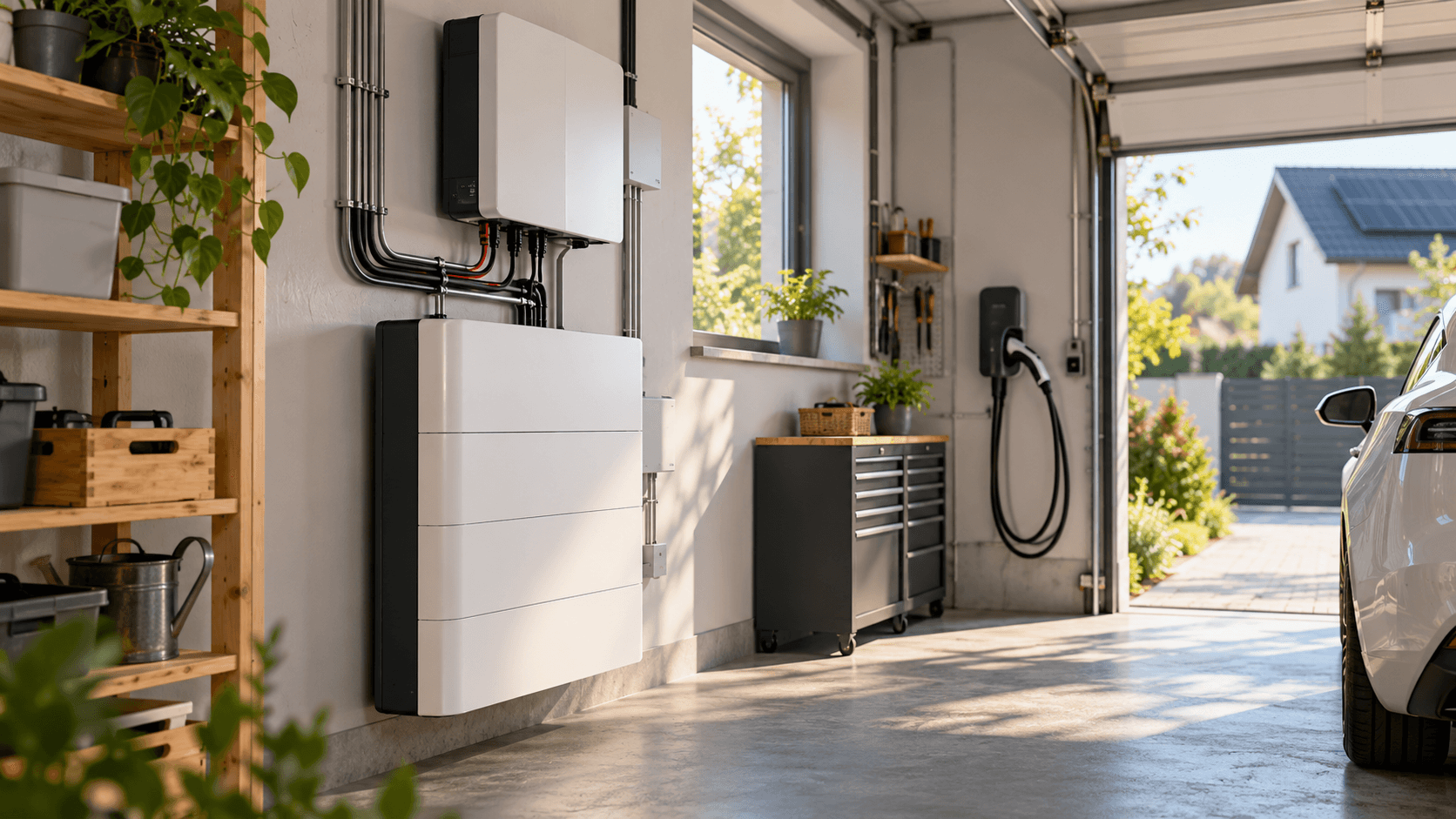
Home battery grants in Poland in 2026: eligibility and notification
Check PME2, grid and building notifications, the register threshold and Polish tax-relief rules.
Oct 27, 20263 min read
The installation route depends on unit count, rights to the parking bay and the building's electrical system. We show the relevant Polish Act provisions and a separate, explicit time-and-cost scenario.
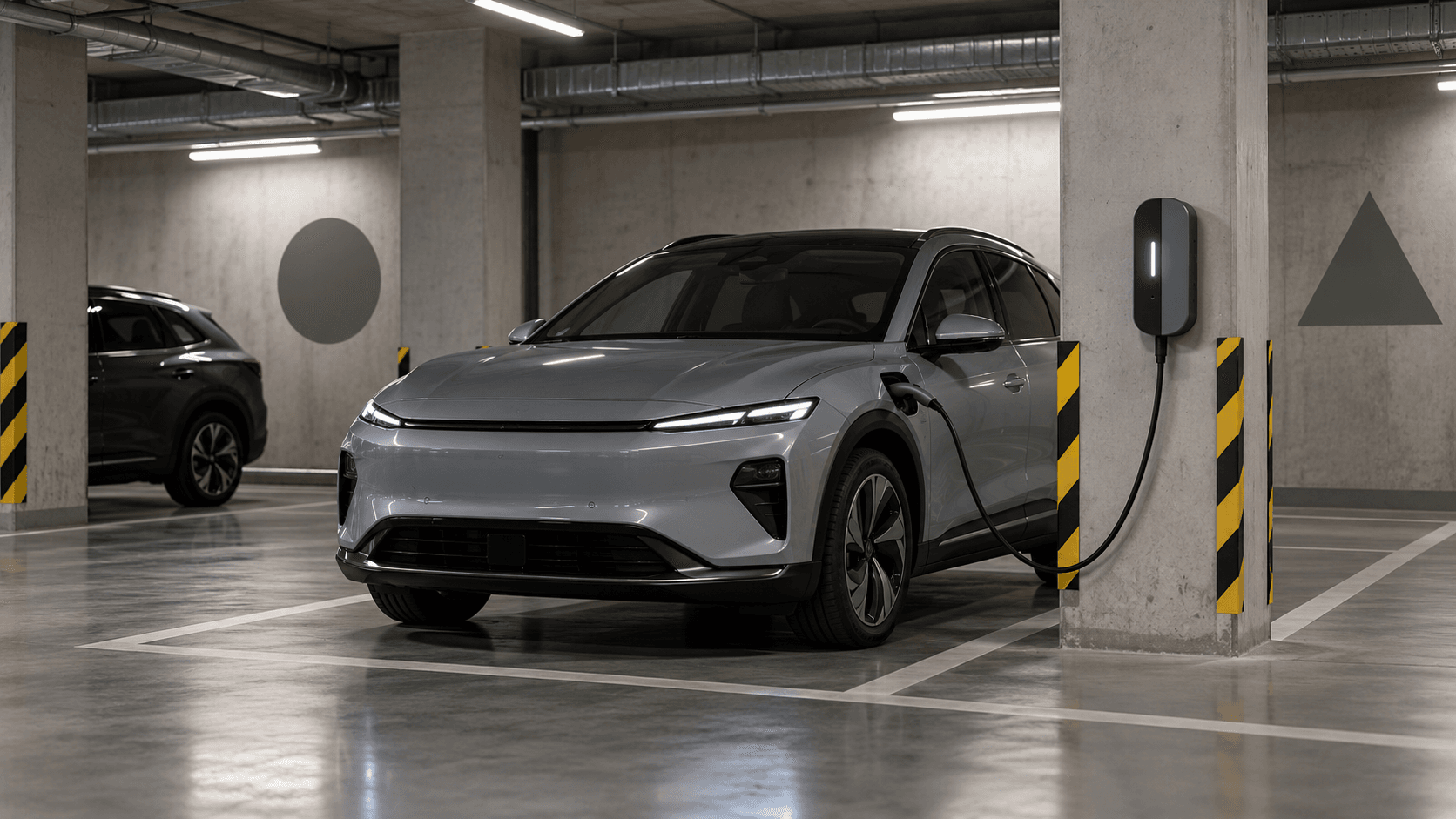
A multi-unit residential building with more than three separate units has a specific statutory route for installing a charging point. The applicant must hold legal title to a unit and have a parking space for exclusive use; the consent application goes to the community board, cooperative or property manager (Article 12b(1) of Poland's Electromobility and Alternative Fuels Act). For a building with fewer units, this particular provision does not describe the same process.
In a housing community, consent to install and use a point rated below 11 kW is an ordinary management act (Article 12b(2)). That does not remove the application or technical requirements. The application includes a commitment to cover all installation costs, proof of legal title, owner consent if the applicant is not the owner, and, for an immovable monument entered in the register of monuments or the municipal heritage record, consent by the provincial conservator competent for its location, issued by decision (Article 12b(3)(4) and (11)).
| Situation | Provision | What follows |
|---|---|---|
| Building has more than 3 separate units; applicant has title to a unit and exclusive parking | Electromobility Act, Article 12b(1) | Apply for consent from the community board, cooperative or property manager. |
| Housing community and a point rated below 11 kW | Article 12b(2) | Consent to install and use the point is an ordinary management act. |
| Application and required attachments | Article 12b(3)(1)–(4) and (11) | Applicant commits to cover all costs and supplies title, owner consent when the applicant is not the owner, and, for an immovable monument entered in the register of monuments or municipal heritage record, consent by the provincial conservator competent for its location, issued by decision. |
| Electrical installation assessment and application review deadline | Article 12b(4)–(6); Article 12c(1) and (5) | The manager orders the assessment within 30 days of the application; the manager considers the application within 30 days of receiving the assessment or, if no assessment is required, within 30 days of the application. The assessment covers safety and installation capacity. |
| No response | Article 12b(7)–(8) | Installation after the deadline is available only when no assessment is required and the applicant covers all costs; paragraph 8 lists refusal grounds. |
| Connection changes or listed immovable monument | Article 12b(9)–(11) | Applicant covers required connection changes; for an immovable monument entered in the register of monuments or municipal heritage record, consent by the provincial conservator competent for its location, issued by decision, is required. |
The manager orders a technical assessment within 30 days of the application and shares the report after receiving it (Article 12b(4)). The manager must then consider the application within 30 days of receiving the assessment or, if no assessment is required, within 30 days of the application date (Article 12b(5)). The Act waives that assessment when the electrical system was designed and built to supply charging points (Article 12b(6)). Its scope includes safety and whether the building installation can support the proposed point (Article 12c(1) and (5)).
No reply does not always mean consent. Installation after the deadline is available only when no assessment was required, the applicant covers all costs and the manager did not issue consent within the statutory period (Article 12b(7)). The Act also lists refusal grounds, including an adverse technical report and missing legal title, exclusive parking, owner consent or cost commitment (Article 12b(8)). A change to the connection agreement or an installation upgrade can be the applicant's cost; the operator installs the meter after an electricity sales agreement is signed (Article 12b(9)–(10)). For an immovable monument entered in the register of monuments or the municipal heritage record, consent by the provincial conservator competent for its location, issued by decision, is required (Article 12b(11)).
The second table does not describe a particular garage. We assume 5.5 kW available to the charging point, an 11 kW wallbox, an 11 kW vehicle AC limit and a 20 kWh session. The lowest limit is 5.5 kW, so ideal time is 3.6 hours; the session fits the assumed 8-hour window. URE announced an average 2026 household energy sales price of PLN 495.16/MWh before VAT and excise. At that input, energy alone costs PLN 9.90 per session. The full bill will differ because distribution, taxes and fees also apply.
| Input | Value | Result | Scope |
|---|---|---|---|
| BMW i4 eDrive35; vehicle AC limit 11 kW; 11 kW wallbox; 5.5 kW available to the point | min(11, 11, 5.5) = 5.5 kW | 20 kWh in 3.6 h; fits the assumed 8 h window | Ideal time, before losses and other limits |
| 20 kWh session; URE 2026 input: PLN 495.16/MWh = PLN 0.49516/kWh net | PLN 0.49516/kWh | PLN 9.90 per session; PLN 9.21/100 km at 18.6 kWh/100 km | Energy only; excludes VAT, excise, distribution and fixed charges |
Use your own inputs in the home-charging calculator, compare chargers, and find an alternative on the charging map. The i4 inputs are listed on the model family hub. The legal text was checked on October 27, 2026; confirm the building documents and current Act text before applying.
About the author
EvCompass articles are prepared by the editorial team using catalogue data and, where an article lists them, the sources shown below it.
Check PME2, grid and building notifications, the register threshold and Polish tax-relief rules.
The NaszEauto application window is closed, and added funding concerns applications already submitted. Here is the current programme status and a dated view of Polish catalogue prices and charging costs.
We compare 2026 Polish PIT and CIT limits with a declared lease scenario and a separate rental-invoice cash flow. Neither is presented as an offer or a rental tax result.