It is 19 February 2026. Tesla Robotaxi has announced the launch of "unsupervised" rides in Austin. One determined Texas enthusiast tried to catch such a vehicle over four days and made 38 attempts. Each time, a Tesla arrived with a so-called "Safety Monitor" on board – a live human inside.
The vision of full autonomy in Tesla's approach relies exclusively on cameras (Vision Only), without Lidar or radar. The premise is that since humans drive using only their eyes, a car should too. The problem is that the human brain has millions of years of evolution in contextual recognition, which neural networks still cannot replicate.
Electric cars are changing the world, but the road to full autonomy turns out to be exceptionally bumpy.
Tesla Robotaxi promises vs. brutal physics
The Tesla Robotaxi fleet, which was meant to send Uber drivers into retirement, still needs an electronic nanny. Rival Waymo, packed with expensive lidars, drives boringly and safely. Meanwhile, Tesla Robotaxi records minor collisions and intersection disorientation noticeably more often than an average driver.
Tesla has bet everything on a single card: pure computer vision. The unsupervised version of the FSD (Full Self-Driving) system makes the car behave like a teenager after a theory course. It sort of knows what's going on, but still fails on so-called "edge cases". Rare situations, such as a kangaroo crossing the road or a knocked-over traffic sign, can completely paralyse the algorithm.
Every such vehicle is still an advanced catalogue of technology that learns from its mistakes "on the fly".
Cybercab and the two-seat future of autonomy
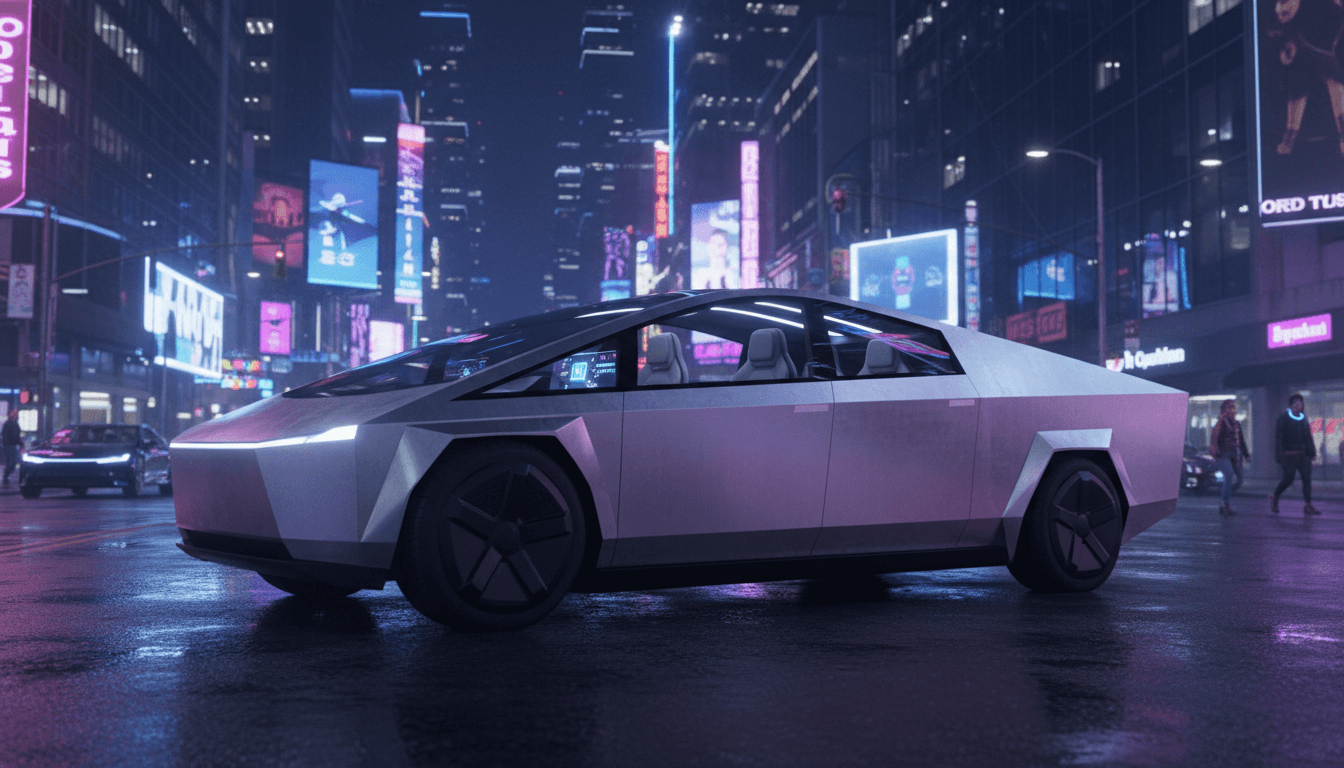
On the horizon looms Cybercab. This two-seat invention with "butterfly" doors is targeted to cost less than USD 30,000. In a Polish showroom, after adding duty, VAT and other fees, we should aim at around PLN 123,000.
What do we get in return? A vehicle without a steering wheel, pedals, and a rear window. Tesla decided that since the robot drives, the passenger does not need to know what is happening behind them. Inside sits a 21-inch tablet.
Technically, Cybercab is to use inductive charging. That means the traditional charger with a cable will become obsolete. You drive onto a pad in the garage and the current flows on its own. However, the efficiency of such a solution still raises engineers' doubts. A battery of approximately 40-50 kWh is meant to deliver a theoretical 320 kilometres of range.
When will Tesla Robotaxi reach Europe?
The company has placed Poland on the list of countries where the Tesla Robotaxi app is eventually meant to operate. Although electric cars are becoming increasingly popular here, regulations concerning AI remain extremely restrictive.
First comes the "supervised" stage, which has de facto been ongoing for years but is to be officially sanctioned. From February 2026, the FSD system is to be tested in neighbouring countries, with Poland in the queue.
European road signage is a labyrinth. While American highways are wide and predictable, the old town in Prague or narrow bottlenecks in Kraków are "Expert" level for a robotaxi. This means that for the coming years you will still have to keep your hands on the steering wheel.
Moreover, European certification authorities demand hard evidence of safety. This will significantly delay the Cybercab launch on the Old Continent compared with the US market.
Verdict: brilliant toy or real transport?
Tesla Robotaxi is currently the most fascinating mess in the automotive world. On one hand we have the vision of a visionary who believes our cars will earn our retirement. On the other hand we have reality. Finding a car without a supervisor borders on a miracle, and every software update carries the risk that the vehicle starts behaving unpredictably.
If you are interested in other electric cars, the market offer is currently much broader than just vague autonomy promises.
Is it worth waiting for Cybercab at PLN 123,000? If you are a technology enthusiast – absolutely yes. It will be the most controversial vehicle of the decade. However, if you simply want to reach your destination without wondering whether the algorithm confused a barrier with a free lane, stay with a traditional driver for now.
This is a fascinating time for the industry, in which every new charger and every line of code brings us measurably closer to the goal.
FAQ – Frequently asked questions
Can Tesla Robotaxi operate in all weather conditions?
Currently, no. The FSD (Full Self-Driving) system relies exclusively on cameras (Vision Only), which makes it vulnerable to phenomena that limit visibility. Heavy rain, dense fog or blinding sunlight can temporarily disable autonomous functions. Test models in Texas during sudden storms immediately require the safety driver to take over.
What are the real Cybercab trip costs for a passenger?
The estimated cost is around 20 cents per mile, which translates to roughly 50-60 groszy per kilometre. This is an operating cost, to which the platform's margin will be added. It is a drastic reduction compared with traditional taxis, made possible by eliminating the driver's salary and using cheaper energy.
Why does Cybercab have no steering wheel or pedals?
Cybercab has been designed for level 4 and 5 autonomy, where human intervention is not envisaged. The lack of physical controls allows better use of interior space, lower vehicle mass and a production cost reduction of around 15%. However, this poses a major type-approval challenge in many countries.
Can I buy a Cybercab privately as an individual?
Yes, the business model assumes sales to both fleet operators and individual customers. A private owner will be able to add their car to the "Tesla Network" and earn from it when they do not need it themselves. Return on investment at the USD 30,000 price is estimated at around 3 years of intensive car use.
What happens in an accident with no driver in the cabin?
In the case of an unsupervised robotaxi, civil liability will likely rest with the software manufacturer or fleet operator. Tesla aims to make its systems statistically safer than humans, which underpins its legal defence and insurance strategy.
How does inductive charging work in Cybercab?
The vehicle has no physical connector. Charging is wireless, using magnetic resonance between a coil in the chassis and a pad in the ground. Expected power is 11-20 kW. The solution provides full automation of fleet handling, although it involves around 10-15% energy loss compared with a cable.