Imagine you are eating a fine dinner in Modena, sipping Chianti, when a guest in a Xiaomi tracksuit walks into the restaurant and starts claiming he can prepare better ravioli using a microwave. Sounds like heresy? It does.
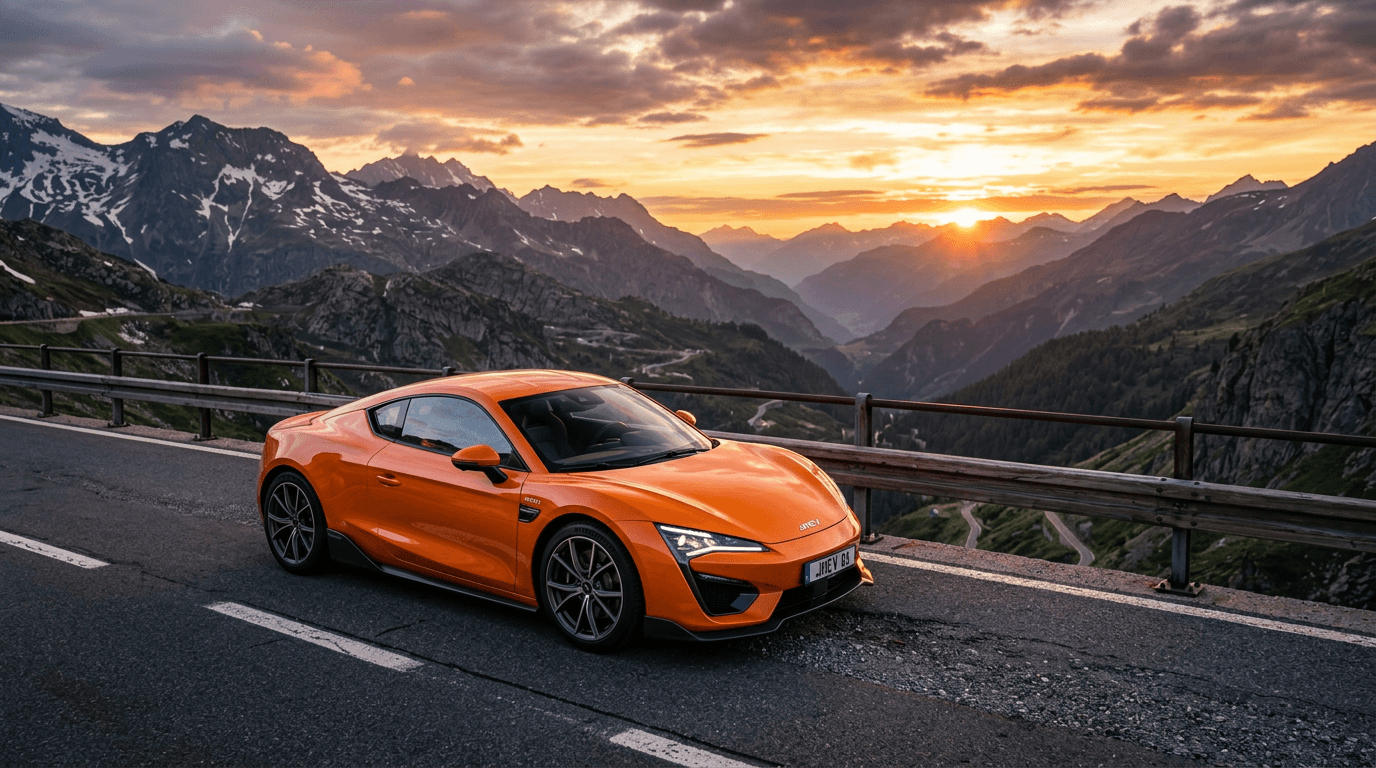
But that "guest" has just parked outside and his name is JMEV SC01. It is not another generic crossover with all the character of a cardboard shoebox. It is a machine built with one very specific purpose: to prove that electricity in motoring does not have to serve only to power refrigerators.
The market dominated by electric cars has recently become about as exciting as watching paint dry on a tax office wall. We get more two-tonne mammoths on wheels that can sprint to 100 km/h in three seconds but have the charm of a drunk hipopotamus in a china shop.
And then they appear – the Chinese from Tianjin Gongjiangpai Auto Technology, supported by the smartphone giant Xiaomi. They decided to do something European manufacturers have forgotten, busy as they are with fitting ever larger tablets into cockpits: a sports car that does not weigh as much as a detached house with a basement. The JMEV SC01 is a breath of fresh air in a segment aimed at pure driving fun.
Anatomy of the Chinese go-kart that is the JMEV SC01
The SC01 is a middle finger aimed at excess weight. In a world where the average EV weighs as much as a small planet, this Chinese projectile comes in at just 1365 kg. To achieve that, the engineers designing the JMEV SC01 had to abandon the conventional "skateboard" chassis approach that plagues modern electromobility.
Dear European stylists, you can stop designing SUVs that look like sliced loaves of bread. The SC01 weighs the same as a combustion Cayman, yet it has twice the power and acceleration that rearranges the geometry of your face. This is not evolution – it is a humiliation of the old continent.
Instead, a tubular space frame was used – a solution straight from endurance racing and the most orthodox British manufacturers. It is like sending a ballerina armed with a butcher's knife and a black belt in karate to a heavyweight gala.
Under the bodywork, which looks as if a Lancia Stratos had a fiery affair with a Lotus Evora in a dark Turin alley, sit two electric motors – one per axle. This architecture delivers not only all-wheel drive but, above all, impeccable traction.
Combined output of 435 hp and torque of 560 Nm are values that scramble the brain in the JMEV SC01. The result? The car shoots to 100 km/h in 2.9 seconds. Faster than a rumour about a new tax, and brutal enough to embarrass most combustion supercars costing millions.
If you check our catalog, you will see that very few models offer such performance in this weight class. While Porsche owners paying three times as much are still wondering whether their Launch Control will work, you will already be at the other end of the straight in your JMEV SC01.
Technology hidden beneath the shell
What makes the JMEV SC01 handle differently from a Tesla? The key is mass distribution. Most manufacturers fit batteries under the floor, which indeed lowers the centre of gravity but makes the driver feel as if he were sitting on top of the Eiffel Tower.
In this model, the 60 kWh battery pack is placed centrally, right behind the driver and passenger. It is a mid-ship layout, as found in Ferrari or Lamborghini. As a result, the car rotates around its own axis with such ease as if Newton's laws did not apply to it.
Push-rod suspension, rarely seen in road-legal cars, shows that the designers of the JMEV SC01 were not joking. The dampers are mounted horizontally inside the frame. This reduces unsprung mass and allows cornering precision so sharp you could perform neurosurgery on wet asphalt with this car.
Brakes? A Brembo system with six-piston callipers up front stops this projectile almost on the spot – essential given its uncompromising character.
Interior for purists and hardliners
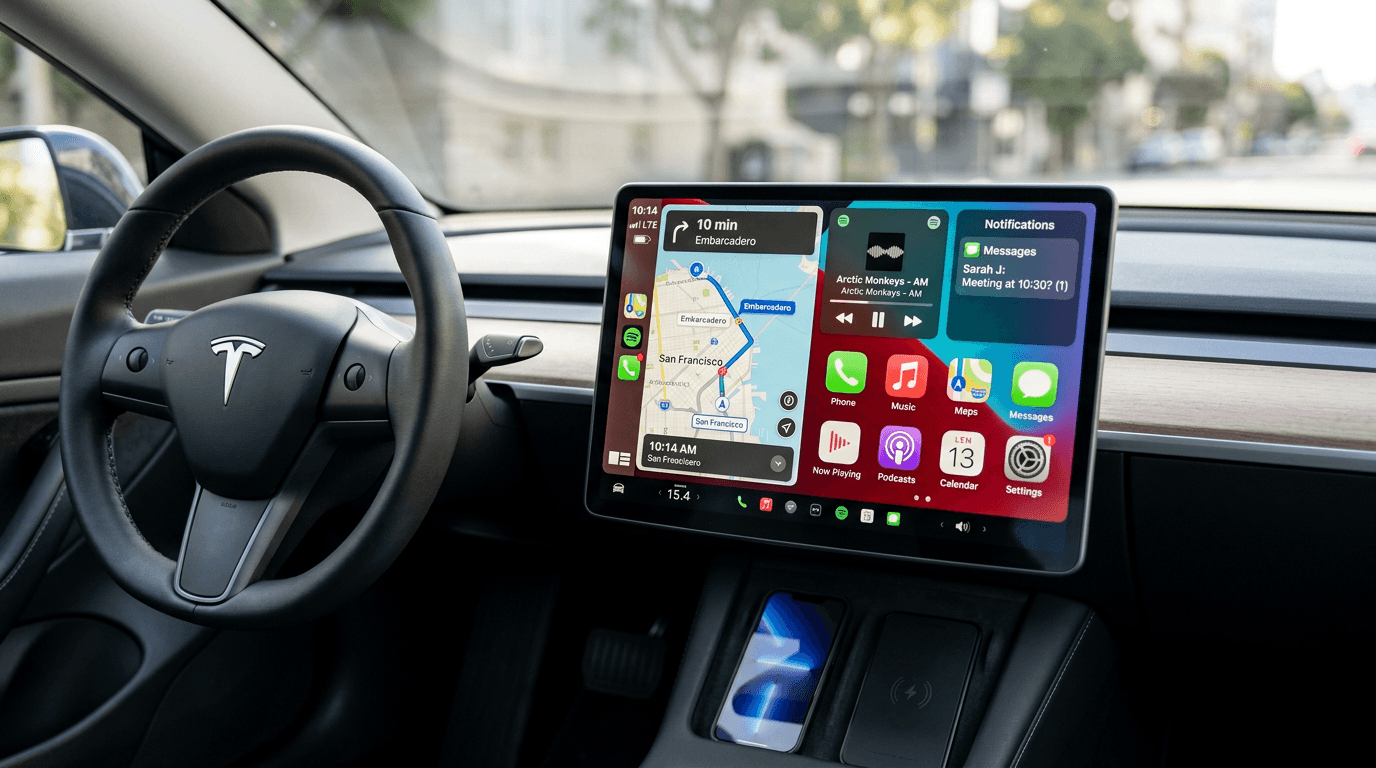
Climbing into the JMEV SC01, you will suffer a culture shock. There is no screen the size of a panorama painting here, and no climate controls buried under ten submenus. There is a single, modest digital instrument cluster in front of the driver, classic air-conditioning buttons and – behold – a traditional, mechanical handbrake lever.
In today's world that is almost an archaeological artefact, like a vinyl record in the era of Spotify. It is a clear signal: the JMEV SC01 exists for driving, not for scrolling TikTok in traffic.
The cabin is tight, raw and purpose-focused. Bucket seats hold the body like a vice, and the steering wheel is stripped of unnecessary buttons that could distract you while attacking the nearest hairpin. The manufacturer has deliberately skipped the soundproofing of a luxury saloon, so you will hear every pebble hitting the wheel arch.
For some that is a flaw; for an enthusiast it is pure mechanical symphony, even if instead of a V8 roar we get the whistle of electrons in JMEV SC01 form.
Range and Italian diplomacy
Of course, the Chinese claims of 500 kilometres of range can be filed under fairy tales. Those numbers are based on the CLTC cycle, which is wildly optimistic. In the real world, with typical Polish weather and a heavy right foot – mandatory in the JMEV SC01 – expect more like 330–340 kilometres.
But let's be honest: nobody in their right mind buys a two-seater go-kart with 435 hp to drive it on holiday to Croatia with a caravan. It is a toy for generating endorphins. When the battery runs low, any fast charger will restore energy in a dozen or so minutes.
The biggest trick of the JMEV SC01, however, lies in its expansion strategy. The car is set to be assembled in Italy, a move that is brilliantly simple. It lets Chinese capital sidestep the punitive tariffs imposed by the European Union, while marketers can safely spin a narrative of European heritage and passion.
Italian assembly is a masterpiece of tariff avoidance dressed in an Armani suit. The Chinese know that a "Made in Italy" sticker sells dreams better than any certificate from Tianjin.
Yet only 1,000 units will reach the Old Continent in the first production run. That makes this car more exclusive than an invitation to a private papal audience.
Verdict: how much does the JMEV SC01 cost?
The price in Poland should hover around PLN 260,000 – 270,000. For that sum, the traditional competition will give you at best a well-equipped blender on wheels in the form of a city SUV. The JMEV SC01 plays in an entirely different emotional league.
It is proof that electrification does not have to mean the end of driving joy. It is a raw, shamelessly fast and fascinatingly simple go-kart that makes modern rival electric cars look overloaded with unnecessary technology.
If you manage to secure one of the thousand JMEV SC01 units, you will have something with a soul in your garage – even if that soul is powered from a socket. It is automotive punk rock in a world dominated by bland disco polo.
When choosing this model, it is worth checking straight away which charger will work best in your home garage. The JMEV SC01 is a car for those who are not afraid of the smell of burnt rubber and for whom what matters is how the car corners, not how fast it pairs with a phone.
It is worth browsing our catalog to see how this model stacks up against other sports contenders.
FAQ – Frequently asked questions
What type of cells are used in the JMEV SC01 battery?
The SC01 uses high-energy-density lithium-ion cells. The pack has a capacity of 60 kWh and uses liquid cooling, which keeps performance consistent during hard driving and minimises power drops.
Does the car support fast charging?
Yes, the SC01 supports DC fast charging. Thanks to the relatively small 60 kWh pack, charging the battery from 30% to 80% takes around 25 minutes on a suitably powerful charger.
What are the exact dimensions of the vehicle?
The SC01 is an extremely compact machine. Length is 4085 mm, width 1820 mm, and height just 1162 mm. The wheelbase is 2500 mm. These proportions make the car short and wide, which translates into cornering stability.
Is the push-rod suspension adjustable?
The push-rod suspension with horizontal dampers allows advanced stiffness adjustment. Although the production version is optimised for aggressive road driving, the design enables precise tuning of the damping characteristics for a specific racing setup.
What kind of drivetrain does this model use?
The JMEV SC01 uses two PMSM electric motors placed symmetrically on both axles. This layout provides intelligent torque vectoring, which drastically reduces understeer and allows effective exits from tight corners.
Why was assembly chosen in Italy rather than direct import?
The decision to assemble in Italy is a strategic move aimed at optimising logistics. It allows the vehicle to be classified as a product with EU content. In addition, working with local specialists enables final tuning of the steering to the specific demands of European drivers.