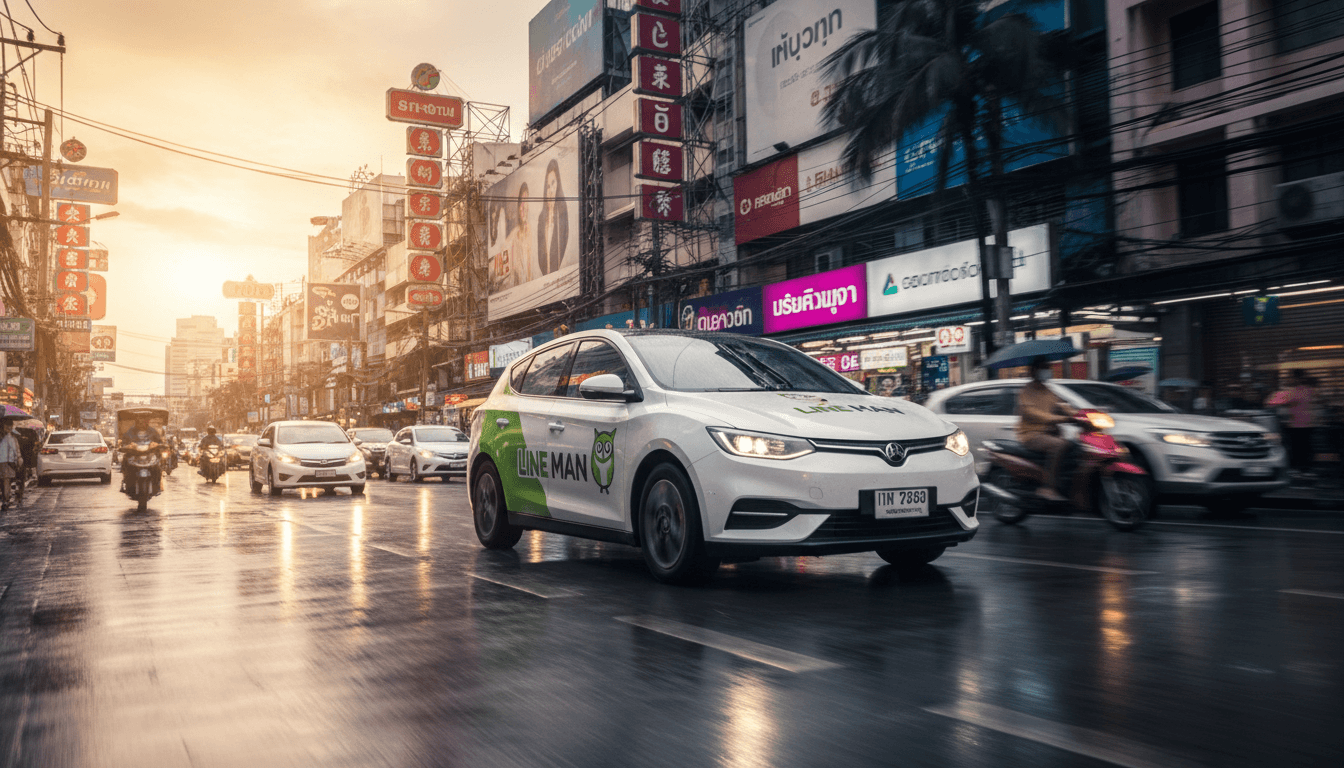
Picture yourself in Bangkok. It is 35 degrees Celsius in the shade, the humidity makes you feel like a dumpling in a steamer, and the air has the consistency of thick tail soup. In this traffic chaos, among roaring tuk-tuks, ancient Isuzu pickups belching black smoke, and thousands of scooters, it suddenly appears: the BYD e6. It is so quiet you could hear a tourist's wallet dropping, and so sterile that the local pad thai stalls look like a post-apocalyptic film set next to it. This is not another designer's whim of a rich teenager from the Sukhumvit district. This is a work tool meant to change the rules of the game in one of the most gridlocked cities in the world.
Thailand's super-app Line Man has just announced it is putting 50 units of this Chinese invention on the streets. It is like releasing 50 cleaning robots into a herd of unruly elephants. Ambitious? Yes. Will it work? Well, let us look at the numbers before the environmentalists' enthusiasm melts our radiators. The Chinese from Shenzhen did not come here on holiday; they came for the wallets of taxi drivers and fleet operators. The BYD e6 is meant to prove that electric cars are no longer a curiosity, but a real alternative to the internal-combustion classic.
BYD e6 – performance worthy of a lawnmower, range worthy of admiration
Let us start with what is under the bonnet, although in the case of the BYD e6, the term "performance" should be taken with a generous pinch of salt – and maybe a dash of sarcasm. The motor delivers a staggering – drum roll, please – 70 kW. For those who slept through physics class: that is about 95 horsepower. In a world where even an average kitchen mixer has more vigour, and modern smartphones have more computing power than Apollo mission computers, the BYD e6 promises acceleration you can measure with a wall calendar rather than a stopwatch. 180 Nm of torque, available from zero rpm, makes pulling away from the lights about as exciting as watching paint dry on a cloudy day. Do not expect to be pushed back into your seat. You will more likely have time to reflect on your life choices before the speedo needle passes one hundred.
But wait a moment. This car is not meant to win lumberjack races or enter the Paris–Dakar rally. It is meant to be a workhorse, an electric mule that never asks for oats, only a few electrons. The 71.7 kWh battery promises 415 kilometres of range under the WLTC cycle. In urban jungle conditions, where average speed is about that of an arthritic pensioner on a stroll, the BYD e6 can run almost endlessly. Energy consumption of 17 kWh per 100 km in the city is a figure that makes owners of old Mercedes "barrels" cry into their empty tanks. And if the driver pulls up to a point with a fast charger from EA Anywhere, they also receive a 10% cashback on charging costs. It is like buying a beer and getting the change in crispy pretzels – pure profit for a taxi driver counting every baht in their wallet.
Interior – dragon face in the service of the passenger
The second generation BYD e6 is based on the Song Max and uses the so-called "Dragon Face" design language. Sounds fierce, right? It suggests aggression, fire, and mythical beasts. In practice, it is just a competently drawn, almost boring MPV with one task: to carry five people and their luggage without triggering claustrophobia in anyone. The designers dropped flashy chrome in favour of functionality. Inside, we find the famous Blade Battery cells – a lithium-iron-phosphate (LFP) technology that is the pride of the Chinese manufacturer. These are not ordinary batteries; they are components that passed a nail-penetration test without exploding in an engineer's face. This is meant to ensure that the BYD e6 does not turn into a fireball during fast DC charging, which incidentally takes the car from 20% to 80% in about an hour and a half.
In Poland, where we now browse more than one catalogue and see that a BYD Dolphin in the Surf Boost version costs 97,700 PLN (and after the mythical "Mój Elektryk" subsidy the figure becomes even more attractive), utilitarian machines like the BYD e6 remind us that the Chinese have stopped copying and started dominating. They are not into sentimentality. While European automotive giants are still debating Euro 7 norms and figuring out how to fit a particulate filter into a lawnmower exhaust, BYD is simply flooding the market with ready-made, affordable solutions. Thailand, by introducing a fleet of BYD e6, is switching to electric wedges set to cut CO2 emissions by nearly 1,800 tonnes per year. It is as if several thousand smoking chimneys suddenly disappeared from the face of the earth.
Why the BYD e6 makes sense (unfortunately)
You can laugh at 95 horsepower. You can mock the fact that the BYD e6 has the soul of a microwave and zero charisma. But the truth is brutal and hits us straight in the pocket: for someone spending 12 hours a day in murderous traffic jams in Bangkok, Shanghai, or Warsaw, what matters is purely the cost per kilometre and whether the air conditioning (which in the BYD e6 is damn efficient) survives an hour of standing still. The Line Man and ITPP cooperation is a financial masterpiece, not just an ecological manifesto. The programme includes low-down-payment leases, charging cashbacks, and special "green financing" from Bank Kasikorn. It is a system of connected vessels in which ecology is just a nice green leaf attached to hard, ruthless business.
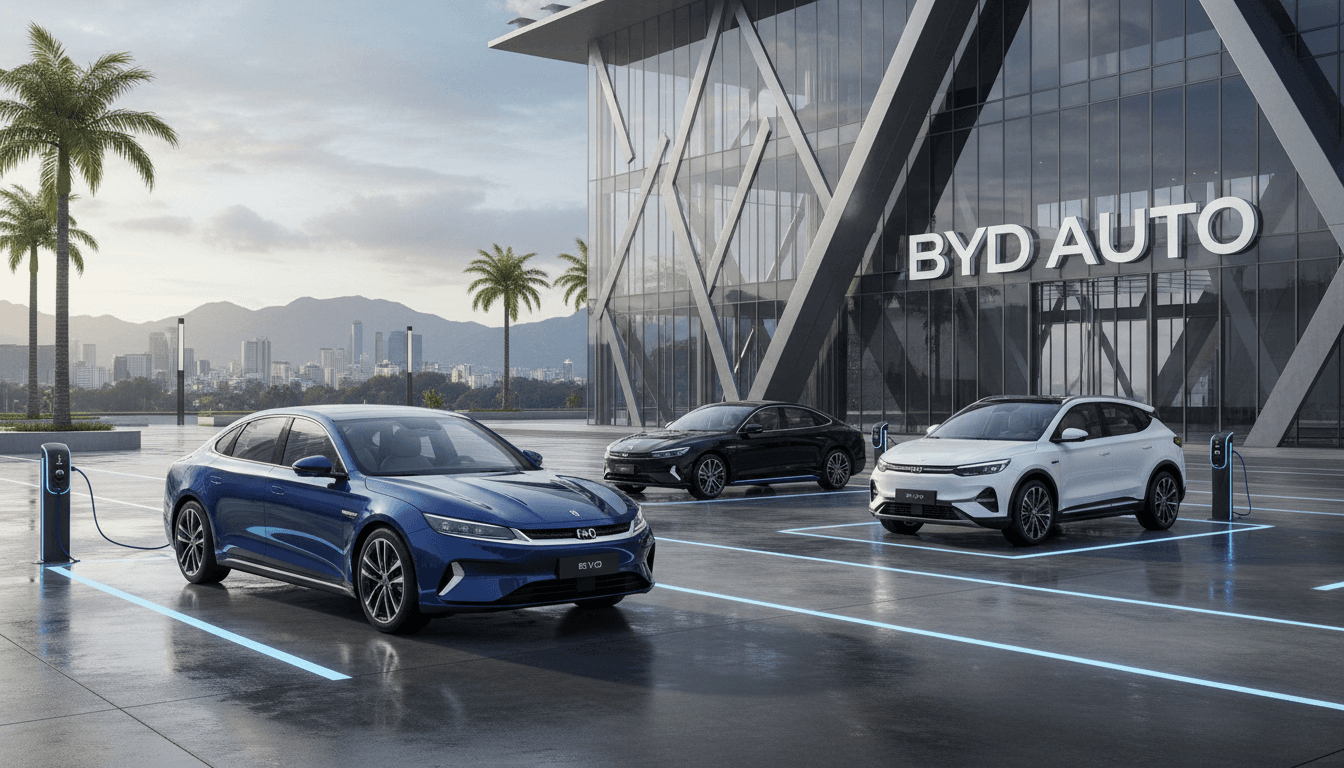
For us, fanatics of high-octane petrol and the guttural roar of a V8, the BYD e6 is like a visit to the dentist – necessary, not very pleasant, and boring, but ultimately preventing a bigger drama, namely total paralysis of cities by smog. The Chinese have understood something we still refuse to admit: electric cars in the city have stopped being a status symbol and become a service. If that service is cheap, quiet, and does not break down every two weeks, it wins against any combustion equivalent. It is worth checking out the brand's catalogue to understand the scale of their expansion.
Verdict
The BYD e6 is not a car you will dream about at night. You will not wash it every Sunday with reverence, using wax infused with unicorn tears. It is a household appliance on wheels, meant to carry a passenger from point A to point B in absolute silence, for pennies, and without poisoning the neighbourhood with nitrogen oxides. In a world where a litre of fuel costs a fortune and city centres close to combustion engines with the fury of an inquisitor, this Chinese MPV makes more sense than any supercar with a 5-litre engine. The world becomes a little cleaner, but – let us not kid ourselves – a lot more boring. For heaven's sake, if you see a BYD e6 in your rear-view mirror on the motorway, do not be afraid. It will not overtake you. It will simply patiently wait until you pull into a petrol station to leave half your salary there, while it calmly checks where the nearest charger is. By choosing modern electric cars, we commit to a new era of mobility.
FAQ – frequently asked questions
What exactly is the Blade Battery technology used in the e6?
Blade Battery is BYD's proprietary technology based on lithium-iron-phosphate (LFP) cells. Unlike traditional lithium-ion batteries, the cells take the form of long, flat "blades", allowing better energy packaging and significantly higher thermal safety. In nail-penetration tests, the Blade battery does not smoke or catch fire, and its surface temperature stays within 30–60°C.
Is 95 horsepower enough for smooth driving?
In city conditions – yes. The electric motor offers 180 Nm of torque available instantly, allowing smooth starts from traffic lights up to 50–60 km/h. However, at higher speeds or on the motorway, the low power (70 kW) becomes noticeable, making overtaking a process that requires planning. This is a car optimised for economy, not dynamics.
What is the real charging time of the BYD e6?
With a 60 kW DC fast charger, charging the battery from 20% to 80% takes about 90 minutes. With a standard 7 kW AC wallbox, a full charge of the 71.7 kWh pack takes about 12 hours, making the car ideal for overnight charging at a transport depot.
How much luggage does this electric MPV hold?
The BYD e6 offers a 580-litre boot. It is a regular, usable space, crucial for taxi and transport applications. Thanks to the flat floor (no central tunnel), rear-seat passengers also enjoy an unusually large amount of legroom, which is an advantage over many combustion cars of similar dimensions.
What are the operating costs compared to a combustion car?
Data from the Thai market indicate that the "fuel" (electricity) cost is about 60–70% lower than petrol. In addition, the absence of engine oil, fuel filter, and timing belt replacements cuts service costs by roughly 40–50% per year at annual mileages of 40,000–50,000 km.
Is the BYD e6 available in Poland?
BYD currently focuses in Poland on next-generation passenger models such as the Dolphin, Atto 3, and Seal. The e6 is offered mainly on Asian markets and in selected countries as a fleet vehicle (e.g. in the United Kingdom). However, the battery and drivetrain technology from the e6 underpins all newer models available in the Polish dealer network.