Socket revolution: how California and China are reshaping the EV market in 2026
If California were a person, it would be the guest at a party who first convinces everyone to jump into the pool, and then, when half the guests are already drifting around with fogged-up smartphones, suddenly announces that from now on, towels are only for those taking a dip for the first time.
It is a classic Silicon Valley move: first we build the hype, then we cash in on those who believed in the vision first. In this context, electric cars have become the centre of a new battle over subsidies, one that favours newcomers and sidelines existing technology enthusiasts.
Governor Gavin Newsom has just put USD 200 million on the table for a new EV subsidy programme. Sounds generous? Maybe, until you realise that at the current sales rate in the Sunshine State, it will barely last around three weeks of cheerful giveaways.
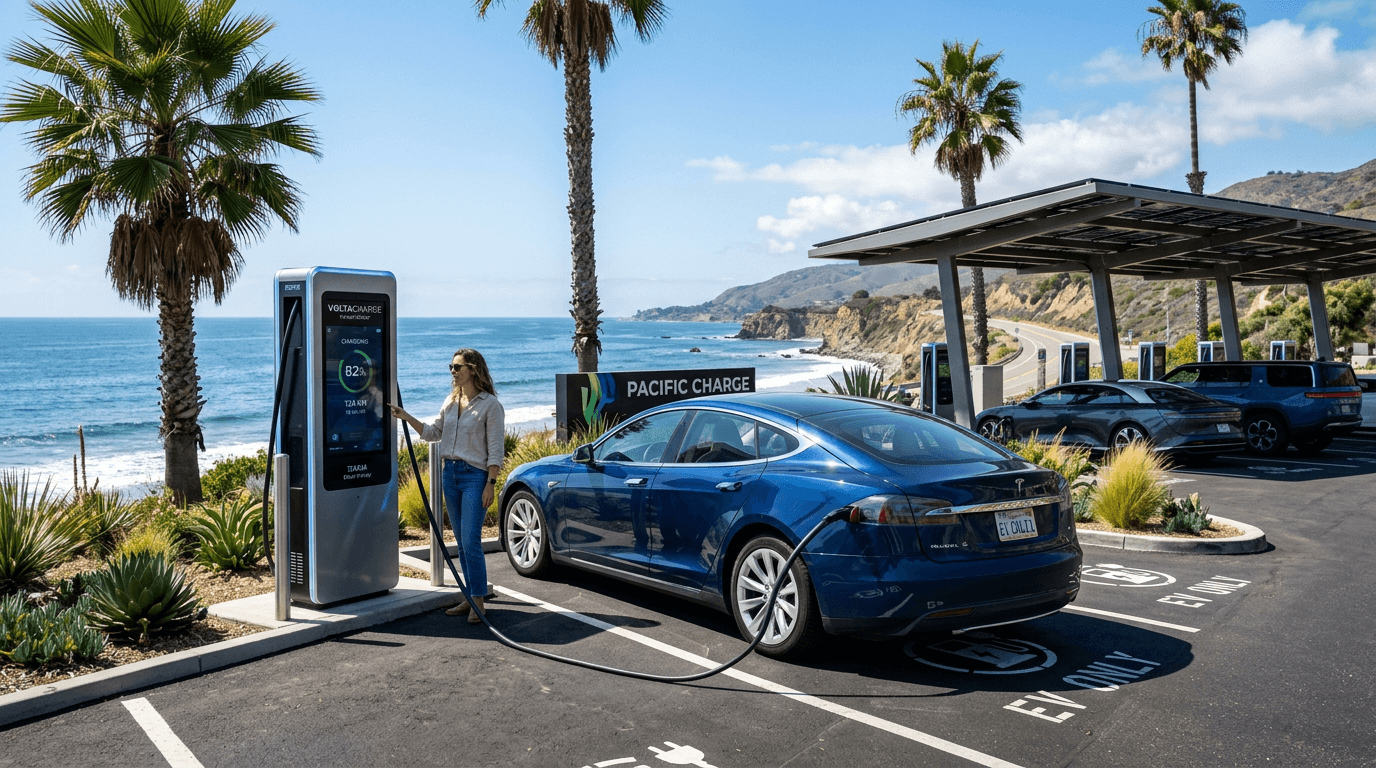
But the devil, as always, lies not in the details but in the brazen selection: this party is closed to veterans. If you have ever soiled your driveway with a charging cable, you will not get a cent. It is a financial middle finger aimed at loyal Tesla or Rivian customers who broke the trail when the infrastructure was still in its infancy.
Newsom's policy is pure Machiavellianism on four wheels. The state rewards infidelity: if you have been poisoning your neighbours with V8 exhaust fumes all your life, you will get a cheque with the governor's smile. If you were an eco-pioneer, you are left empty-handed.
The new order and EVs for first-timers
Data table 1
| Model |
Range (max) |
Drivetrain |
Architecture |
Estimated price |
| Tesla Model 3 |
550 km |
RWD / AWD |
400V |
around $53,000 |
| Hyundai Ioniq 6 |
550 km |
RWD / AWD |
800V |
around $50,000 |
| BMW i4 eDrive35 |
428 km |
RWD |
400V |
around $52,000 |
The logic of California officials is simple and hard, like the suspension on an old Lotus: once you climb into an EV, you will never get out. Data shows remorselessly that more than 90% of zero-emission drivers do not even glance at ICE showrooms when buying their next car.
Since you will buy another Tesla anyway, the state would rather spend your taxes on someone who still shivers at the thought of range and gazes tenderly at a diesel pump. It is a brutal form of market engineering aimed at squeezing the last sceptics out of their old Chevrolet and Ford V8s and onto modern electric cars.
The programme, however, has a clever little hook: "manufacturer matching". Want the state subsidy? The manufacturer must match it pound for pound out of its own pocket. This throws down the gauntlet to the giants in a way we have not seen in a long time.
If Tesla, Ford or General Motors want to keep their sales tempo in the wealthiest US state, they must forget about free government lunches and start actually subsidising the business. To avoid financing the whims of millionaires, strict caps were introduced: USD 55,000 for a passenger car and USD 80,000 for a pickup.
This means luxury yachts on wheels, such as the Lucid Air or Hummer EV, are left at the dock. The bloody fight is fought over the mass customer, who checks our catalogue and counts every dollar before paying a leasing instalment.
The Vistula landscape and an invasion from the Far East
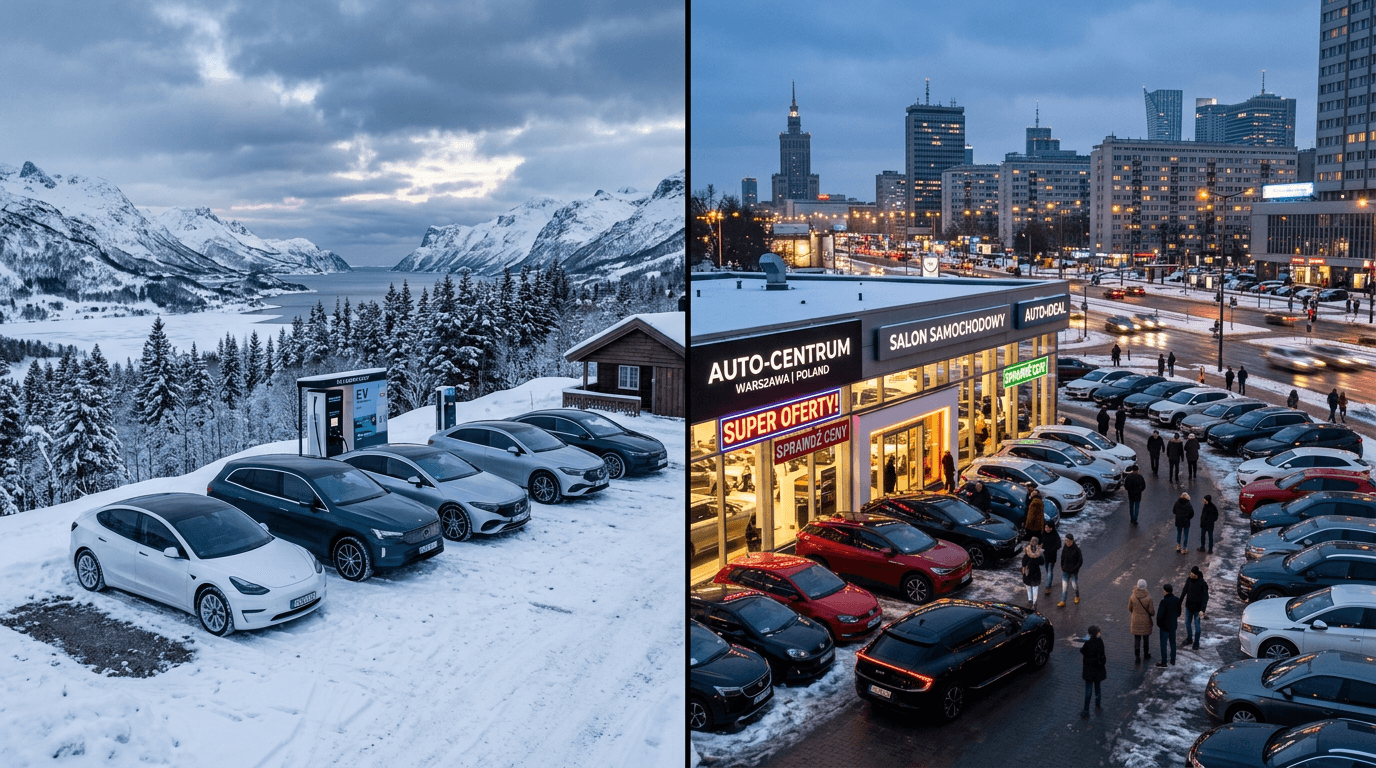
While Americans argue about who to top up with electrons, here, by the Vistula, the landscape is changing faster than a politician's opinion before an election. We are in 2026, and if you thought the Tesla Model Y would forever rule Polish car parks, blame BYD.
The Chinese giant did not come asking for permission; it simply kicked the door down. The BYD Dolphin Surf has become our new "people's car". In January alone, 265 units were sold, which in Polish terms is a knockout result for European brands.
It left behind not only Musk's American legend but also Czech pride in the form of the Skoda Elroq. The popularity that these electric cars are gaining shows that the Polish market is simply hungry for something new.
In Poland, electromobility has stopped being a sport for people with their own wind turbine and a vineyard on a hillside. Today, a decent EV, such as the facelifted Dacia Spring or the Citroën ë-C3, can be driven out of a showroom for less than PLN 100,000 gross.
That is the psychological barrier that has burst with a bang. And if you are looking for something for the city, on the second-hand market you will find a Volkswagen e-up! for PLN 34,900. Less than a year's supply of coffee and sandwiches in a trendy Warsaw café.
The joy of silence in a traffic jam and legally bypassing congestion in the bus lane is priceless. Poland has stopped being Europe's open-air museum and has become a testing ground for new brands offering technology once available only in the premium segment.
End of the era of range anxiety and charger scarcity
The biggest lie of the past decade was the mantra that you cannot drive an EV from Gdansk to Krakow without overnighting near Lodz. In 2026, that is no longer a challenge; it is simply routine.
Take the Audi A6 Avant e-tron. It promises over 700 km of range under WLTP. Even with a correction for Polish frost and motorway fantasies, we safely have around 440 km left.
The budget Skoda Elroq 85 with an 82 kWh battery allows more than 300 km on the motorway at temperatures close to zero. Modern electric cars handle Polish winters far better than designs from just a few years ago.
Complaining about range in 2026 is like crying over the lack of Wi-Fi in a café. If you cannot drive 300 kilometres in a Polish EV without panicking, the problem is not the battery but your ability to plan time for coffee.
What about charging? Poland's infrastructure has swollen to over 11,000 publicly accessible points. It is not yet the density of shops with a lizard in the logo, but every public high-power charger lifts the burden of planning a route with the precision of a Moon landing.
350-400 kW charging hubs are mushrooming at motorway service areas. Moreover, solid-state batteries are already on the horizon, promising 1,000 km of range and charging in 10 minutes.
This is the moment when the "standing at the pole" argument collapses. The car charges faster than you can eat a hot dog at the station. The electric cars available today are rarely limited by refuelling time.
Social engineering and hard financial data
The Californian idea of subsidising only newcomers is brutal social engineering. It is a signal: the days of subsidising a hobby for tech enthusiasts are definitely over.
The market is maturing and moving from the fascination-with-the-new phase to a phase of cold calculation. In Poland, 2026 shows exactly the same. The electric cars bought today are no longer an ecological manifesto but a logical economic choice.
Look at running costs. The average third-party liability insurance for an EV in Poland currently costs PLN 578. At the same time, hybrid owners must spend almost a hundred zloty more, and ICE owners pay even higher rates.
Add to that free parking in city centres, a privilege becoming ever more costly for the rest, and no fees for entering low-emission zones.
If you are still waiting for the mythical "right moment", look at the sales charts. The Chinese are already here, prices have caught up with ICE cars, and range is no longer a punchline.
It is time to stop clinging to the exhaust pipe. By choosing electric cars, you invest in a future that genuinely lowers the cost of daily commuting.
Note that electric cars have permanently inscribed themselves into the urban landscape. Although California's policy stirs emotions, its goal is clear: mass adoption.
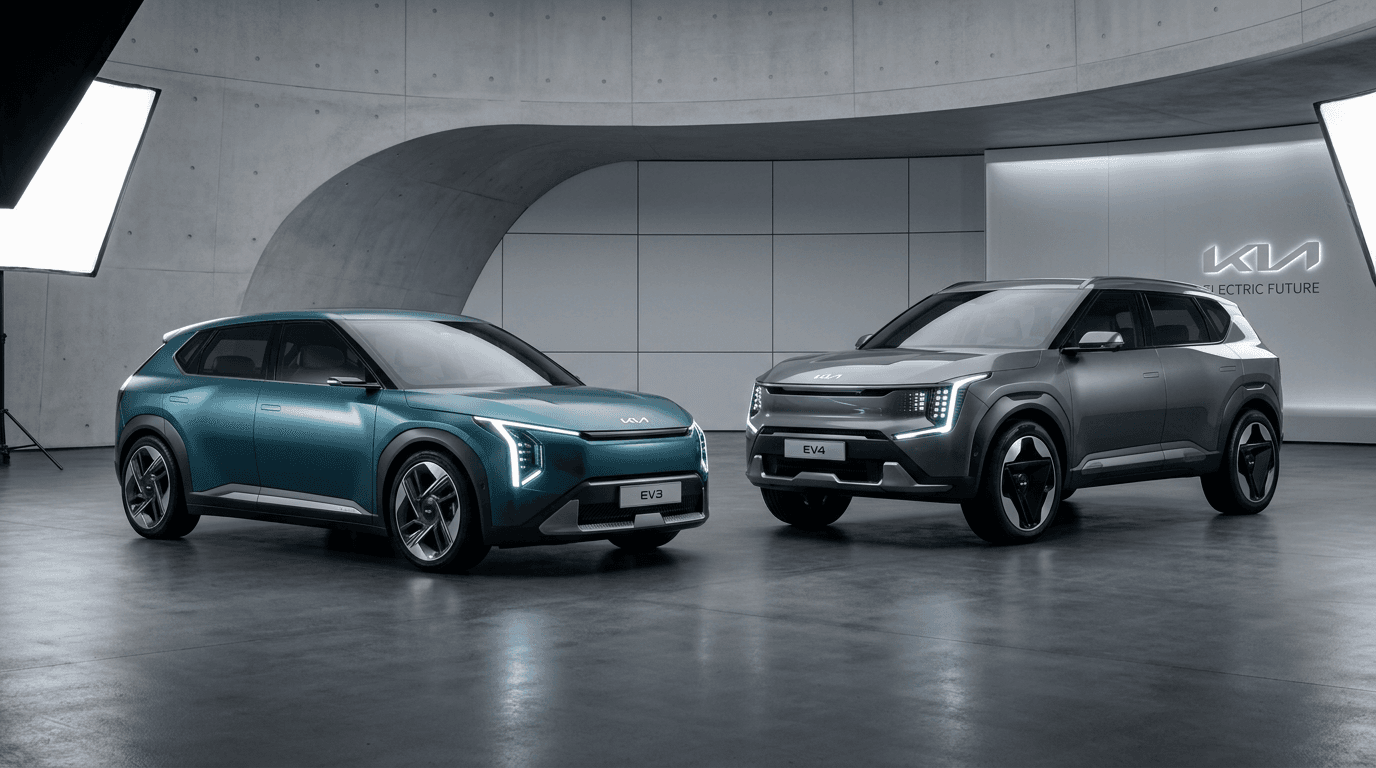
Browsing our catalogue, it is easy to see that manufacturers have adapted to the new rules. Today's electric cars are no longer just expensive toys, but above all practical compacts and family SUVs.
FAQ – Frequently asked questions
Why does California exclude current EV owners from subsidies?
The decision is based on customer-loyalty analysis. More than 90% of people who buy an EV once do not return to combustion engines. Authorities concluded that subsidising the next EV for the same person would be a waste of public funds, since that decision would be made anyway. The goal is to attract entirely new users to accelerate transport decarbonisation.
How does the manufacturer matching mechanism work in the subsidy programme?
It is a solution that forces manufacturers to co-finance the transition to electromobility. For a buyer to receive, e.g., USD 7,500 from the state, the manufacturer must offer a discount of the same value. As a result, the car price drops by USD 15,000, but taxpayers only cover half. This forces brands into more aggressive price competition and production-cost optimisation.
What are the real insurance costs of an EV in Poland compared to ICE cars?
Third-party liability insurance for EVs is statistically cheaper. The average premium in 2024 was PLN 578 for BEVs, while hybrid owners paid on average PLN 667 and petrol cars PLN 712. This stems from the risk profile: EV owners more often park in safe places and are less frequently involved in serious collisions.
Are Chinese brands like BYD a real threat to Tesla and European manufacturers?
Yes, BYD is already the world's largest producer of electrified vehicles. Its advantage is full control of the supply chain; it makes its own battery cells (Blade Battery technology). This allows it to sell models like the Dolphin or Seal at prices unattainable for Europe while keeping margins. In Poland, BYD is quickly winning over customers who previously considered budget models from traditional brands.
How will solid-state technology change the EV market in the coming years?
Solid-state batteries eliminate the drawbacks of lithium-ion cells. They offer around 50% higher energy density, enabling ranges of around 1,000 km without increasing vehicle weight. They are nearly non-flammable and allow charging from 10% to 80% in roughly 8-10 minutes. Broad commercialisation by brands such as Toyota is expected around 2027-2028.
What is the real winter range loss of an EV in Poland?
At -5 degrees Celsius, a modern EV loses 20% to 30% of its range. A car that covers 400 km in summer will cover roughly 280-310 km in winter. The largest energy draw is cabin heating just after start-up. The use of a heat pump, now becoming standard, significantly limits these losses and improves comfort in winter conditions.