Brussels plays poker, and the players look sideways
Europe has just woken up with its hand in… a charger. It is 2026 and the situation on the Old Continent feels like trying to put out a forest fire with a Hello Kitty water pistol.
For years, EU commissioners, munching buttery croissants in glass towers, dreamed of electric sovereignty. In the meantime, China quietly, millimetre by millimetre, bought up almost every molecule of lithium on the planet.
Today's automotive industry and modern electric cars are no longer a romantic race of mechanical horses or the sound of an exhaust system. It is a brutal geopolitical game about whether your car will have a soul from Europe or from Shenzhen.
While European engineers keep debating the perfect fit of a dashboard, the Chinese simply bought the entire periodic table. This is not evolution; it is a takeover powered by galvanic cells.
We used to argue about whether a Mercedes V8 was better than a BMW one. We debated the work culture of an inline-six and the precision of its handling. Today we argue about "local content" – how much of the Old Continent really sits inside the battery pushing your car forward.
And here the real trouble begins. Even though PowerCo (Volkswagen's offspring) and the French Verkor have finally started producing cells, their operational efficiency is smaller than a teenager's enthusiasm for cleaning the room on a Saturday.
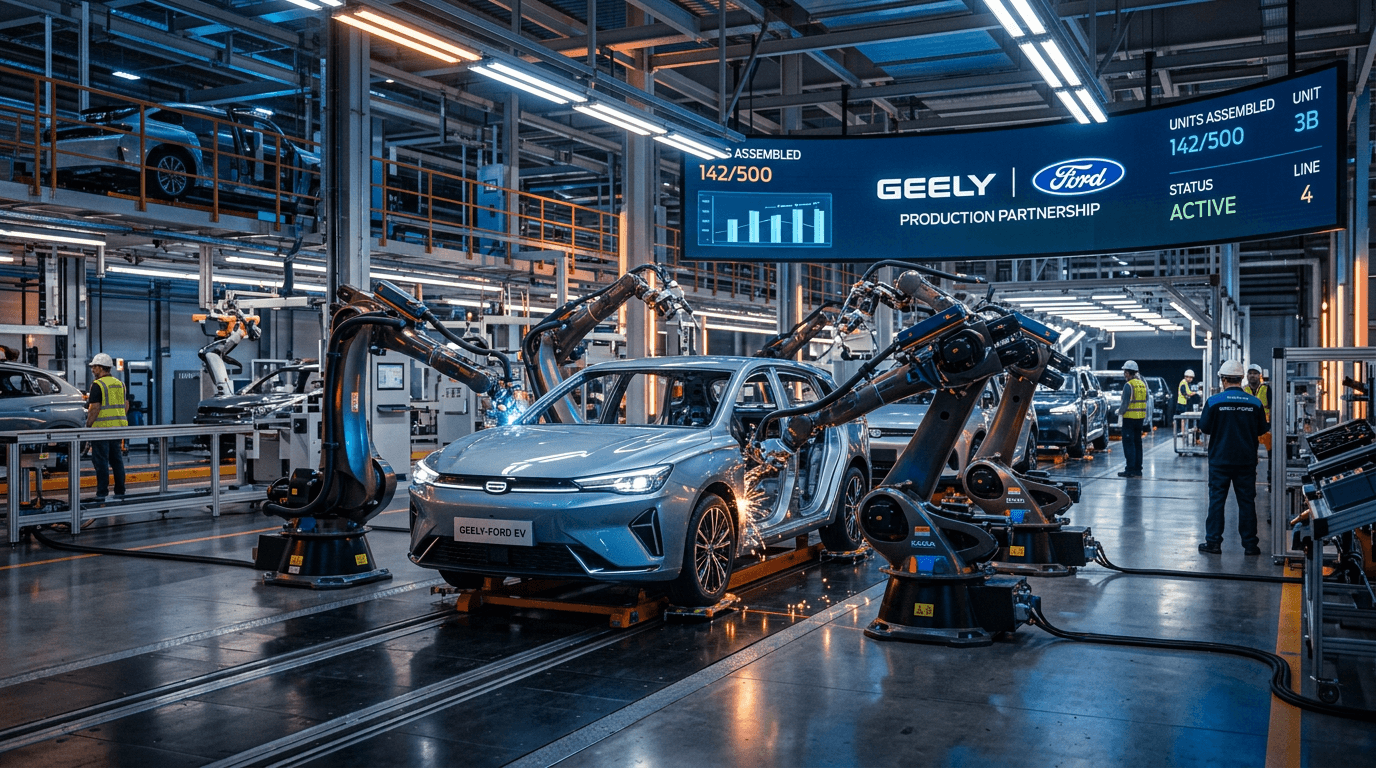
We use a miserable one-fifth of real production capacity. European gigafactories, instead of being bastions of modernity, currently look like expensive laboratories where engineers stare in horror at efficiency charts of Asian competitors.
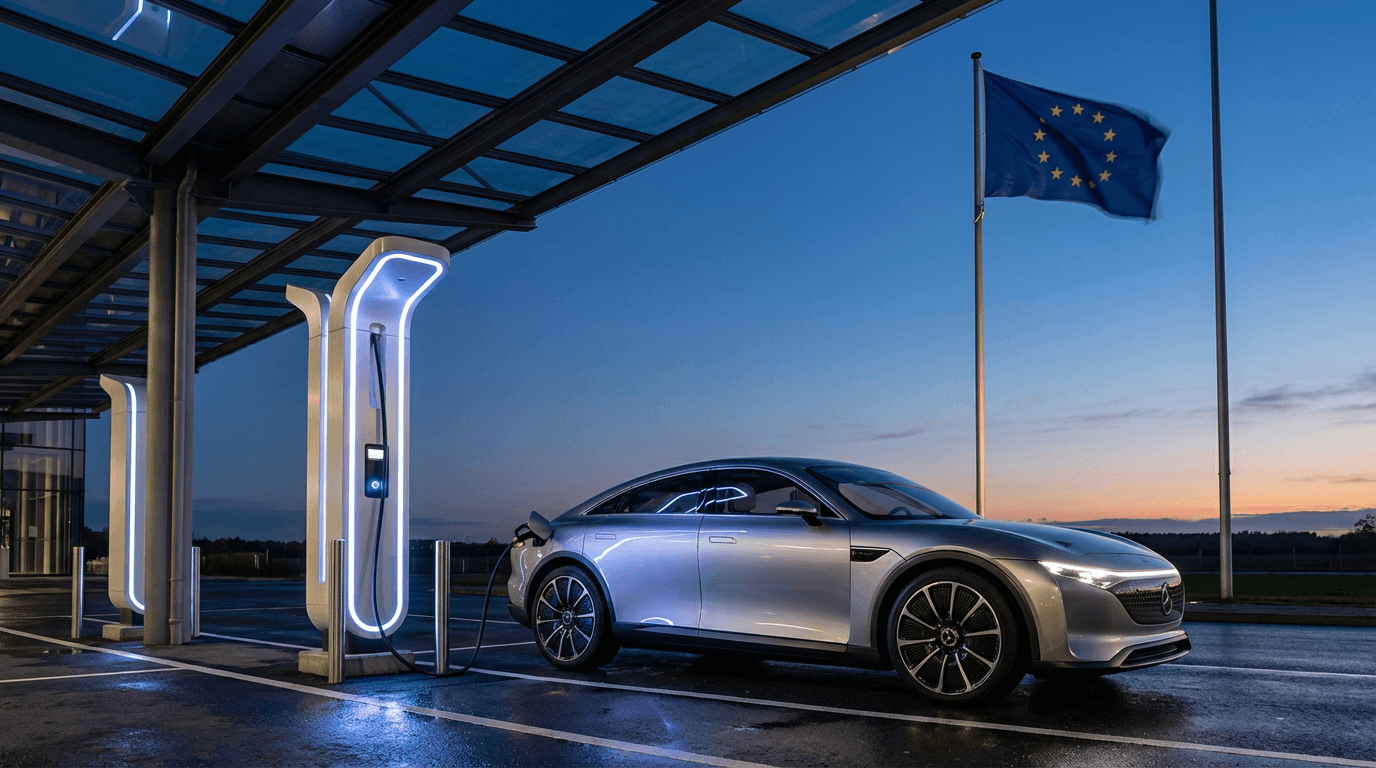
Every modern charger in a public car park may soon mostly serve imported vehicles.
The problem is that China does not only control the mines. It holds the entire refining chain in its grip – from Congolese cobalt to graphite, without which the anode in your car is just an expensive paperweight.
Europe tried to play fair by introducing strict environmental standards. Beijing, meanwhile, simply built another coal-fired power plant next to a battery factory, as long as the unit price dropped by a few dollars. Browsing the catalogue of available models makes it clear that this strategy works.
A new hierarchy of current
If you think electric cars are still only toys for the wealthy from Wilanów, take a look at the Skoda Elroq. It starts at 141,900 PLN and packs more clever solutions than a MacGyver Swiss army knife.
It is a solid piece of engineering that shows the Volkswagen Group is starting to understand the rules of the game. If, however, you want something that actually drives further than the nearest eco shop, you need to look at the Mazda 6e at 198,200 PLN or the Hyundai Ioniq 6.
The latter, priced at 189,900 PLN, offers aerodynamics inspired by a river stone and a range of nearly 600 km – at least according to the optimistic WLTP catalogue.
Reality, though, can be brutal. In winter, at -10°C on the A2 motorway, those numbers melt faster than artisan ice cream in full sun.
We are also waiting for the premiere of the Volkswagen ID.2all (called ID.Polo). It is set to cost around 25,000 euros, roughly 105,000 PLN.
The Wolfsburg-based manufacturer proudly announces that this car will "not scare" conservative drivers. Charming. It sounds as if a smartphone maker promised rubber buttons and a black-and-white screen so that retirees would not feel lost.
This is a defensive strategy that reveals Europe's fear of the future. Today's electric cars demand design courage, not constant glances in the rear-view mirror.
In the upper league the fight is even fiercer. BMW and Mercedes defend the bastions of luxury, offering multimedia systems with powerful computing capacity. But even there, nervousness is visible.
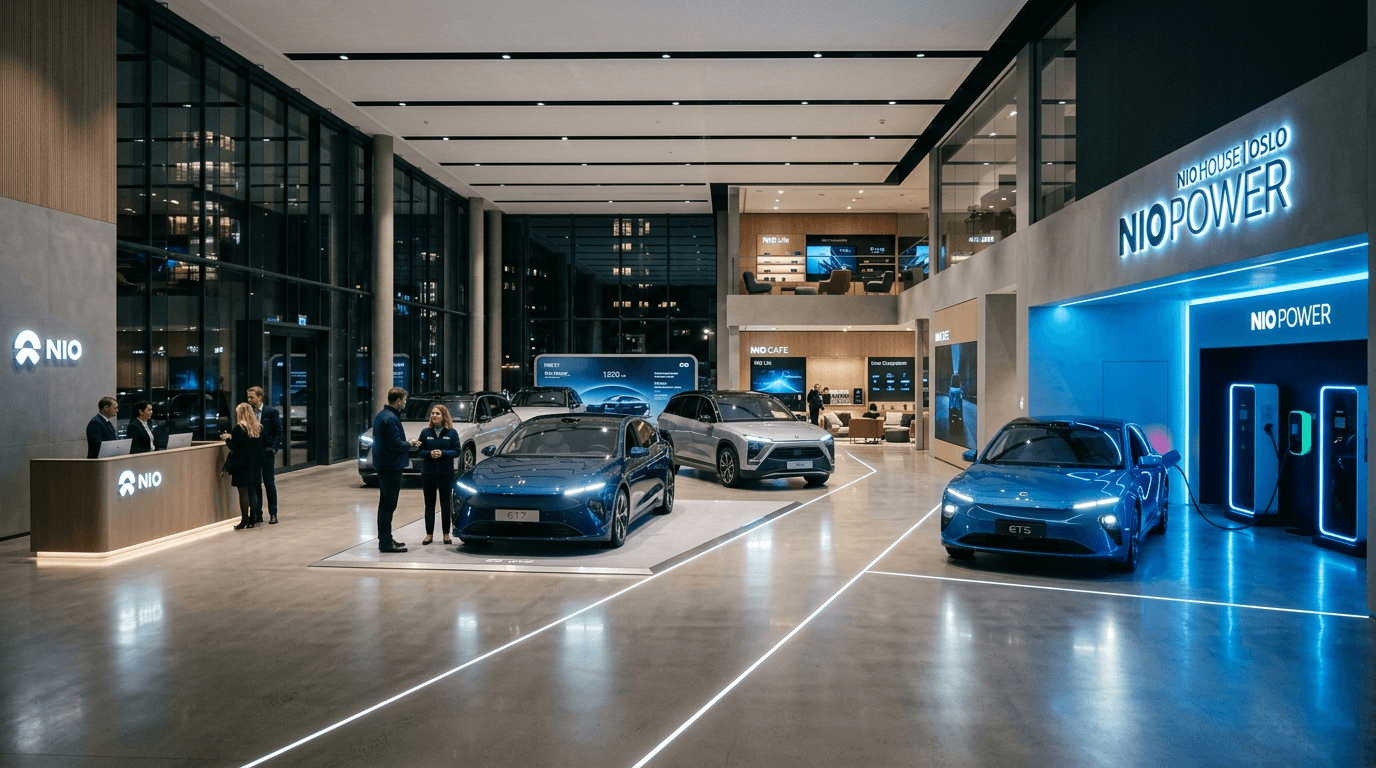
When China's Nio swaps a battery in 3 minutes, European engineers can only offer "fast charging" that lasts as long as a proper lunch. A suitable high-power charger is still a rarity on many routes.
The battle for raw materials, technology and electric cars
What you cannot see at first glance in a showroom is the war for intermediates. To produce a single battery, you have to move tens of tons of earth in search of lithium, copper and nickel.
China has dominated this process completely. Even if we build the most advanced factory in the world at home, the chemical components will still arrive in a container from Asia. Browsing the catalogue of strategic raw materials, Europe looks pale.
We save ourselves with recycling. The idea is beautiful: we will recover 95% of materials from old batteries. The problem is that there are still too few old batteries to feed the hungry production lines.
We are caught between ecological aspirations and the hard economics of scale. The Americans pump billions of dollars into local production through the Inflation Reduction Act. We respond with a stack of directives.
It is a bit like fighting with light sabres against heavy artillery with an inexhaustible supply of ammunition. If electric cars are to become cheap, we need real access to our own raw materials and technologies.
Verdict: sovereignty or capitulation?
The truth is painful: Europe finds itself in a classic "valley of death". The industry that for a hundred years was the foundation of our prosperity is now going through the hardest test in its history.
If upcoming regulations do not impose hard rules on the origin of components, our gigafactories will only be expensive monuments of a delayed reaction. Even the best electric cars will not save the economy if their hearts come from imports.
Today's choice in a showroom is a dilemma between pragmatism and market patriotism. You can buy a Chinese BYD or MG for a fraction of the price of a European car and enjoy technology that many Europeans will soon not be able to afford.
Or you can pay extra for an Audi Q4 e-tron (from 213,000 PLN), hoping that your money will save what remains of the local industry. By choosing electric cars, you support a specific vision of the future – ours or theirs.
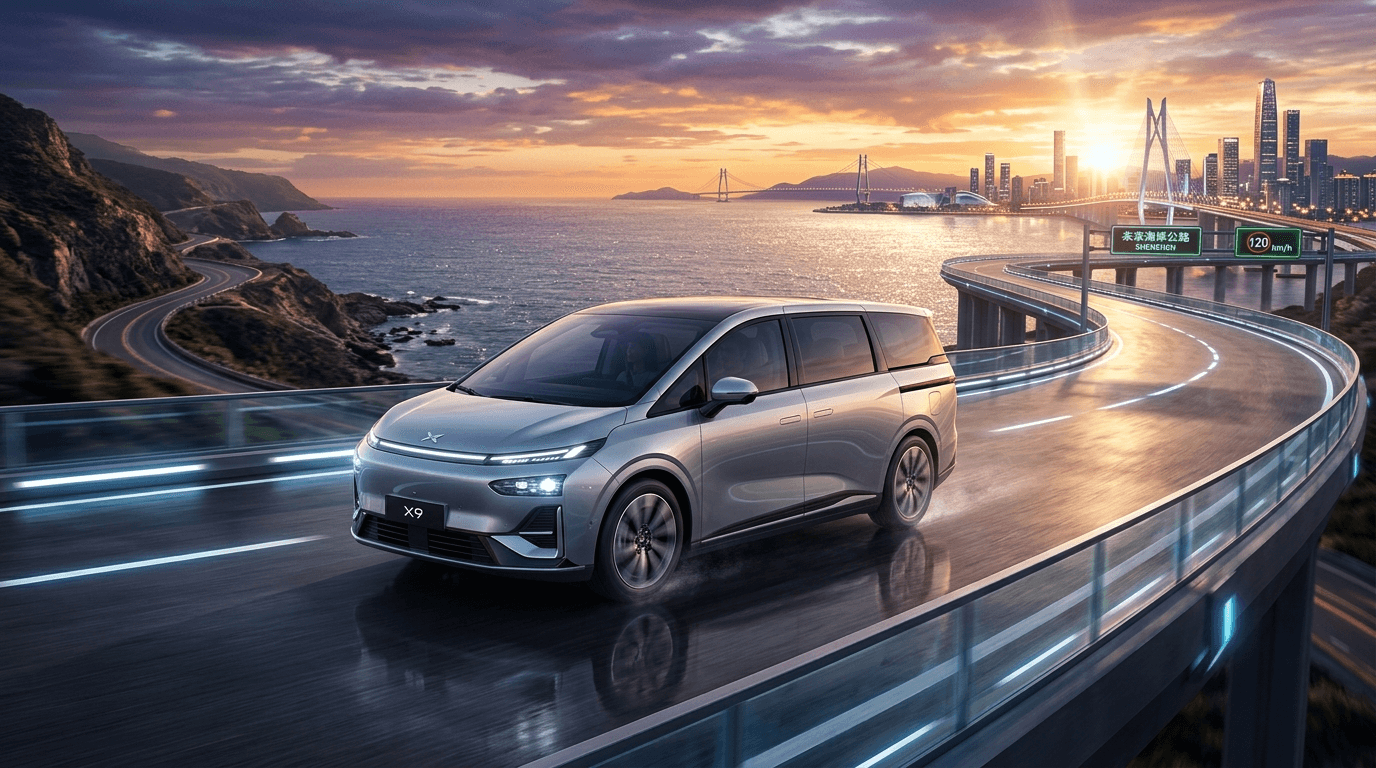
The Chinese dragon does not only breathe fire and scare the competition – it uses that fire to power our chargers, manufacture our cables and design the software that manages energy.
Europe must show some backbone and invest in real chemistry, not only in nice brochures about ecology. If it does not do so now, in a decade the halls of Wolfsburg or Turin will only assemble instruction manuals for cars from Asia.
And probably in Mandarin, because it is becoming the new language of the automotive world. Then electric cars with a proud "Made in EU" label will be only a rare curiosity.
FAQ – frequently asked questions
Why are LFP batteries key to cheap electric cars?
Lithium iron phosphate (LFP) cells do not use expensive and controversial cobalt or nickel, which lowers production costs by around 20–30%. They offer significantly longer cycle life and better thermal safety, allowing simpler cooling systems in budget cars such as the BYD Dolphin.
What is the Industry Accelerator Act and how is it meant to help Europe?
It is an initiative aimed at shortening permitting processes for strategic-technology factories and at introducing requirements for a local supply chain. It assumes that by 2030 at least 40% of key technologies, including battery cells, must be produced in the European Union to avoid total dependence on Asia.
What is the real difference in EV range in winter on the motorway?
At around -5°C and speeds of 130–140 km/h, the real range of most models drops by 30–45% versus WLTP declarations. The reasons are cabin heating, higher air resistance and reduced chemical efficiency of the electrolyte. Cars equipped with a heat pump do about 10–15% better in these conditions.
Can European gigafactories compete on price with China?
Currently, the production cost of 1 kWh in China is around USD 30–50 lower than in Europe. The gap comes from higher energy costs on the Old Continent, higher labour costs and less vertical integration – Chinese groups often produce everything themselves, from electronics to cell chemistry.
Why is "local content" becoming a new quality benchmark?
The metric defines the percentage of a vehicle's value produced locally. A high local-content level protects manufacturers from countervailing duties and unlocks national subsidy schemes. For the customer, it is a guarantee of stable supply of parts and service, which with new brands is often an unknown.
Can battery recycling really replace lithium mining?
In the long run yes – modern processes can recover over 95% of lithium, cobalt and nickel. Today, however, there are too few old batteries to meet market demand. For the next decade the industry will still rely on new mines, mostly located outside Europe.