People usually fear anything that lacks familiar shapes, but they are slowly softening. It turns out that our reluctance toward robotaxi is directly proportional to the distance that separates us from the nearest Waymo or visionary Tesla Cybercab.
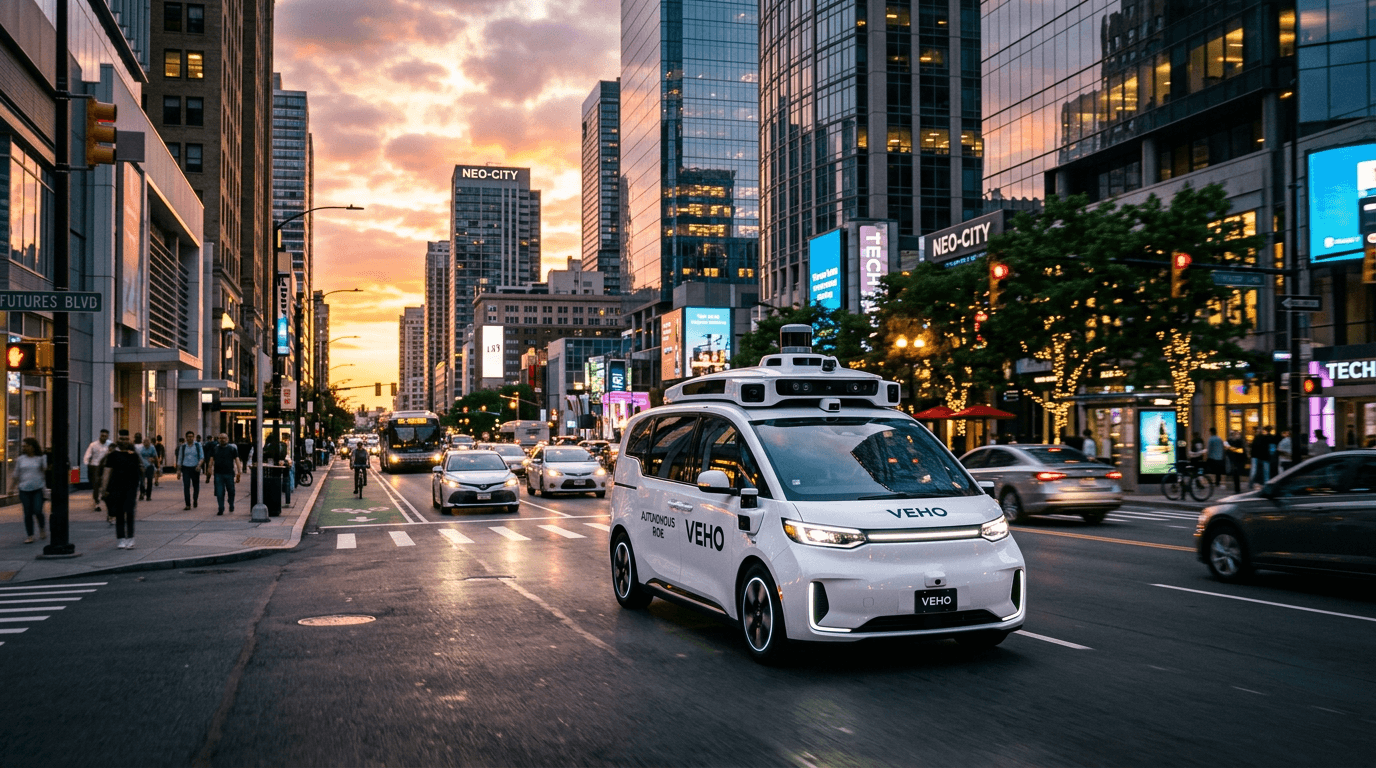
In cities such as San Francisco or Austin, where autonomous cars have become a landscape feature as common as pigeons, more than half of residents consider it a great idea. It is fascinating how quickly we tame technology when it turns out it is not trying to kill us at every intersection.
Most of us fear computers behind the wheel, forgetting that human drivers are biological time bombs driven by fatigue, emotions and SMS messages. A robot does not blink. A robot has no "bad Monday".
Why does this happen? Because the machine does not have road rage, does not check TikTok while changing lanes and has no bad day. While promoting the Tesla Cybercab, manufacturers emphasize that silicon drivers cause far fewer serious accidents than we do – biological units with our sluggish reflexes.
Algorithms do not feel fatigue after a twelve-hour shift, have no limited field of vision at night and – crucially – see in 360 degrees simultaneously. However, once you leave the operational zone of these cars, skepticism rises faster than fuel prices.
There, almost 70% of parents would sooner send their child on a survival course than let them ride where the Tesla Cybercab rules. It is a classic fear of the unknown that will vanish the moment the first autonomous vehicle drops us safely outside a club.
Technology that takes no prisoners
Modern autonomous cars are not simply cars with a glued-on computer. They are supercomputers on wheels that process gigabytes of data in milliseconds. The vision systems equipping the Tesla Cybercab are based on neural networks and learn from millions of kilometers of experience.
If one car in Arizona learns how to avoid an unusual pothole, that knowledge is instantly received by every other unit on the network. It is a collective intelligence humans can only dream of.
While we argue about whether zipper merging is polite, the algorithms controlling vehicles such as next-generation electric cars negotiate right of way with mathematical precision.
Tesla Cybercab: a two-seat revolution at a reasonable price
The transport market has just received a powerful challenge. The engineers' latest brainchild, the Tesla Cybercab, is entering preparations for mass production scheduled to start in earnest in 2026.
Forget luxuries – it is a bare, two-person bullet with butterfly doors, built for one purpose: being a cheap, soulless and incredibly efficient money-making machine. The Tesla Cybercab design lacks any mechanical links to the passenger – you will find neither a steering column nor pedals inside.
Specs? That is where it gets interesting. The Tesla Cybercab is expected to cover about 483 km on a single charge, using a battery smaller than 50 kWh. That is a result that embarrasses most modern EV models available through the catalog, which weigh as much as a small planetoid.
All thanks to brilliant aerodynamics and a drastic slimming of the structure. The best part, however, is charging – forget about cables. The Tesla Cybercab bets on high-power induction. You drive over a charging plate and wait for physics to do its job.
In Poland, the price of this invention is expected to hover around 148,000 PLN, placing it in the same row as a reasonably equipped compact. The difference is that this compact will not earn its keep while you sleep soundly and your Tesla Cybercab hauls people around the city.
Poland on the shoulder of autonomous highways
When will these technological wonders hit the streets of Warsaw or Krakow? Well, while global giants flex their muscles, the Polish Road Traffic Act is still mentally stuck in the era of the Fiat 125p.
Current regulations require a person capable of taking control to be inside the vehicle, which is physically impossible in the Tesla Cybercab. For robotaxi to legally ignore the existence of a steering wheel here, a powerful amendment to the law is needed.
Polish roads with their potholes and creative approach to lane markings will be for the Cybercab what a commando exam is for a kindergartner. If this algorithm survives the Puławy roundabout in the rain, it will survive anything.
What is more, our weather conditions – a mix of snow sludge and ruts – will be the ultimate test for the Tesla Cybercab's vision systems. Cameras must cope with road salt, and algorithms must understand the specifics of bumper-to-bumper driving.
It is estimated, however, that the cost per kilometer will drop to about 1 zloty. That means a half-city ride will cost less than a liter of fuel. If this materializes, traditional taxi corporations will face a bigger problem than just lacking small change. Every induction charger in the city will become a strategic point.
Economy without a driver, or who benefits
The introduction of autonomous fleets is not just a change in how we get to work. It is a complete questioning of the model of owning a car. Why pay a leasing installment when a modern Tesla Cybercab is always ready to go?
Private electric cars and combustion cars spend 95% of their lives parked uselessly. The Tesla Cybercab will work 20 hours a day, with breaks only for fast energy top-ups and interior cleaning.
It is an efficiency that no public transport system can match, while offering the comfort of a fully private space.
Verdict on the Tesla Cybercab
Robotaxi are no longer a curiosity for tech enthusiasts. They are an incoming invasion in which the Tesla Cybercab will play a key role. Will we miss the smell of "pine tree" vanilla air fresheners and listening to conspiracy theories from the driver? Maybe for the first five minutes.
But when you look at the fare issued by your Tesla Cybercab, you will quickly forget the sentiment. Freedom is not just the ability to keep your hands on the steering wheel; it is also the time to read a book while the machine performs the world's most boring task for us.
If you are looking for information about other models, check the available cars catalog. The future has no steering wheel, and given what we see on the roads every day, that is probably the best news of this decade.
FAQ – Frequently asked questions
How does the Tesla Cybercab cope with extreme weather conditions?
The vehicle uses an advanced vision system based on eight high-resolution cameras, supported by an AI processor with enormous computing power. This system can "see" through fog and heavy rain better than the human eye thanks to light spectrum analysis. Additionally, the camera lenses are equipped with hydrophobic coatings and self-cleaning systems, eliminating the problem of snow sludge limiting visibility.
Does the lack of a steering wheel and pedals mean the passenger has no control over the car?
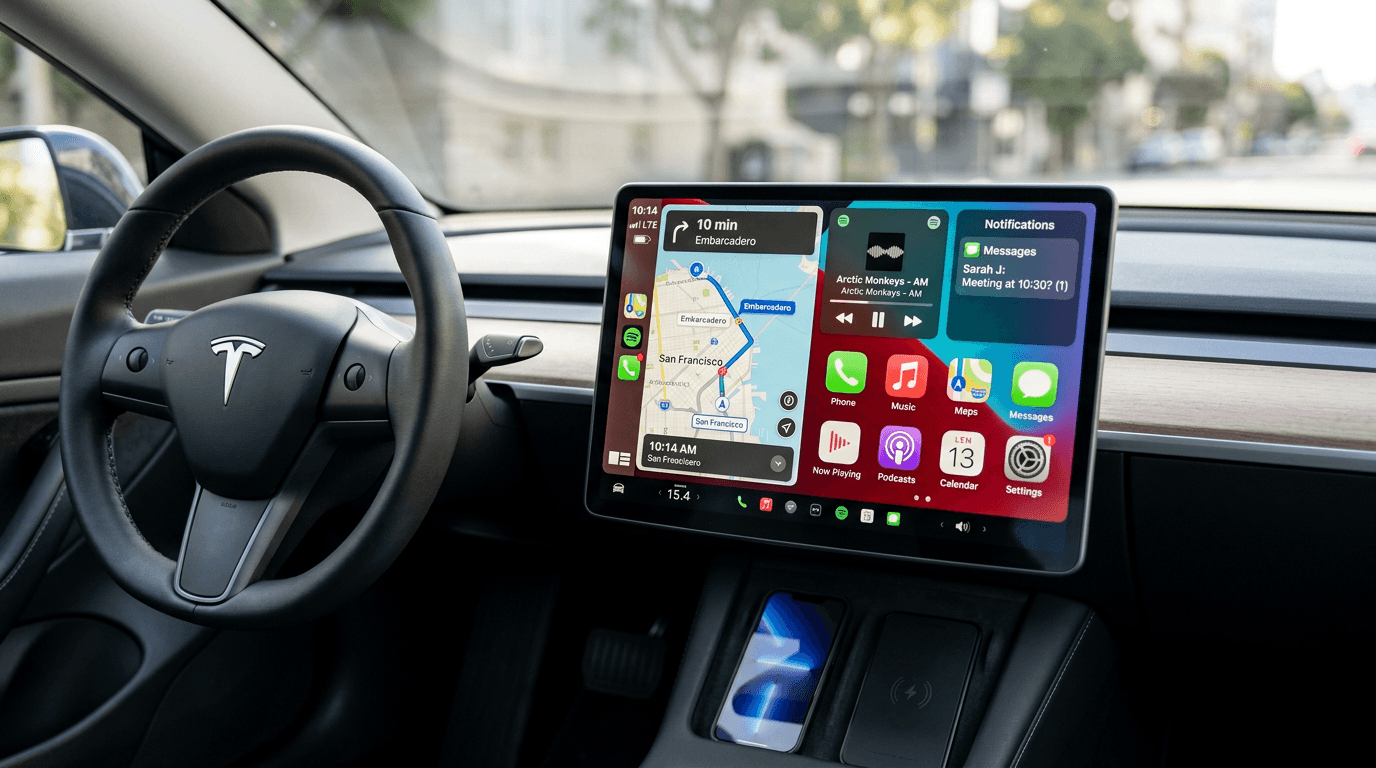
Exactly. The Level 5 autonomy design of the Tesla Cybercab assumes that the human is a passenger, not an operator. The interior is equipped with a large touchscreen for multimedia and a physical safety button that allows an immediate, controlled stop on the roadside. There is no possibility of manual steering control.
How much does it actually cost to operate such a vehicle compared to a combustion car?
Thanks to efficiency of 10 kWh per 100 km, the cost of energy delivered by any modern charger is extremely low. For the Tesla Cybercab it is about 8-10 PLN per 100 km. The absence of items such as timing belts or engine oils reduces service costs by nearly 70% per year.
How is the charging problem solved without human involvement?
The system uses resonant induction charging technology. A coil mounted in the vehicle's underbody communicates with a plate embedded in the parking surface. The system automatically centers the vehicle over the electromagnetic field with the highest precision, allowing the fleet to autonomously top up energy at unmanned technical hubs.
Can the robotaxi network be hacked and taken over by third parties?
The security architecture relies on end-to-end encryption and complete isolation of critical systems (drive, steering) from entertainment systems. The Tesla Cybercab fleet uses dedicated communication protocols, and every software change goes through multi-stage verification. The risk of mass vehicle takeover is marginal and constantly monitored.
What happens if a passenger soils the car interior?
Vehicles are monitored by optical sensors and odor sensors after every completed ride. If contamination is detected, the system automatically takes the car out of the fleet and routes it to a cleaning hub. The offender is charged for the service through the app, and their profile may be suspended. Interiors are made of highly resistant, easy-to-wipe materials.